Sustainability
Beginner
50 mins
Teacher/Student led
+65 XP
What you need:
Chromebook/Laptop/PC or iPad/Tablet

Living Within Limits: Resources, Waste and the Circular Economy

Explore how a circular economy works, trace the lifecycle of everyday items, and learn to sort household waste correctly using the Irish waste hierarchy and bin rules.
Teacher Class Feed

Load previous activity

    1 - Getting Started

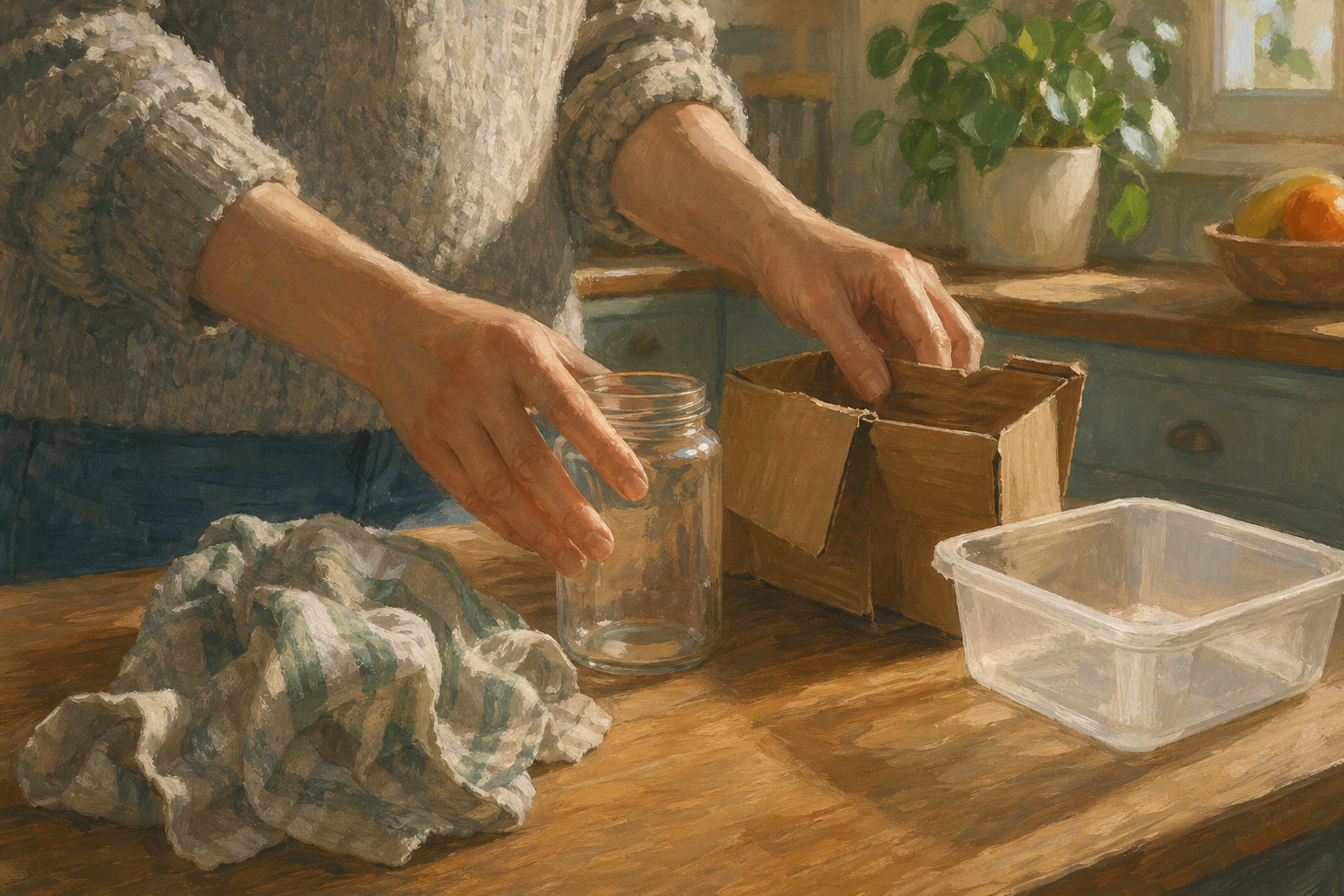
    Illustration for Getting StartedThink about the last thing you put in a bin today. A teabag? A bit of packaging? An empty jar?

    Most of us were taught one rule growing up: throw it away. But there is no real "away". Everything we buy comes from somewhere, and everything we bin goes somewhere. In this lesson, you will follow one of your own everyday items through its life, and look at a week of your own household waste with fresh eyes. No guilt, no perfection, just a clearer picture.

    2 - Key Terms

    Here are the four terms you will use in this lesson. They will come up again in the activity, so it is worth a quick read now.

    TermWhat it means for youExample
    Circular economy. An approach where things are designed, used and reused so materials keep circulating instead of being thrown away.Choosing items you can refill, repair, pass on or recycle properly keeps them in the loop.A glass milk bottle returned, washed and refilled.
    Waste hierarchy. An order of preference for handling waste: refuse, reduce, reuse, repair, then recycle.Before reaching for the bin, you ask whether you could refuse, use less, use again or fix it first.Mending a coat zip instead of buying a new coat.
    Wishcycling. Putting something in recycling while hoping it can be recycled, even when you are not sure.It feels helpful but it can spoil the whole bin load. "If in doubt, leave it out" is the rule in Ireland.A greasy pizza box in the green bin.
    Contamination. Wrong items, or food and liquid residue, ending up in a recycling bin and spoiling the load.A quick rinse of jars and tubs makes a real difference. Empty, clean and dry is the green-bin rule.A yoghurt pot still half full of yoghurt.

    The standard household bin colours in Ireland are green for clean dry recyclables, brown for food and garden waste, and black (or grey) for general waste. Some areas also have a separate glass collection or bottle banks.

    3 - Explore and Apply

    This step has three short parts:

    1. Linear vs circular. A quick walk-through of the take-make-waste model versus the circular economy.
    2. Follow one item. Pick something you own, like your phone, a t-shirt or a takeaway coffee cup, and trace its lifecycle.
    3. Sort your own week. Use the waste sorting tool to think through a typical week of your own household waste, and pick three items you could refuse, reuse or repair instead of binning.

    Take your time. There is no right answer to find, only a clearer view of your own home.

    4 - Think About It

    Take a quiet minute with these prompts. There is nothing to type or save here, just to notice.

    5 - Go Further

    If you want to go a step deeper, here are three optional extras:

    • Find your nearest civic amenity site or recycling centre. Most local authorities run one. They take items the kerbside bins do not, like paint, large electricals, mattresses and garden waste.
    • Check your bin collector's leaflet. The leaflet that comes with your bill is the most reliable source for what goes in your green bin in your specific area. Pin it inside a kitchen cupboard.
    • Do a one-week "refuse" test. Pick one thing to refuse for seven days, for example bagged shopping, single-use cups, or unsolicited junk mail (a No Junk Mail sticker for the letterbox is free and works).

    Unlock the Full Learning Experience

    Get ready to embark on an incredible learning journey! Get access to this lesson and hundreds more on our learning platform.

    Copyright Notice
    This lesson is copyright of Coding Ireland 2017 - 2025. Unauthorised use, copying or distribution is not allowed.
    🍪 Our website uses cookies to make your browsing experience better. By using our website you agree to our use of cookies. Learn more