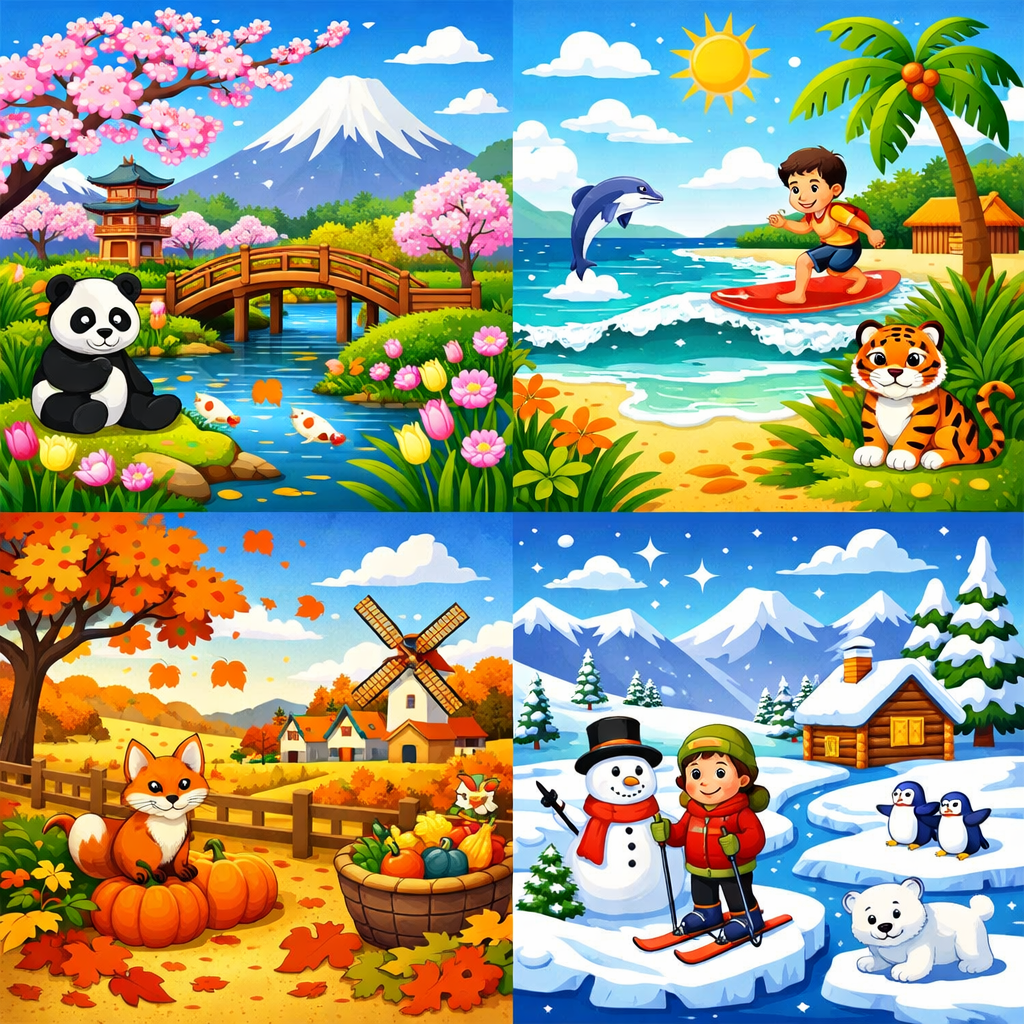
 Have you ever wondered why it gets warmer in summer and colder in winter? Or why some countries have summer when Ireland has winter? In this lesson, we will explore seasons around the world.
- Learn what seasons are and how they change the weather.
- Find out how to say seasons in different languages like French, Spanish, German, and Irish.
- Discover when seasons happen in Ireland and how they are opposite in places like Australia.
- Think about clothes people wear for different weather in various countries.
- Sort countries into Northern or Southern Hemispheres.
- Understand why seasons happen because of how Earth tilts around the Sun.
By the end of this lesson, you will know how seasons work around the world and how they affect people's lives.
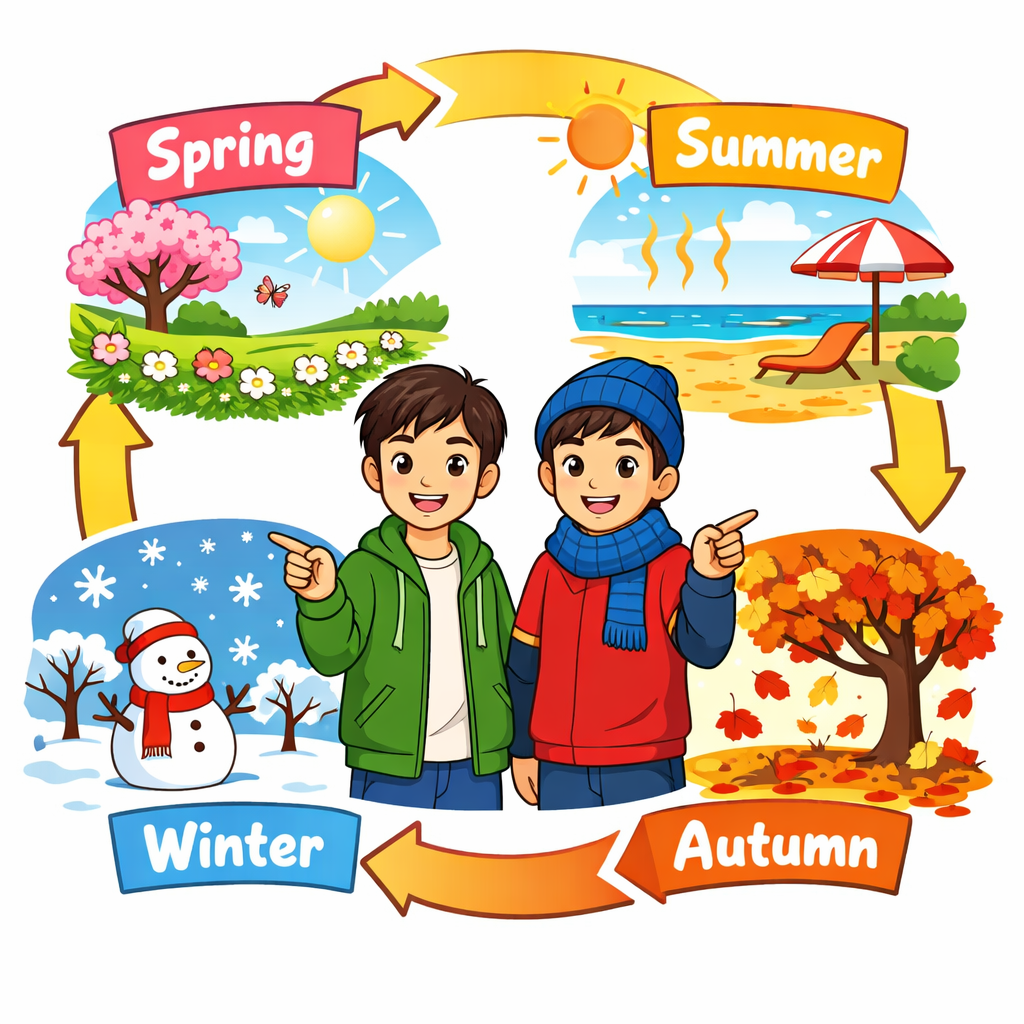 The year is divided into four main seasons. These seasons change the weather, the temperature, and the activities people do throughout the year.
In many countries, the four seasons are:
- Spring – when flowers grow and the weather becomes warmer.
- Summer – the warmest time of the year with long sunny days.
- Autumn – when leaves change colour and fall from trees.
- Winter – the coldest season with short days and sometimes snow.
Seasons affect how people live, what clothes they wear, and the festivals they celebrate.
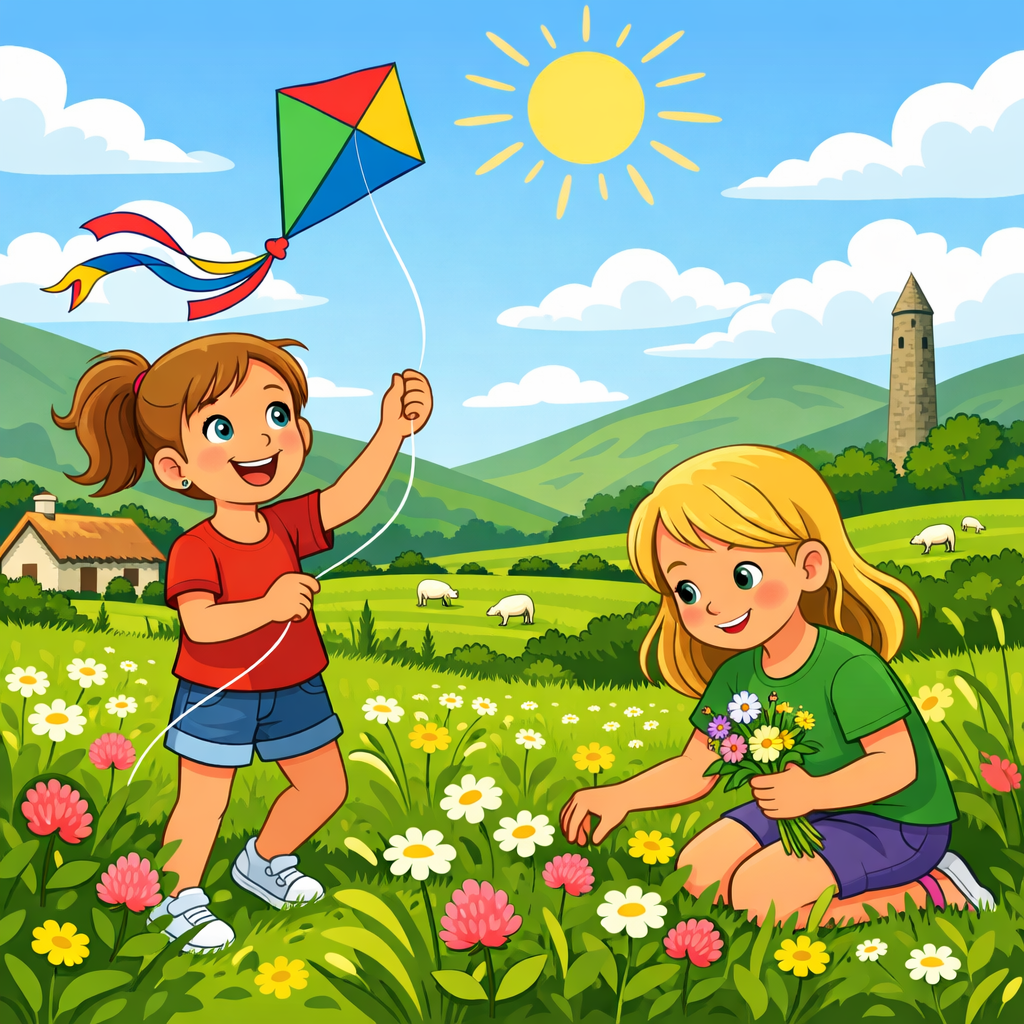 In Ireland, the seasons usually happen at similar times every year.
- Spring – March, April, May
- Summer – June, July, August
- Autumn – September, October, November
- Winter – December, January, February
Spring often brings new plants and baby animals on farms.
Summer has the longest days and usually warmer weather.
In autumn, leaves change colour and farmers harvest crops.
Winter is usually colder with shorter days.
These seasonal changes affect daily life in Ireland, including school holidays, outdoor activities, and farming.
Just like many words around the world, the names of the seasons change depending on the language people speak.
Learning how to say the seasons in different languages helps us understand how people describe nature in their own cultures.
Key Vocabulary
Language |  Spring Spring |  Summer Summer |  Autumn Autumn |  Winter Winter |
|---|---|---|---|---|
 English
| Spring | Summer | Autumn | Winter |
 French
|
Le printemps
luh pran-tom
|
L'été
lay-tay
|
L'automne
loh-ton
|
L'hiver
lee-vair
|
 Spanish
|
La primavera
lah pree-mah-veh-rah
|
El verano
el veh-rah-noh
|
El otoño
el oh-ton-yoh
|
El invierno
el in-vee-air-noh
|
 German
|
Der Frühling
dair froo-ling
|
Der Sommer
dair zom-er
|
Der Herbst
dair hairbst
|
Der Winter
dair vin-ter
|
 Irish
Irish
|
An t-earrach
un tar-ukh
|
An samhradh
un sow-rah
|
An fómhar
un foh-wer
|
An geimhreadh
un gyev-rah
|
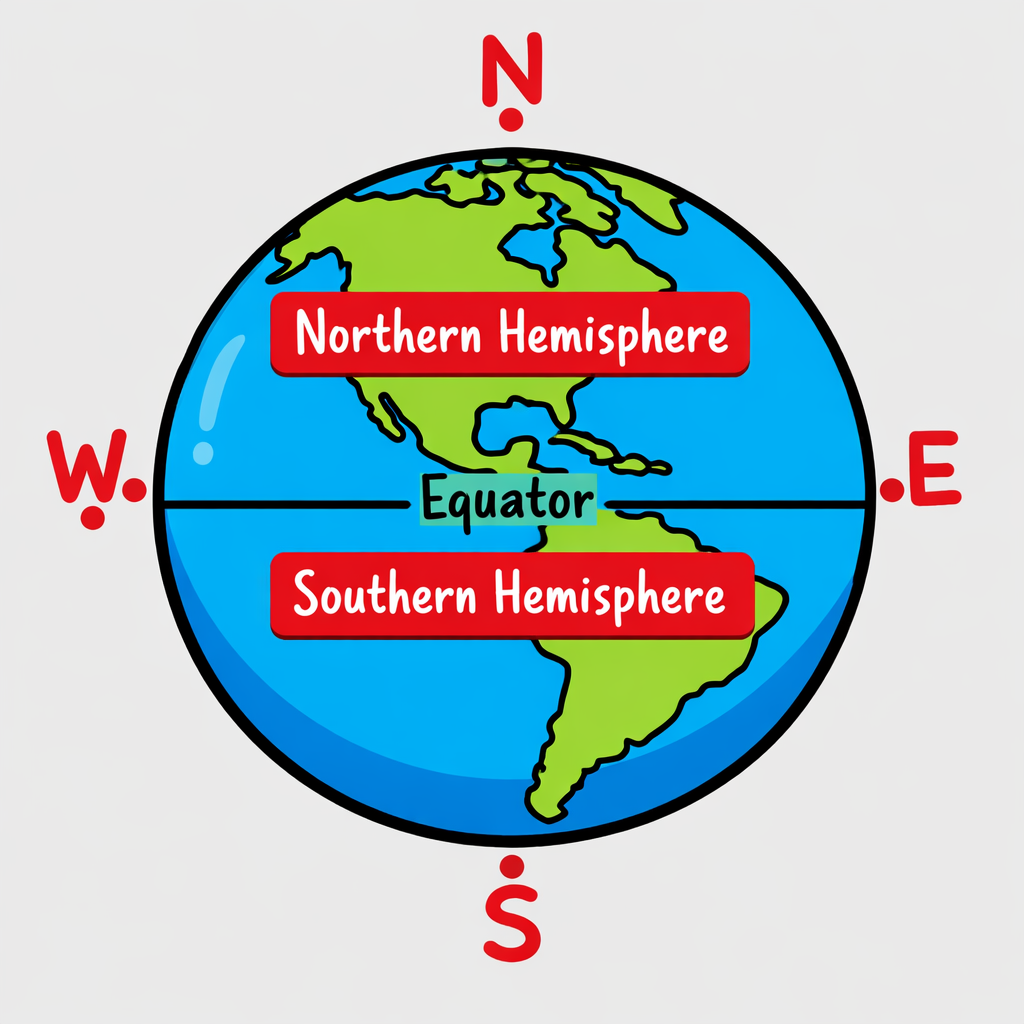 Seasons happen because the Earth is tilted as it travels around the Sun. This tilt changes how much sunlight different parts of the Earth receive during the year.
The Earth is divided into two main halves called hemispheres:
- The Northern Hemisphere
- The Southern Hemisphere
Ireland is in the Northern Hemisphere. This means the seasons we experience follow the pattern we discussed earlier.
However, countries in the Southern Hemisphere experience the opposite seasons to us.
Unlock the full learning experience
You're previewing this lesson. Get full access to this lesson and hundreds more — each one ready to teach, with interactive activities, printable resources and pupil progress tracking built in.
This lesson is copyright of Coding Ireland 2017 - 2025. Unauthorised use, copying or distribution is not allowed.