1 - Introduction
What is Media Literacy?
 Every day you see hundreds of headlines, videos, posts and messages. Some tell the truth. Others try to trick you into clicking, sharing or buying something. How do you know what to trust?
This lesson shows you how to spot reliable information and question the rest. You will build skills to stay safe from scams and misinformation.
What You Will Learn and Do
- Test your instincts on real headlines
- Learn the definition of media literacy and why it matters
- Explore types of media and how trustworthy they are
- Master a 5-question test for critical thinking
- Audit your own media habits
- Build real-world skills for protection and better decisions
By the end of this lesson
- You will know how to question information before you believe or share it
- You will spot scams, clickbait and emotional tricks
- You will feel more confident handling news and messages every day
2 - Test Your Instincts
Read These Three Headlines
Decide which sound true, which seem suspicious, and which need checking.
Headline 1
"Local woman wins lottery after listening to lucky podcast"
Headline 2
"Weather expected to reach 25°C tomorrow with 60% chance of rain"
Headline 3
"This one trick doctors don't want you to know about!"
What Did You Notice?
You can identify what to trust and what to question. This is media literacy.
Reflection Questions
- When was the last time you saw something online or on TV that made you question its truth?
- Who do you trust for accurate information?
- Have you shared information that later proved incorrect? How did that feel?
3 - Definition and Why Media Literacy Matters
What is Media Literacy?
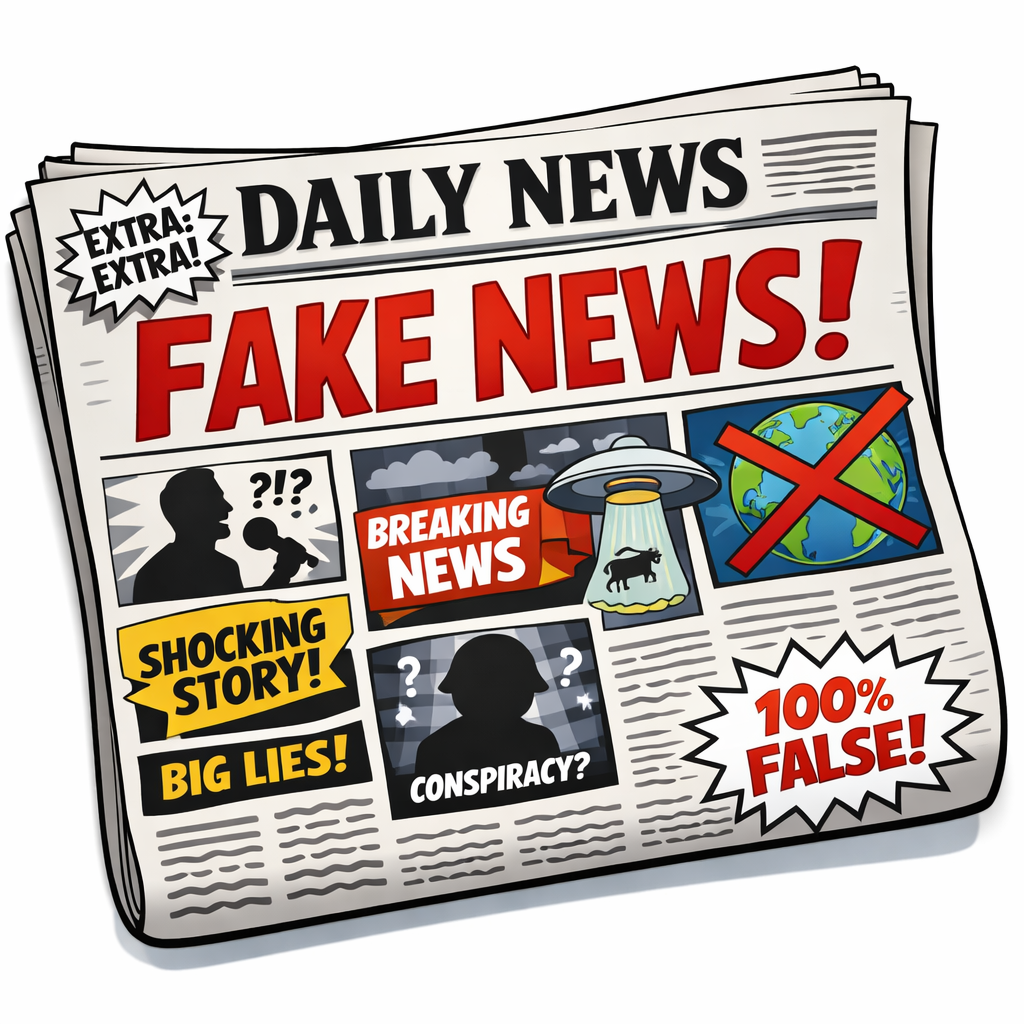 Media literacy is the ability to understand and think carefully about the messages you see and hear in newspapers, TV, radio, social media, podcasts, and online videos.
Think of It This Way...
You wouldn't cross a street without looking both ways. That's automatic thinking that keeps you safe.
You wouldn't buy something without checking the price. That's automatic thinking that protects your money.
Media literacy is the same idea: You shouldn't accept information without checking it first. It's automatic thinking that protects your mind from misinformation, scams, and manipulation.
Why Does This Matter?
You see hundreds of messages every day. Some are factual news. Some are advertisements. Some are opinions. Some are outright lies. Media literacy helps you tell the difference.
What you believe affects how you vote, what you buy, who you trust, and how you treat others. Getting accurate information matters.
Fake health products, lottery schemes, romance scams, and investment frauds all prey on people who don't question what they're told. Media literacy is your protection.
You can make your own decisions based on facts instead of relying on what others tell you to believe. That's real freedom.
Real-Life Example
Your grandson sends you a video on WhatsApp. Without media literacy, you might believe and share it without checking.
Your daughter posts something on Facebook. Without media literacy, you might get upset or angry based on misinformation.
Your neighbor mentions something they heard on the radio. Without media literacy, you might repeat it as fact.
With media literacy, you ask: “Where did that come from? Who made it? What proof do they have?” Then you make your own decisions.
Here's the Good News
Being media literate doesn't mean you can't enjoy the news, social media, or entertainment. It just means you watch, read, and listen with your thinking cap on. You become a smarter consumer of information, stay safe, and stay in control.
4 - Types of Media
Types of Media
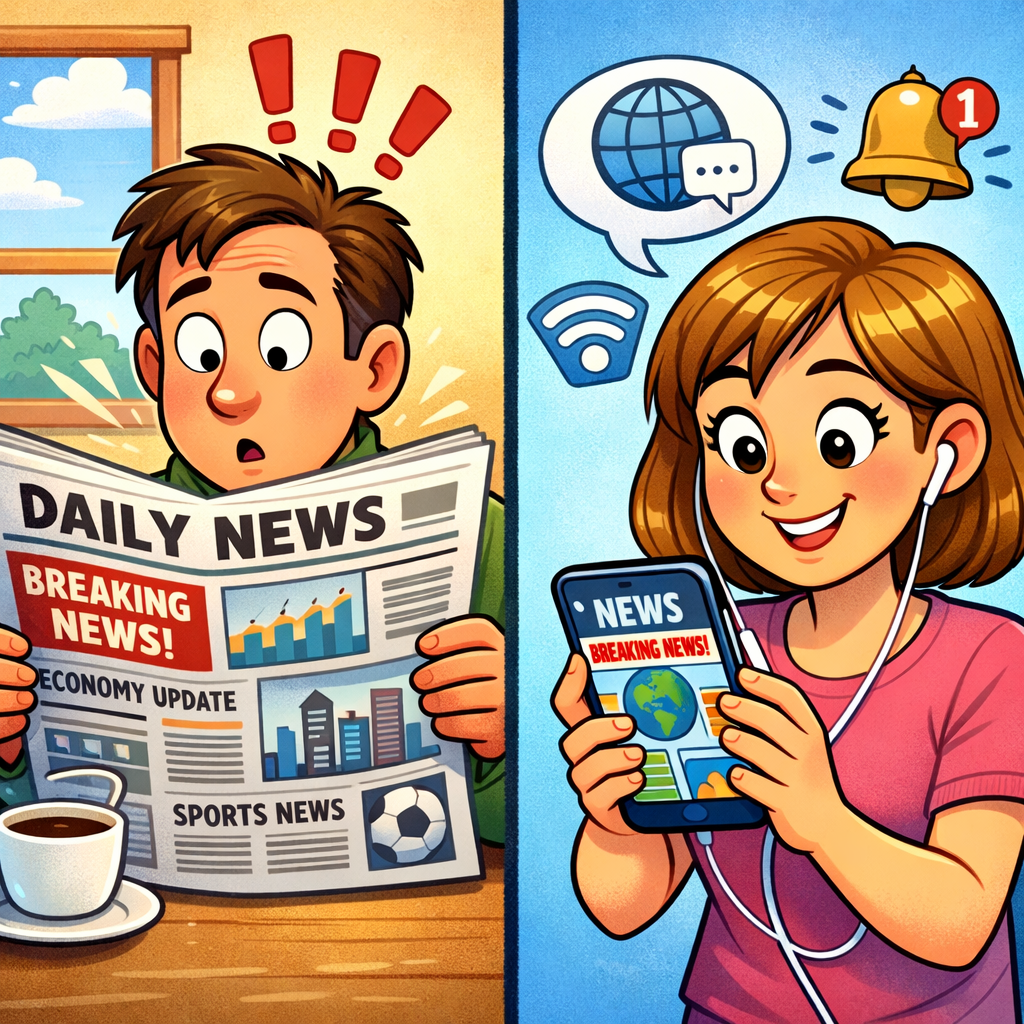 We get information from many different kinds of media. Some sources are created by professional news organisations with editors and standards. Others let anyone publish instantly.
That does not mean traditional media is always right or digital media is always wrong. It means you should understand how the message was created, who created it, and whether it was checked before it reached you.
Which Types of Media Do You Use?
Click the cards that match the media you use most often:
Traditional Media vs Digital Media
Traditional Media
- Examples: TV news, radio, newspapers, magazines
- Usually created by organisations with editors and publishing standards
- Often takes longer to produce because it may be reviewed before release
- Can still contain mistakes, bias, or opinion
Digital Media
- Examples: websites, blogs, social media, emails, YouTube, messaging apps
- Can be published instantly by individuals or organisations
- Information spreads faster and reaches more people quickly
- Quality varies widely, so checking is especially important
Which Usually Needs More Checking?
These are not exact scores. They are a simple guide to show that some sources are usually checked more carefully than others.
A professional-looking post is not automatically true. A familiar face is not proof. A viral video is not evidence.
The Key Difference
With some media, professionals may have already checked the facts.
With other media, the checking is up to you.
That is where media literacy matters most.
Think About Your Own Media
5 - Critical Thinking
Critical Thinking: The 5-Question Test
 Whenever you see information online, on TV, in the newspaper, or in a message from someone else, pause and ask yourself these five questions.
The more you practice, the more automatic it becomes. That is what critical thinking looks like in everyday life.
The 5 Questions
Ask yourself: Is this from a reporter, a news organisation, a company, a government department, an influencer, or just a random person online?
The source changes everything. A health article from a professional news outlet is very different from a health company trying to sell you a supplement.
Ask yourself: Are they trying to inform you, sell you something, get clicks, build attention, or make you angry so you will share it?
Once you understand the purpose of a message, you are less likely to be manipulated by it.
“You won’t BELIEVE what happened next!”
“Doctors HATE this one trick.”
“Share this NOW before it gets deleted.”
Ask yourself: Can this claim be checked and proven, or is it someone’s belief, judgment, or feeling?
Fact: “It rained yesterday.”
Opinion: “The rain ruined my day.”
Ask yourself: Do they quote experts, link to sources, show evidence, or provide documents? Or do they just make a claim and expect you to trust them?
A big claim with no proof is a reason to slow down and be suspicious.
Research studies • quotes from experts • official documents • statistics with sources • reporting from trusted organisations
Ask yourself: Does this make me angry, scared, shocked, excited, or panicked?
Strong emotion can switch off careful thinking. Messages that trigger fear, outrage, or urgency often spread because of emotion rather than truth.
Extreme fear • intense anger • outrage • shock • panic • urgency
Quick Practice
Read the headline, then click each question to test it.
Unlock the full learning experience
You're previewing this lesson. Get full access to this lesson and hundreds more — each one ready to teach, with interactive activities, printable resources and pupil progress tracking built in.
This lesson is copyright of Coding Ireland 2017 - 2026. Unauthorised use, copying or distribution is not allowed.