Mathematics
Intermediate
50 mins
Teacher/Student led
+95 XP
What you need:
IWB/Projector/Large Screen

3D Shapes, Nets and Building Models

Explore how flat nets fold into solid 3D shapes. Predict whether arrangements of squares will close into cubes, then build and test your own nets with paper.
Teacher Class Feed

Load previous activity

    1 - Getting Started ~4 mins

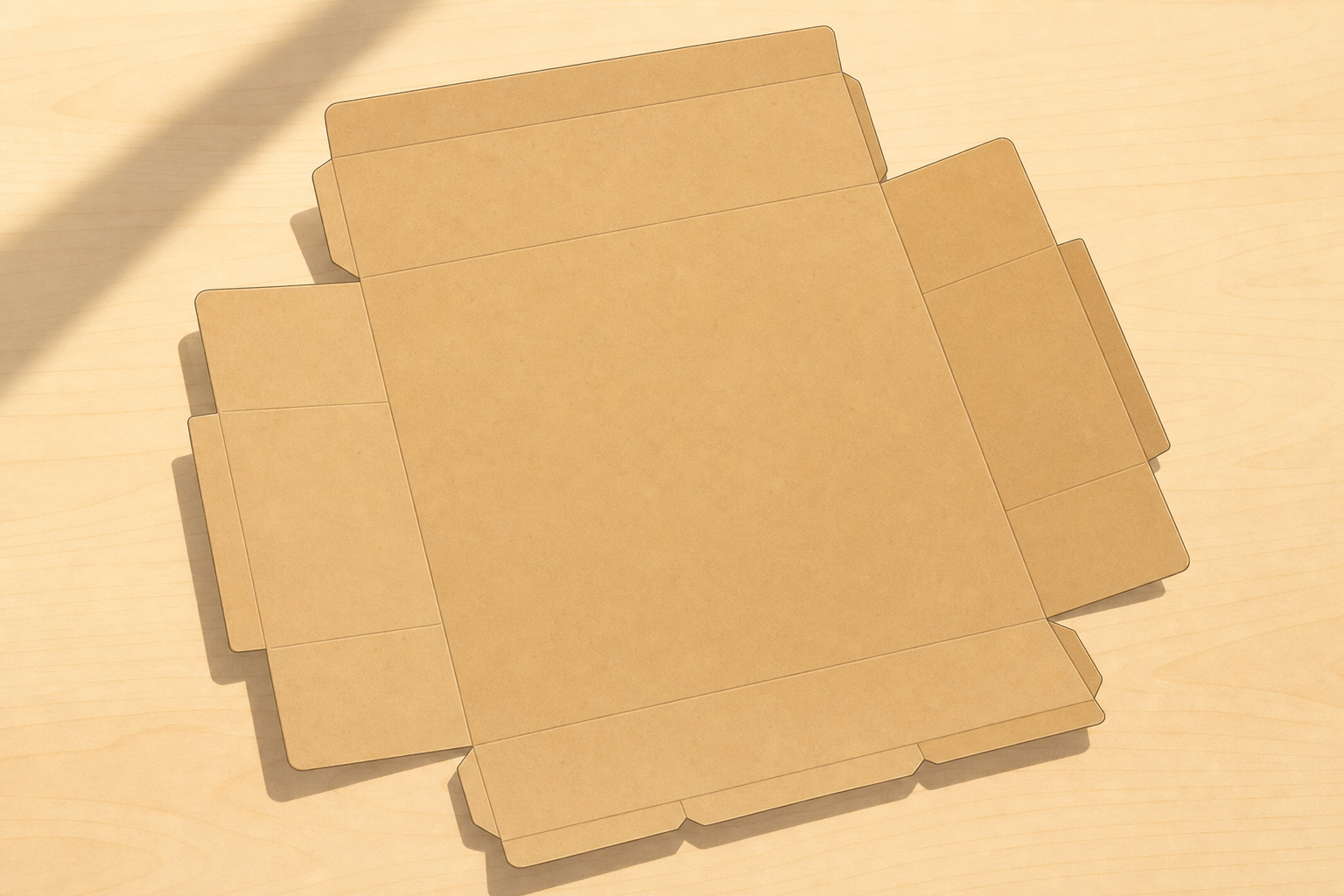
    Illustration for Getting StartedWatch a cereal box being opened right out until it lies completely flat.

    It was a solid box a moment ago. Now it is a flat shape on the table. What solid did it make when it was folded, and how many faces can you count now that it is laid out flat?

    2 - Watch and Notice ~9 mins

    Here is the flat shape we call a net. Watch each of these nets fold up. The faces are colour-matched, so you can follow where each flat square ends up on the finished solid.

    This next one is not six squares in a neat cross. Watch which face becomes the base and which folds over to become the lid.

    Now watch this next net as it folds. Keep an eye out for what happens to the faces.

    This last shape is not a cube at all. Watch the square base sit flat while the four triangles fold up.

    3 - Try It Together ~7 mins

    Now we build our own cube net on the grid and fold it to test. Tap the grid to place six squares. Before we fold, predict together: will this arrangement close into a cube, or will a face overlap or a gap open?

    Once we have folded one arrangement and checked it, we clear the grid and try a different one. Each time, say what you expect before we press Fold.

    Build and fold a cube net

    4 - Sketch a Cube Net in Your Copy ~2 mins

    COPYBOOK MOMENT

    Illustration for Sketch a Cube Net in Your CopyIn your maths copy, sketch a cube net as four squares in a row, with one extra square joined above the row and one joined below it.

    Then put a small mark on the two faces that will become the top and the bottom of the cube when it folds.

    5 - Class Challenge ~8 mins

    Today we predict first, then fold to check. For each arrangement of squares, decide together: will it fold into a cube, or won't it close?

    We work these in order: a clean cross first, then a T-shape, then a staircase, and finally six squares in one straight line.

    Will it fold into a cube?

    Pupil practice
    Module 7 · 2D and 3D Shapes and Angles Data & Chance
    Lesson 83 · 3D Shapes, Nets and Building Models
    Download Activity Book page (PDF)
    123learn · Online learning platform

    Unlock the full learning experience

    You're previewing this lesson. Get full access to this lesson and hundreds more — each one ready to teach, with interactive activities, printable resources and pupil progress tracking built in.

    Hundreds of curriculum-aligned lessons
    Interactive activities in every lesson
    Printable resources & progress tracking
    Copyright Notice
    This lesson is copyright of Coding Ireland 2017 - 2025. Unauthorised use, copying or distribution is not allowed.
    🍪 Our website uses cookies to make your browsing experience better. By using our website you agree to our use of cookies. Learn more
