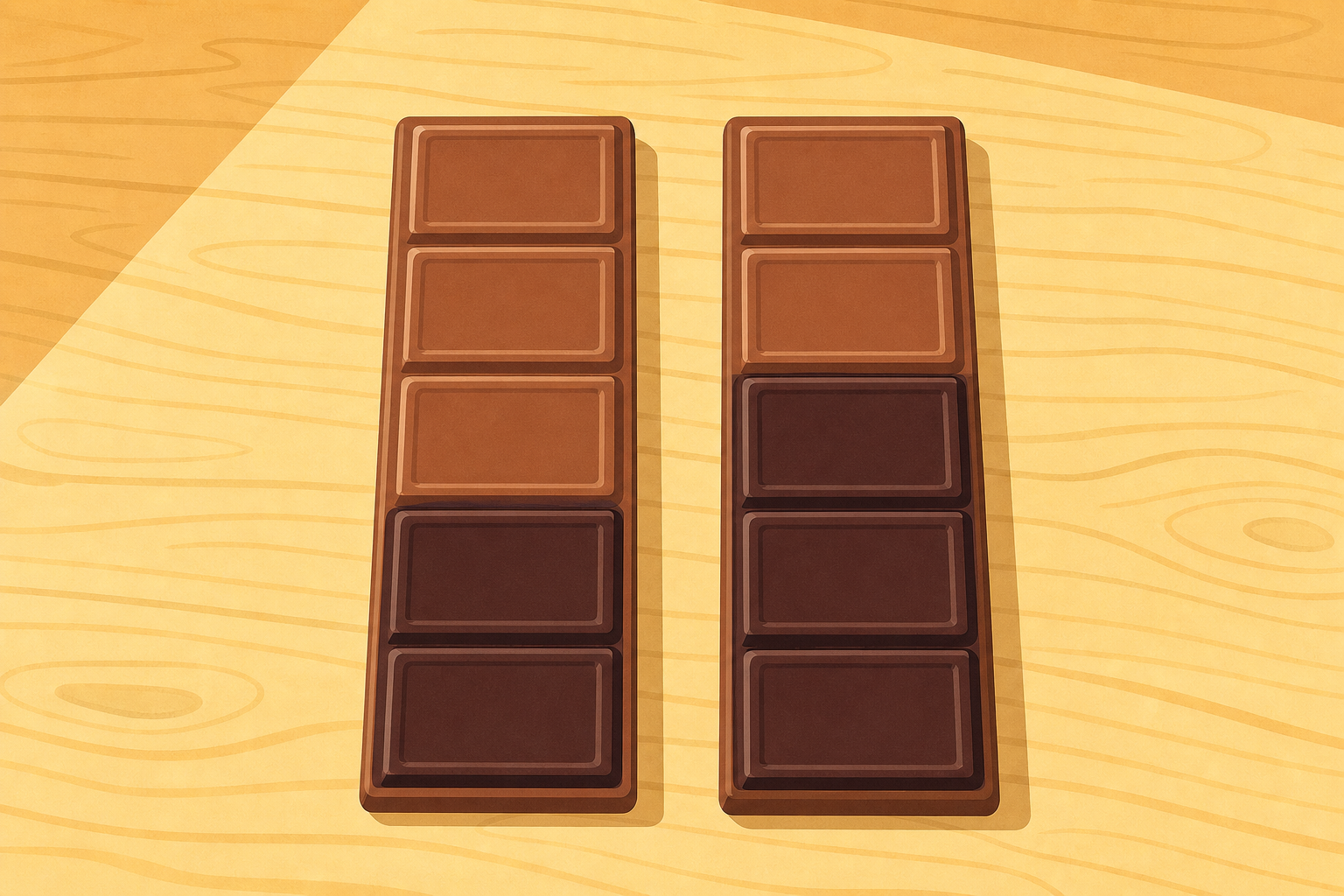
Here are two chocolate bars that are exactly the same size. Both have been broken into five equal pieces. One bar has two pieces shaded in. The other bar has three pieces shaded in. Which shaded part is bigger, and how can you tell just by looking?
Show the two same-size shaded bars on the IWB (two fifths and three fifths) and give five seconds of quiet think-time before any hands go up. Take two or three hands-up answers, not open call-outs. Don't confirm the rule yet — you only want pupils noticing that same-size pieces mean you can just count the shaded ones.
Each pair of strips is split into the same number of pieces, and different amounts are shaded. When the pieces are the same size, we can compare by counting the shaded ones. Watch each pair and decide which fraction is bigger.
Same bottom number means same-size pieces, so count the shaded parts, don't measure.
1/4 vs 3/4: start here, easy. 3 shaded beats 1, so 3/4 bigger.
2/5 vs 3/5: take a prediction which reaches further before pointing. Then count: 3/5 beats 2/5.
3/8 vs 7/8: pieces look tiny here, so pupils must trust the count, not the piece size. 7 shaded beats 3, 7/8 bigger and nearly fills the strip.
Now let's work through four pairs together. For each one, you'll come up to shade the strips and then read out which is bigger. Every pair shares the same bottom number, so we count the shaded parts to decide.
This round is for talking it through together. The interactive sequences all four pairs on-screen, so no manual reset is needed, call a pupil up to shade both fractions in each pair and have the class read the comparison line aloud before you move on.
Watch for the pupil who thinks a fraction with a bigger bottom number is automatically bigger, head it off by reminding them the bottom numbers are the same in every pair today, so only the shaded count matters. Revoice a strong answer: same fifths, so four shaded beats three shaded.
In your maths copy, draw two equal bars and split each one into fifths. Shade two fifths on the first bar and four fifths on the second bar. Then write which one is bigger using the words "is bigger than".
Walk the room, glancing that the two bars are split into five roughly equal parts and that pupils write the comparison in words — this is whole-class copybook practice, not marking.
Now find the bigger fraction in each pair. Every pair shares a bottom number, and these are fresh pairs we haven't shaded yet. We build up from quarters to tenths:
These are the practice questions — pupils take turns at the board, check each answer, and the class confirms before moving on. Keep the board work brisk rather than over-explaining.
For each challenge a pupil shades both fractions and presses Check, then the class reads the comparison line to say which is bigger. Add the callout same bottom number, so just count the shaded parts. The 3/10 versus 7/10 pair is the key one — the tenths pieces are tiny, so pupils must trust the shaded count rather than the size of one piece.
You're previewing this lesson. Get full access to this lesson and hundreds more — each one ready to teach, with interactive activities, printable resources and pupil progress tracking built in.