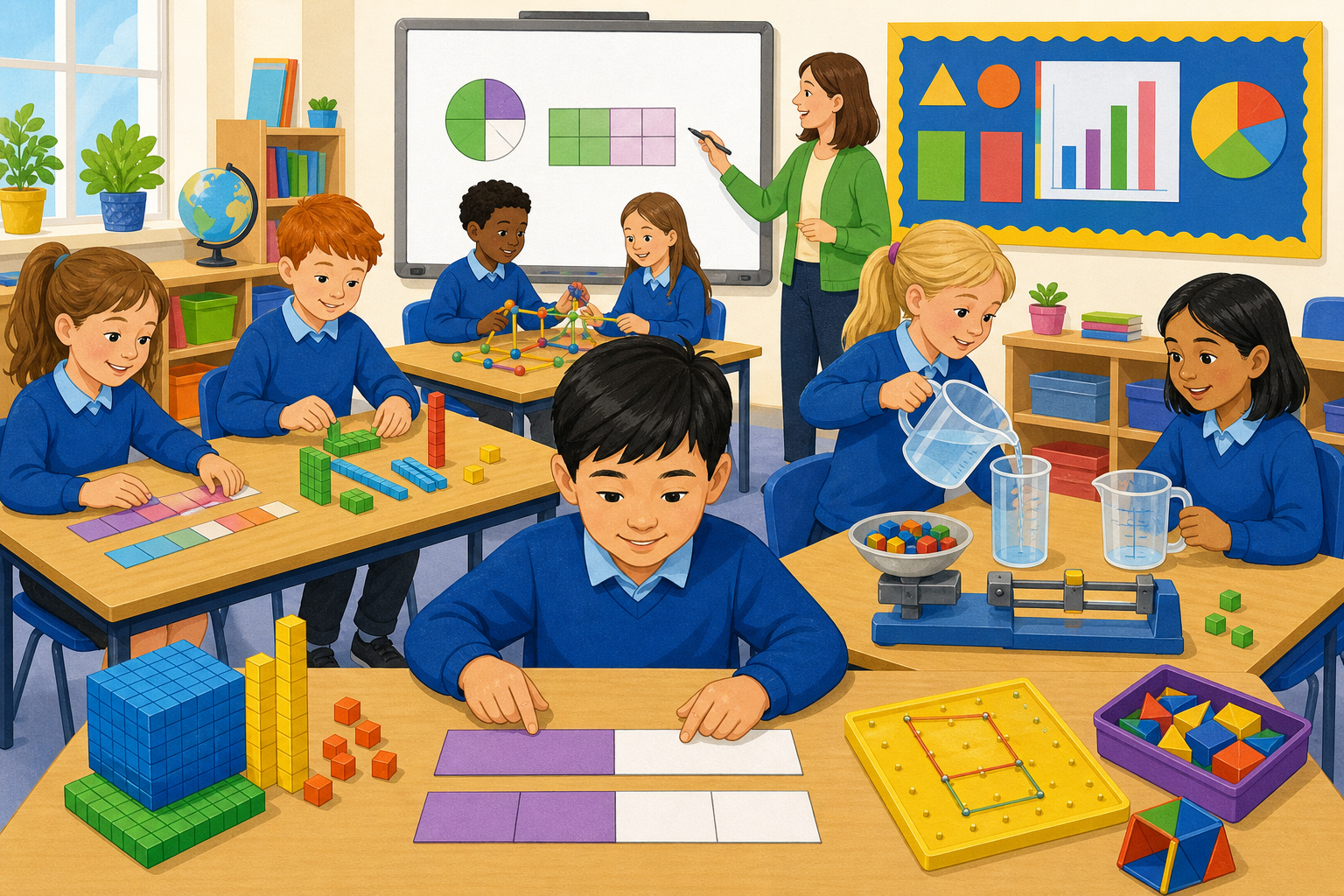
Here are two strips of exactly the same length. On the top strip I have shaded one half. On the bottom strip, which is cut into quarters, watch how far two quarters reaches. Hands up: what do you notice about the shaded parts on the two strips?
Give five seconds of quiet think-time before any hands go up. Take three hands-up answers, not open call-outs. Do not confirm yet — the reveal comes in Watch and Notice.
Each pair of fraction strips lines up on screen, one shaded above the other. Look along the right-hand edge of the shaded parts each time. Where do they stop?
1/2 = 2/4: finger down the right edge of both; they stop at the same place, so same amount, different name. Introduce the word equivalent here.
1/2 = 3/6: six parts against two, each sixth smaller. Three of them still reach the same far edge. More parts, smaller parts, same length is the load-bearing idea.
1/3 = 2/6: get a prediction before you reveal will two sixths reach as far as one third? Then show they line up exactly.
Don't move on until they can say back same length, different name.
Together we will find a match for one half. Below the shaded half are two blank strips, one cut into quarters and one into sixths. Predict first: how many quarters, and how many sixths, will reach the same far edge as one half? Then a pupil comes to the board and shades a strip until its far edge lines up exactly with the half.
This round is for talking it through together — a pupil shades at the board and the class agrees or corrects out loud.
Turn showComparison on so the ordering line confirms the match. Ask the pupil at the board: 'how do you know it lines up?' before checking. Watch for the misconception that more parts means more fraction — head it off by pointing at how small each part became.
In your maths copy, draw a one-half bar and a two-quarter bar of the same length, one under the other. Shade one half on the top bar and two quarters on the bottom bar. Check the shaded ends line up, then write "one half = two quarters" underneath.
Walk the room glancing that the two bars are the same length and the shaded ends line up — no marking, this is whole-class copybook practice.
Today we work through these matches together: first match one half, then match one third, then match two quarters, then match three sixths to an equal fraction. Each one uses more or fewer parts than the last, so predict where the far edge will land before we check.
A pupil comes up for each match, shades the strip, and checks; the class confirms before moving on. Keep the board work brisk rather than over-explaining.
The last two are trickier because the target has more parts to start with. Keep the 'do the shaded lengths match exactly?' question going on every one.
You're previewing this lesson. Get full access to this lesson and hundreds more — each one ready to teach, with interactive activities, printable resources and pupil progress tracking built in.