Mathematics
Intermediate
50 mins
Teacher/Student led
+65 XP
Teacher-led from the board. Pupils do not need a device, but can follow on one.

Estimating and Measuring the Area of Irregular Shapes
Estimate the area of irregular shapes by counting whole squares and pairing part-squares on a grid. Understand why this method gives an estimate rather than an exact measurement.
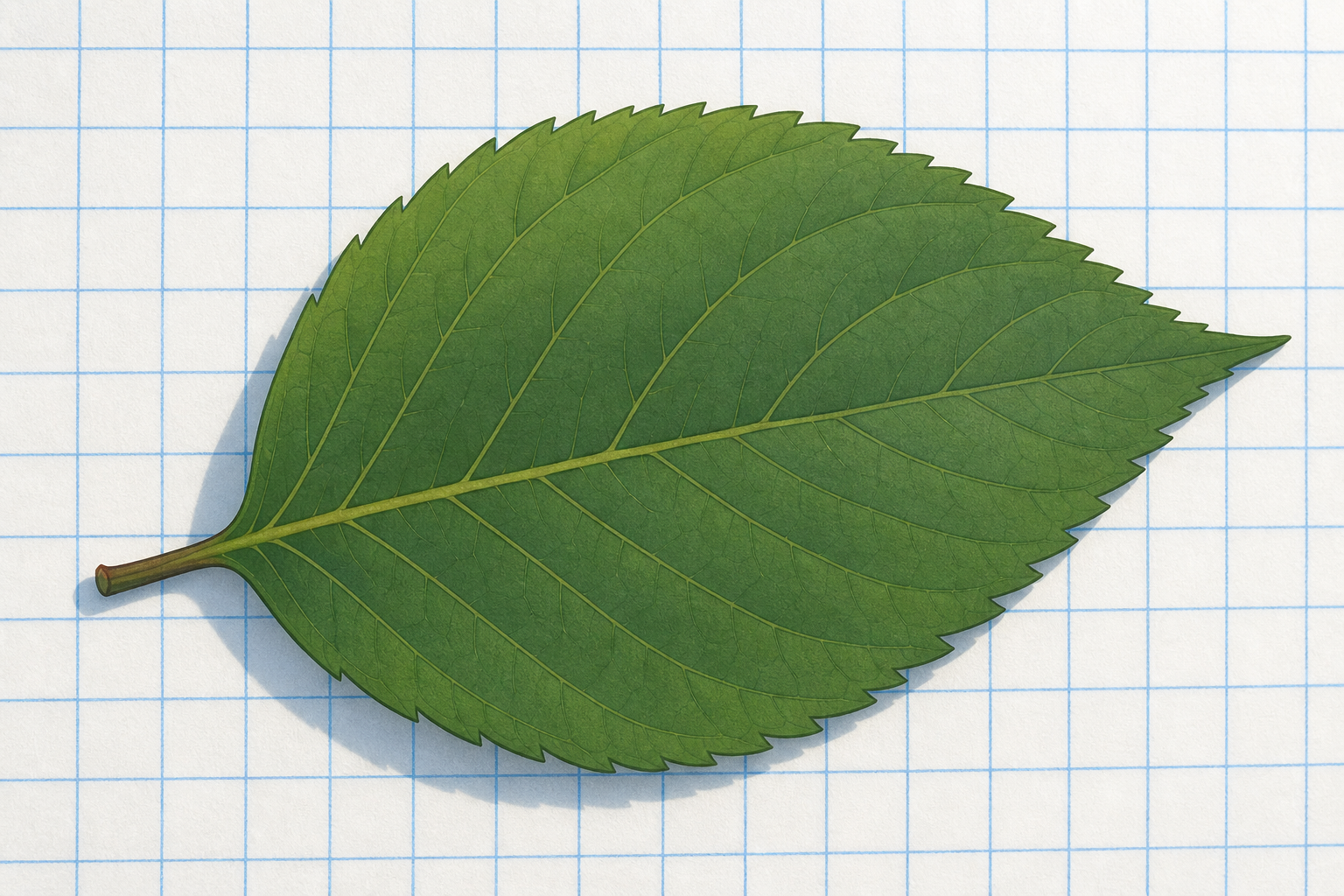 Look at the leaf on the grid of centimetre squares. Its edges curve in and out, with no straight sides at all.
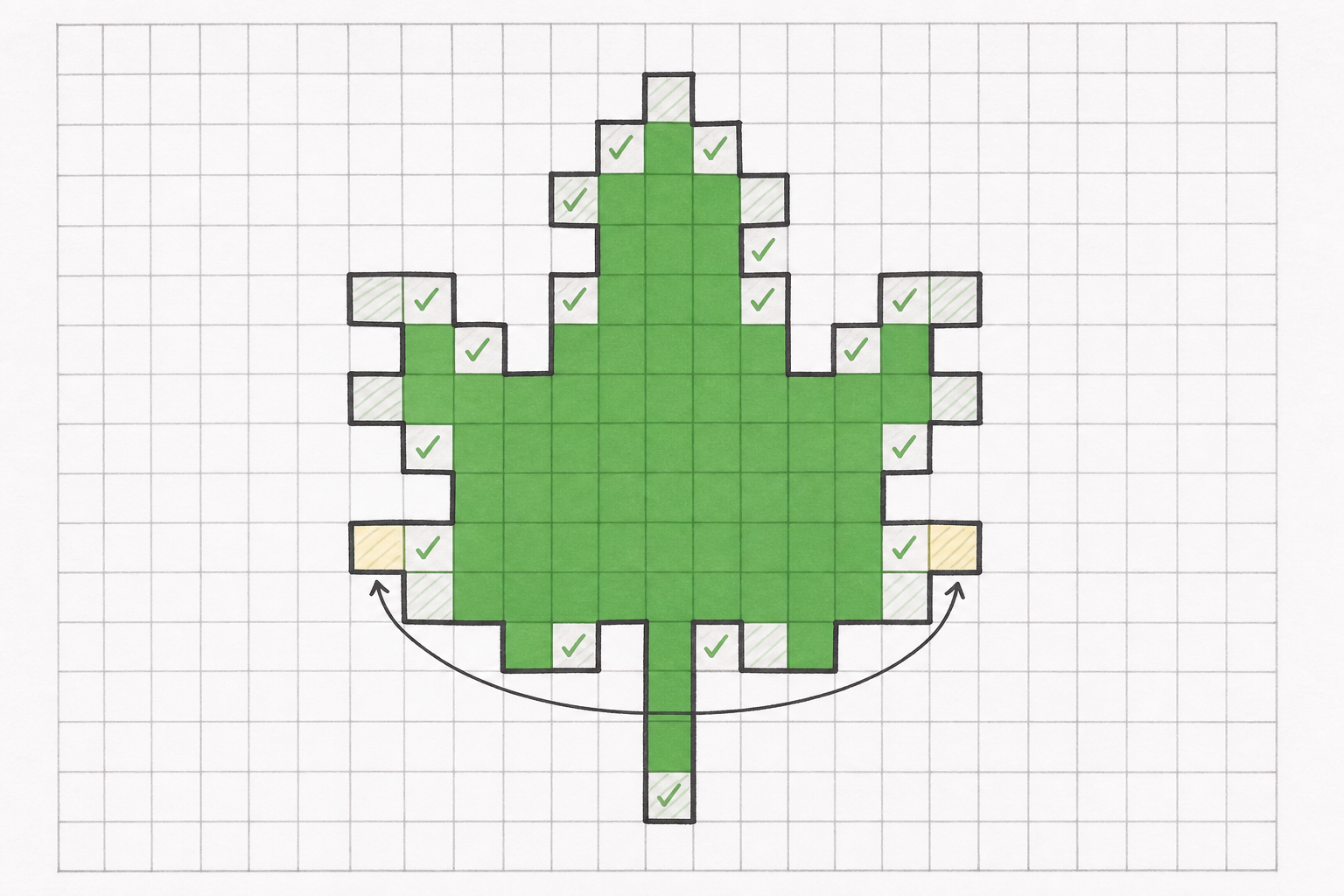 We have a leaf drawn on a grid of squares. First we will count the squares the leaf covers completely — the certain ones. Then we will look at the squares along the curved edge and work out which of those to count. Watch how we decide what to do with a part-covered square.