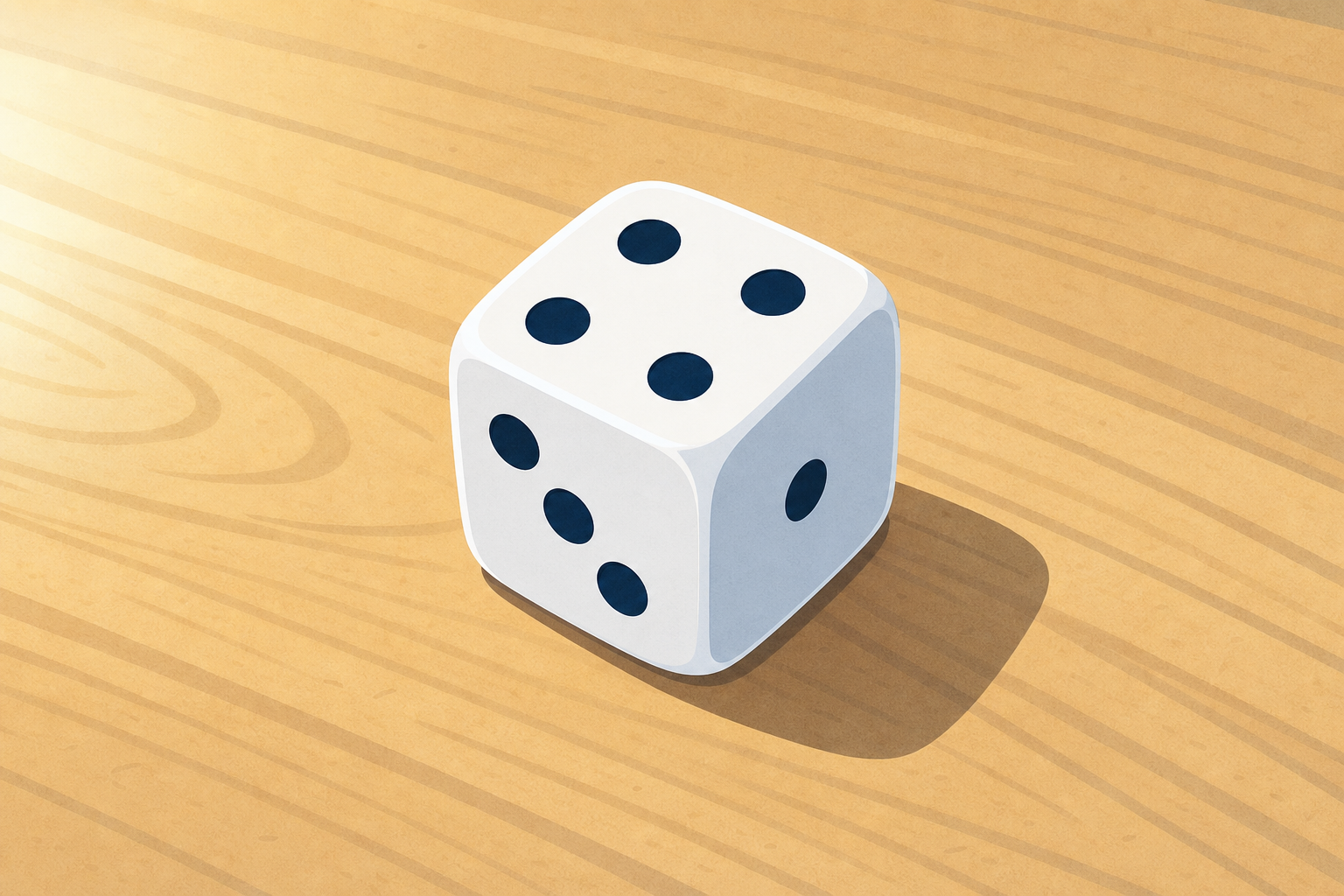
Here is a fair six-sided die. If we roll it 60 times, roughly how many sixes would you expect to see? And a bigger question: will you get exactly that number, every single time?
Theory says a six comes up 1 time in 6, so we predict 10 sixes in 60 rolls. A single roll is unpredictable, theory only tells us the pattern across many rolls, never the result of one throw. Hold that prediction ready. In the next step we roll live and watch the count settle.
Today we run the die live and record what happens. We'll roll in batches and watch the histogram build. First 20 rolls. Then on to 40. Then on to 60. Each time, we compare the tally of sixes against our predicted one-in-six. We say aloud whether the experimental fraction is getting closer to a sixth or still bouncing around.
In your maths copy, write your prediction for the number of sixes in 60 rolls, then record the experimental tally from the board. Now write the experimental probability two ways: as a fraction (sixes out of total rolls) and as a percentage. Underneath, write one line saying how close it came to the theoretical one sixth.
Today's review puzzle has five clues — cracking one unlocks the next. Each clue uses a different skill from this whole data and chance module. Work each clue in order; write every answer clearly before you move on.
One pupil records at the board while the class checks each answer before the next clue is revealed.
You're previewing this lesson. Get full access to this lesson and hundreds more — each one ready to teach, with interactive activities, printable resources and pupil progress tracking built in.