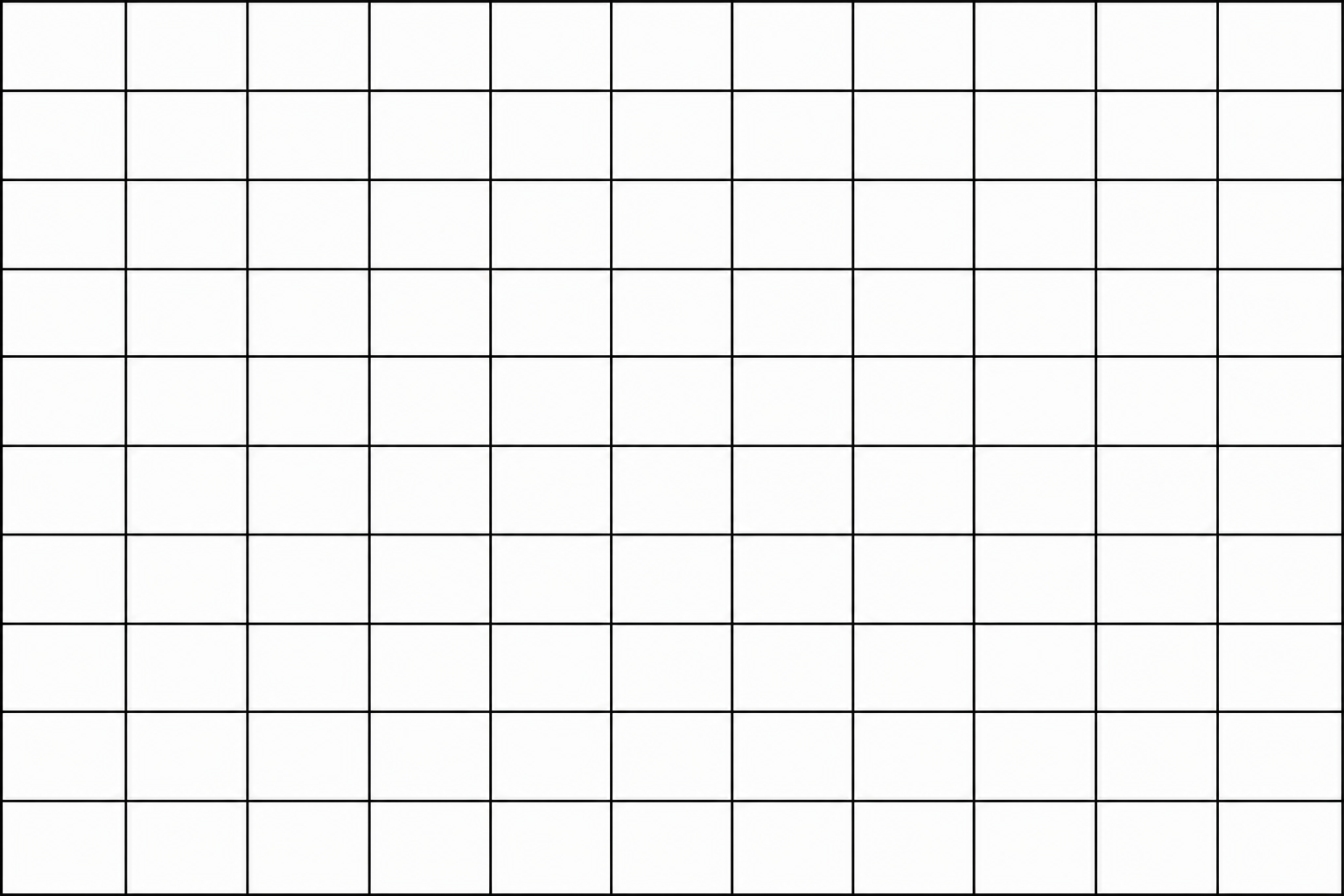
Look at this big square. It is split into a hundred tiny squares, and the whole square is one. If the whole square is one, what is just one of those tiny little squares worth? And how many of them do you think you'd need to shade to colour in the whole square?
Show the 10×10 grid as pupils settle. Take three hands-up answers, not open call-outs. Push gently on the whole square is one, not one hundred — that is the shift from the hundred-square they already know. Give five seconds of quiet think-time before any hands go up.
Four hundred-squares are shown below. On each one, notice how many squares are filled and where each digit lands after the point.
0.01: whole square is one, one tiny square is one hundredth; point to the 1 two places after the point.
0.25: 2 in the tenths place, 5 in the hundredths. Confirm a full row of ten is 0.10, then predict: five whole rows, half the square, what will that be? before revealing next.
0.50: five full rows, exactly half, matches the prediction.
0.07: the trap. Only 7 shaded; stress the zero holds the tenths place open so the 7 counts hundredths. Don't move on until they can say why the zero is there.
Today we shade these amounts together on the grid, in this order: 0.10 first (a full row of ten), then 0.03, then 0.40, and finally 0.62. Each time we'll say the decimal, count the shaded squares, and write it as a fraction over a hundred. The zeros are the ones that catch people out, so we'll say each one aloud before we check it.
This round is for talking it through together — pupils take turns at the board and the class agrees or corrects out loud.
Start with 0.10 and make the tenths-hundredths link explicit: a full row of ten hundredths is the same as one tenth. On 0.03 and 0.40 ask which place each digit sits in. 0.62 is the build: six rows plus two singles. Have the class read each as both a decimal and a fraction over a hundred before you accept it.
If board handovers run slow and time is short, drop 0.62 or run it as a quick teacher-led demo — protect the tenths–hundredths anchor on 0.10 and the zero-placement point on 0.03.
In your maths copy, shade 30 squares of a 100-grid. Then write it two ways underneath: as thirty hundredths, and as the decimal 0.30.
Walk the room glancing at how pupils shade — three full rows is the tidy way. Check they write both the fraction and 0.30 with the zero in the second place. This is whole-class copybook practice, not marking.
Support: for pupils who find the count hard, offer a copy-grid with one or two rows already shaded so they complete 30 and focus on writing the notation. Extension: ask stronger pupils to also shade an amount between 0.10 and 0.40 and explain their choice using tenths and hundredths.
Today we work through these targets on the grid, in order: shade 0.01, then 0.10, then 0.25, and finally 0.75. Each one is a step trickier than the last — a single square, then a full row, then a quarter of the whole, then three quarters. Predict how much of the square will be covered before each reveal.
These are the practice questions — pupils take turns at the board, check each answer, and the class confirms before moving on. Keep the board work brisk rather than over-explaining.
The build here goes single square → full row → quarter → three quarters. On 0.10 revoice the tenths link (ten hundredths = one tenth). On 0.25 and 0.75 ask the class to predict the fraction before the Check confirms. Watch for pupils reading 0.01 as 'one tenth' — point back to the second place.
Mixed abilities: hand the easier targets (0.01, 0.10) to less confident pupils and the quarters (0.25, 0.75) to those ready to stretch, and lean on whole-class confirmation after each Check so everyone reasons the answer aloud together.
You're previewing this lesson. Get full access to this lesson and hundreds more — each one ready to teach, with interactive activities, printable resources and pupil progress tracking built in.