Mathematics
Intermediate
50 mins
Teacher/Student led
+65 XP
Teacher-led from the board. Pupils do not need a device, but can follow on one.

Long Multiplication Strategies and Estimation
Learn to estimate products by rounding, then carry out long multiplication accurately. Use your estimate to spot place-value errors in your working.
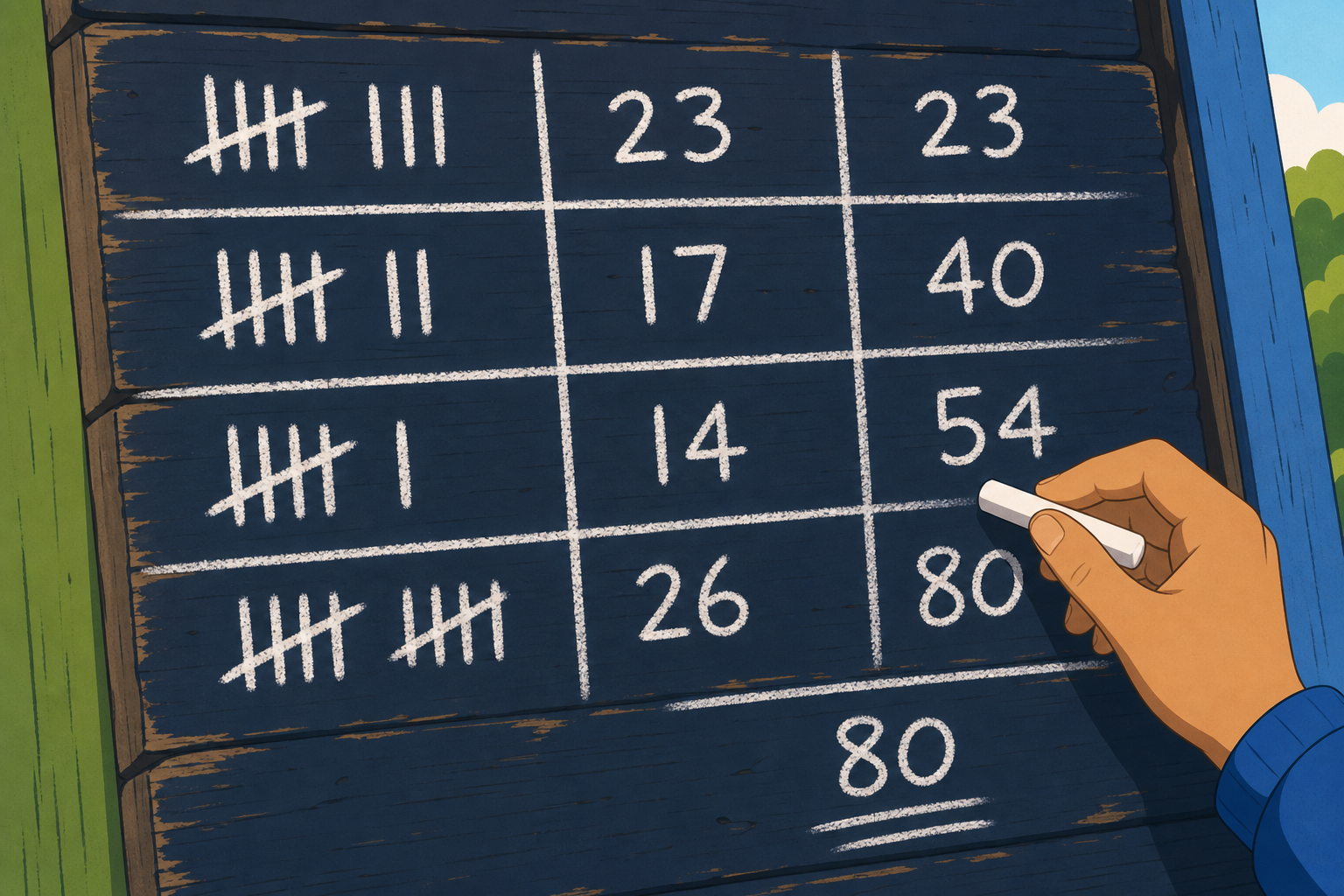 Here is a scoreboard sum someone worked out on the board: a club added up the points scored across a whole season of matches,
 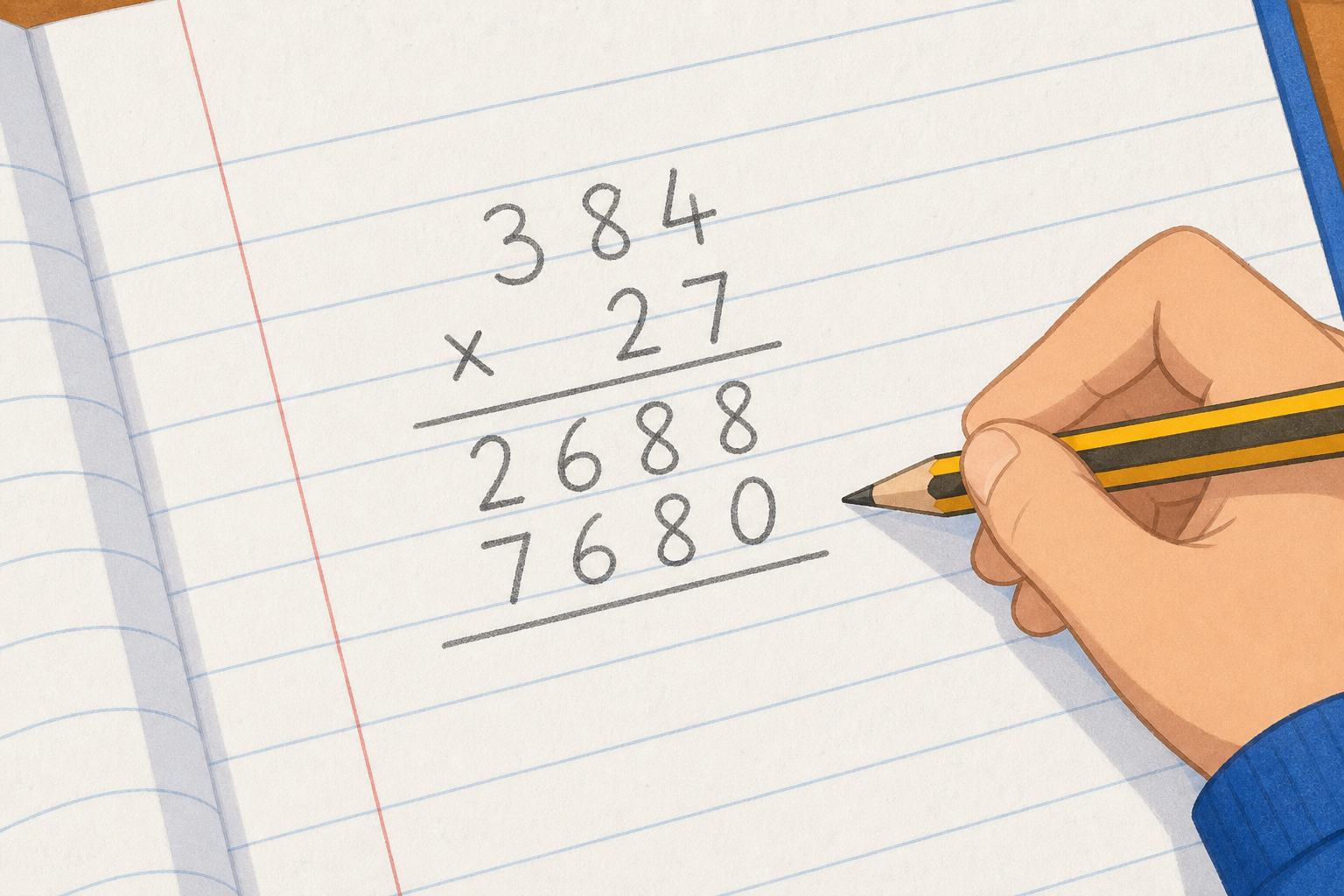 We will work three multiplications on the board, each in two parts: first a rounded estimate, then the real working row by row. Watch what happens to the second row each time, and keep an eye on where the real answer lands compared to the estimate.