Mathematics
Intermediate
40 mins
Teacher/Student led
+80 XP
What you need:
IWB/Projector/Large Screen

Mental Addition Strategies Within 100

Learn smart ways to add two numbers within 100: revisiting counting on, then adding partitioning into tens and units and using a near-double. Show each strategy as jumps on a number line and choose the fastest route for different pairs.
Teacher Class Feed

Load previous activity

    1 - Getting Started ~4 mins

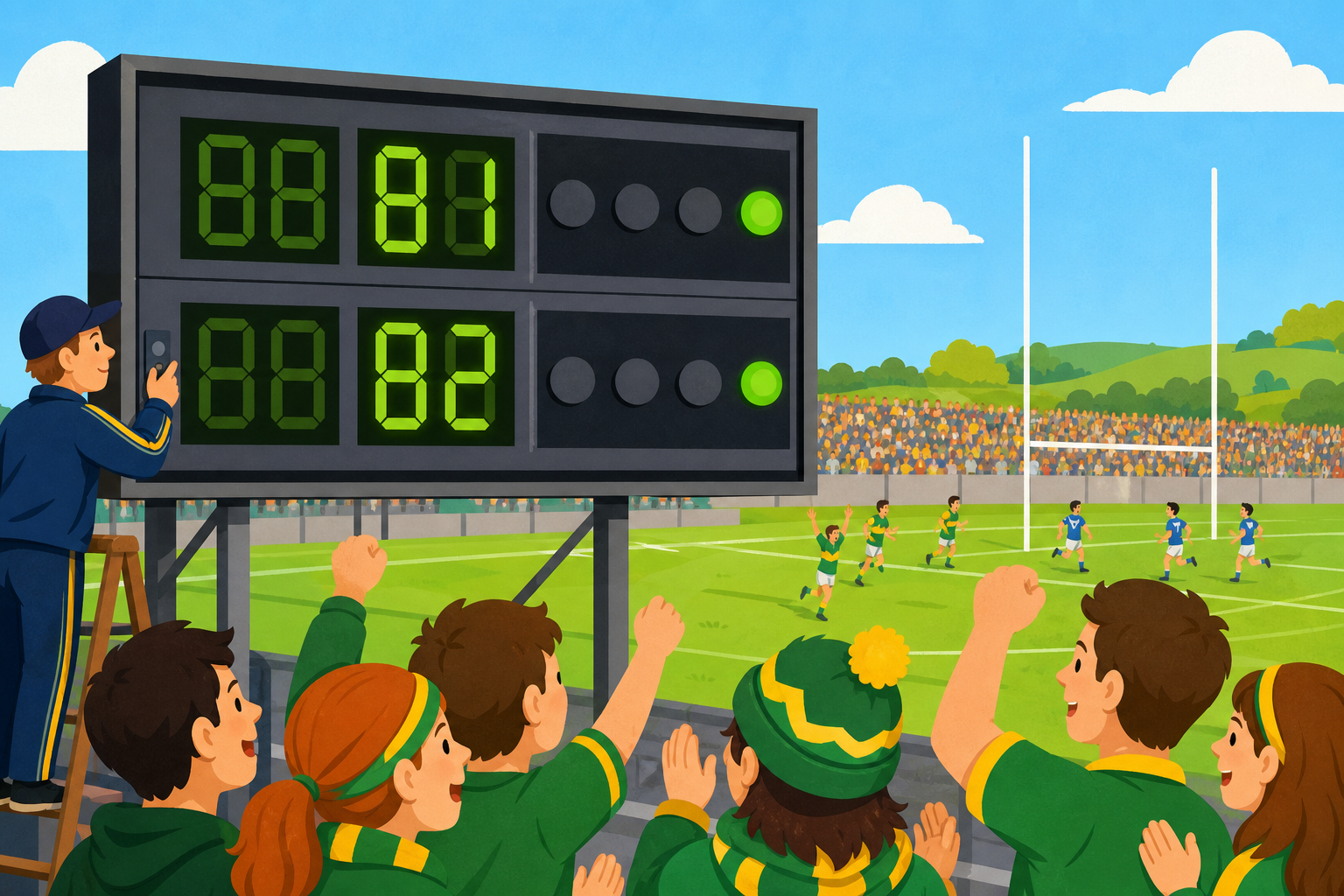
    Illustration for Getting StartedA team has 32 points and scores 9 more. Roughly, what is their new total? You already know how to count on in ones, so think about how you would get there. Would you count on nine ones from 32, or is there a faster route hiding in those numbers?

    Key point

    Counting on is our familiar route from before. Today we add two brand-new routes that can be even faster, and we pick the one that saves us the most steps.

    2 - Watch and Notice ~9 mins

    The number line will show four additions, each jumped a different way. Counting on is the route you already know, so watch how a big jump, partitioning and a near-double can be quicker. Before each jump is revealed, predict the landing number in your head.

    3 - Try It Together ~9 mins

    Today we work through these additions together on the number line: 33 + 8, 42 + 30, 26 + 27, and 23 + 24. One pupil works at the board for each addition while the rest of the class follows along and predicts the landing number before it is confirmed. For each one, we choose a route first, then draw the jumps to land on the total.

    Choose a route and jump

    4 - Show Your Strategy in Your Copy ~3 mins

    COPYBOOK MOMENT

    In your maths copy, show your strategy for these two additions. Beside each one, draw a quick jotting on a number line: a jump for counting on, a split for partitioning, or a near-double if the numbers are close.

    • 33 + 8
    • 26 + 27

    5 - Class Challenge ~8 mins

    A scoreboard is adding up totals: 43 + 6, 38 + 20, 27 + 28, and 49 + 49. We work through these together at the board. For each one, choose the route that saves the most steps, then draw the jumps and check.

    Add it with the smartest route

    6 - What Did We Notice? ~2 mins

    MATHS TALK

    When does counting on in ones become the slow way, and a partition or a near-double the smart way? For which of today's additions would counting on in ones be the slow way?

    Now look at a new pair: 36 + 28. Are these two close numbers? No, so a near-double is not the smart route. The second number has tens and units, so we partition: jump 20 from 36 to 56, then jump 8 to land on 64. Compare that with today's near-doubles like 27 + 28, where the numbers sit side by side.

    So: a big tidy number wants one jump; two close numbers want a near-double; tens and units that are not close want a partition.

    7 - What's Next ~3 mins

    What we learned today

    • Good adders pick a smart route: count on, partition into tens and units, or lean on a near-double.
    • The jumps on a number line show the route clearly.
    • Big tidy numbers want one jump; two close numbers want a near-double.
    Coming up

    Next we turn this thinking around and look at smart ways to subtract within 100: counting back, and counting up to find the gap.

    Pupil practice
    Module 2 · The Four Operations: Mental and Written Number
    Lesson 13 · Mental Addition Strategies Within 100
    Download Activity Book page (PDF)
    End of lesson
    123learn · Online learning platform

    Unlock the full learning experience

    You're previewing this lesson. Get full access to this lesson and hundreds more — each one ready to teach, with interactive activities, printable resources and pupil progress tracking built in.

    Hundreds of curriculum-aligned lessons
    Interactive activities in every lesson
    Printable resources & progress tracking
    Copyright Notice
    This lesson is copyright of Coding Ireland 2017 - 2025. Unauthorised use, copying or distribution is not allowed.
    🍪 Our website uses cookies to make your browsing experience better. By using our website you agree to our use of cookies. Learn more
