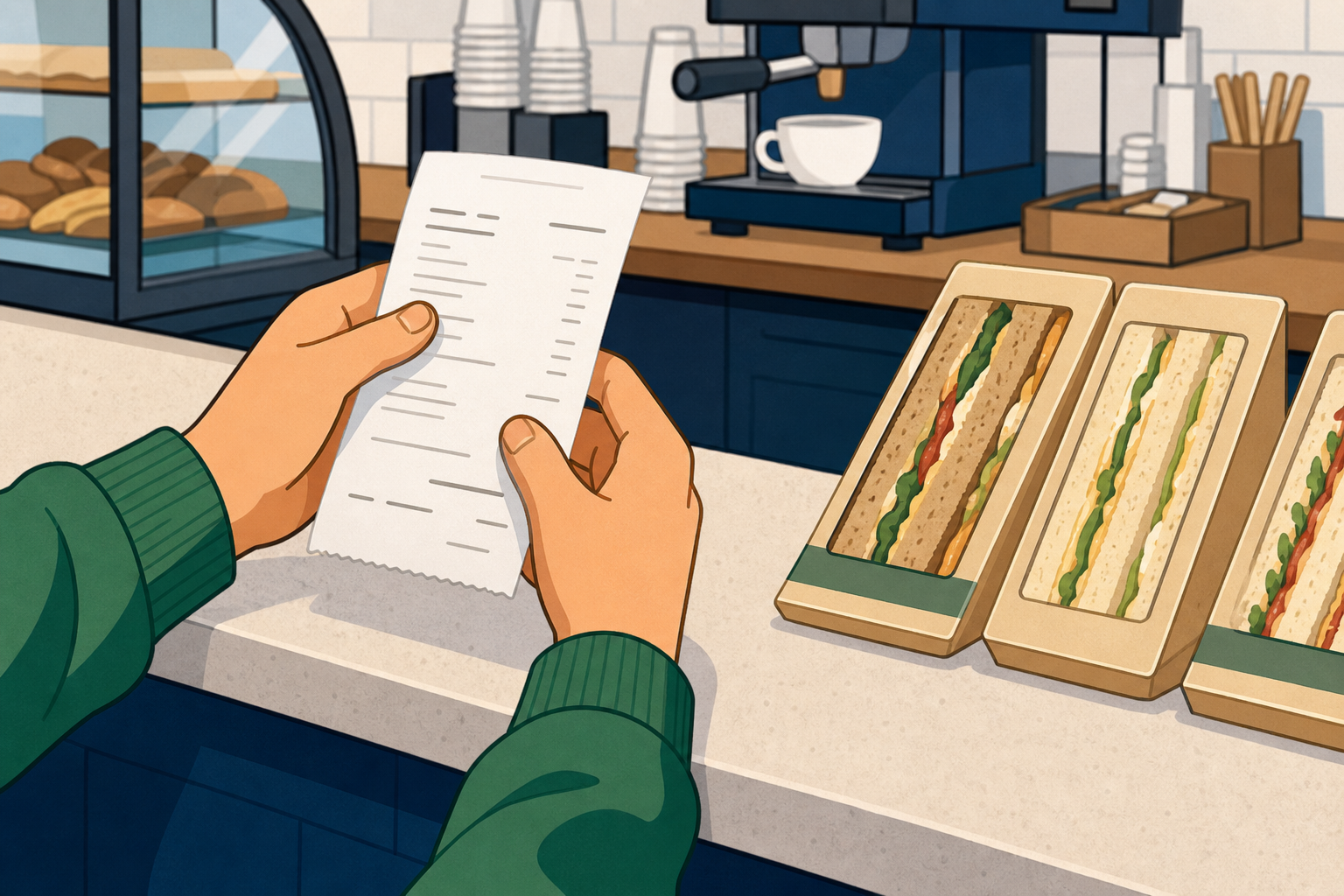
Here is a real shopping moment: you buy 4 sandwiches at €3 each, then you split the bill evenly between 2 people. Before we work anything out, hands up: which calculation would you do first, and which one comes second?
We will work through three money problems together, each built in stages on the board. Watch for the signal words that tell us which operation each step needs, and make a rough estimate before every answer is revealed. Predict each result before you see it.
The zeros and the cent columns catch people out, so let's say every step aloud before we check it, and make a rough estimate first each time.
Today we'll work through three problems together, planning the steps out loud before we calculate. First, eight pencils cost sixty cent each, and the total is shared between four friends. Next, five stickers cost €1.40 each, so how much change from €10? Last comes our trip problem: a €120 bus plus €6 entry for each of thirty pupils, so what does the trip cost each pupil?
Plan the steps for each shopping and trip problem, name the operation for each step, then work it out.
Ways to start:
Stretch:
In your maths copy (or on your plan-then-solve sheet), for each problem write the steps as a short plan (Step 1: …, Step 2: …) with the operation named, sketch a bar to show what each step produces, then show the working and box the final answer.
Each clue is its own mini-problem, and its answer feeds the next clue. We work through them in this order: Clue 1 is a single operation, Clue 2 needs two steps, and Clue 3 needs three steps to reveal the final amount. The mystery answer only appears when every clue is solved in order.
Solve each clue in order — each answer unlocks the next — to reveal the final amount spent at the school shop.
Ways to start:
Stretch:
You're previewing this lesson. Get full access to this lesson and hundreds more — each one ready to teach, with interactive activities, printable resources and pupil progress tracking built in.