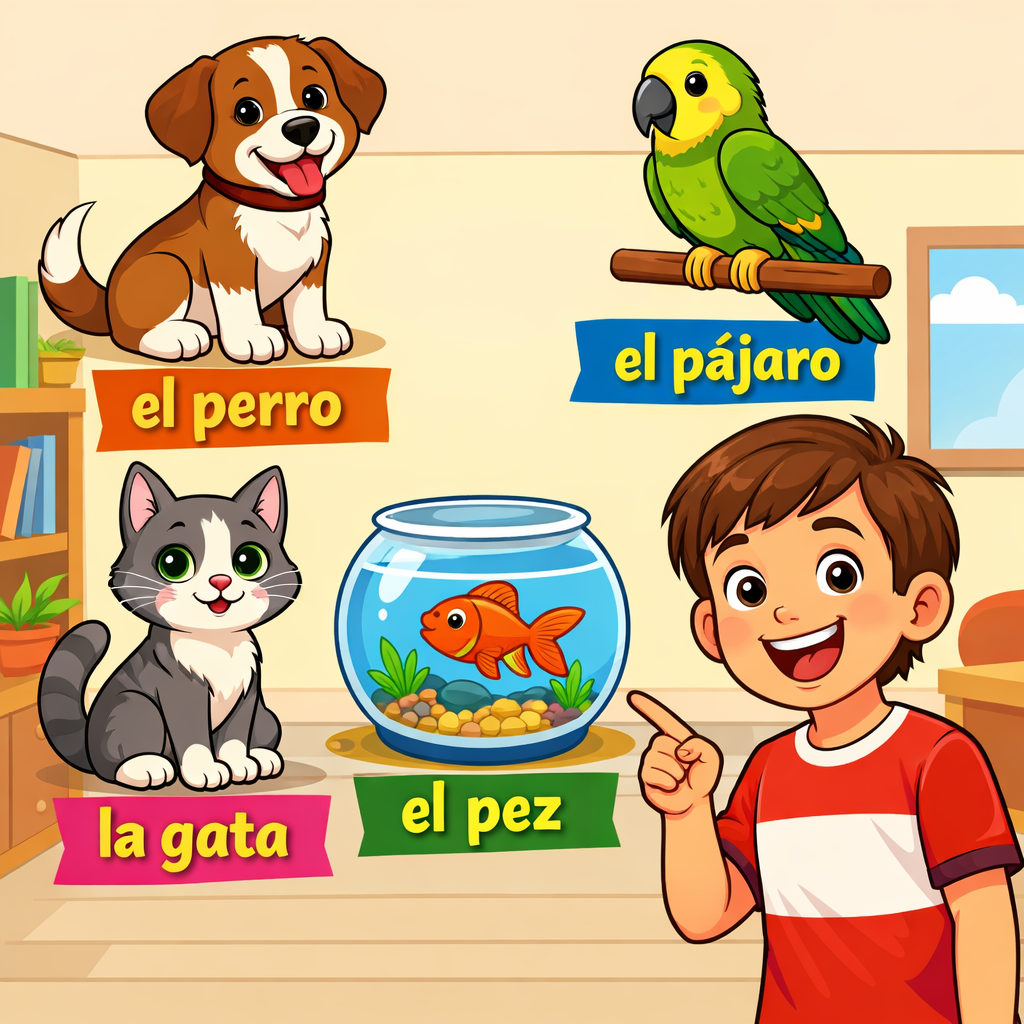
 Do you have a pet at home? Maybe a dog that loves chasing balls, a cat that sleeps all day, or a fish swimming in a tank? Today we're learning how to name all these pets in Spanish!
In Spain, people love their pets just like we do in Ireland. You'll hear dogs barking 'guau guau' and cats saying 'miau' - slightly different from English sounds!
By the end of this lesson, you will be able to:
- Name 8 popular pets in Spanish
- Spot which pets are 'el' (masculine) and which are 'la' (feminine)
- Recognise pets when you hear their Spanish names
Here are 8 popular pets and how the Spanish call them. Notice most use 'el' (el) because they're masculine, but watch for the one feminine pet! Click each word to hear the correct Spanish pronunciation.
How to Use This Activity:
Option 1: Digital Reference (Interactive)
- Display the Word Table on the whiteboard or let students access on their devices.
- Click/tap words to hear pronunciation - great for listening and speaking practice.
- Go through each word together, practising pronunciation as a class.
Option 2: Printed Reference Sheet
Download Vocabulary Sheet (PDF)
- Print the vocabulary reference sheet for students to keep as a study aid.
- Great for homework, revision, or as a take-home reference.
- Students can use it alongside the interactive activity.
 See the English pet name first and try saying the Spanish before flipping the card! This is perfect for testing your memory of today's new pets.
How to Use This Activity:
Option 1: Students on Devices
- Students complete the Flashcards activity on their own laptop or tablet.
- Great for self-paced vocabulary drilling. Students can flip cards and repeat until confident.
- Walk around the room to monitor progress and assist students who need help.
Option 2: Teacher-Led (Whiteboard/Projector)
- Display the activity on your interactive whiteboard or projector.
- Click to flip cards and have the class say the word together. Use choral repetition for pronunciation practice.
- Invite students up to interact with the board, or have them call out answers from their desks.
 Listen carefully to short conversations about pets and answer the questions. This helps you recognise the Spanish pet names when you hear them spoken naturally!
How to Use This Activity:
Option 1: Students on Devices
- Students complete the Listen & Answer activity on their own laptop or tablet.
- Students listen to audio and answer comprehension questions. They can replay audio as needed.
- Walk around the room to monitor progress and assist students who need help.
Option 2: Teacher-Led (Whiteboard/Projector)
- Display the activity on your interactive whiteboard or projector.
- Play audio to the whole class, then discuss answers together. Replay tricky sections.
- Invite students up to interact with the board, or have them call out answers from their desks.
 Drag each pet into the correct column: 'El' for masculine pets or 'La' for feminine pets. Can you remember which pets belong where?
How to Use This Activity:
Option 1: Students on Devices
- Students complete the Gender Sorting activity on their own laptop or tablet.
- Students drag words into the correct gender category. Helps reinforce article patterns.
- Walk around the room to monitor progress and assist students who need help.
Option 2: Teacher-Led (Whiteboard/Projector)
- Display the activity on your interactive whiteboard or projector.
- Ask students to explain WHY they think a word is masculine/feminine before revealing the answer.
- Invite students up to interact with the board, or have them call out answers from their desks.
Unlock the full learning experience
You're previewing this lesson. Get full access to this lesson and hundreds more — each one ready to teach, with interactive activities, printable resources and pupil progress tracking built in.
This lesson is copyright of Coding Ireland 2017 - 2025. Unauthorised use, copying or distribution is not allowed.