Mathematics
Advanced
50 mins
Teacher/Student led
+90 XP
What you need:
IWB/Projector/Large Screen

Ratio and Proportion Problem-solving

Choose between sharing, the unitary method and scaling to solve multi-step ratio and proportion problems. Work through a five-clue mystery where each answer unlocks the next step.
Teacher Class Feed

Load previous activity

    1 - Getting Started ~4 mins

    Illustration for Getting Started

    Key point

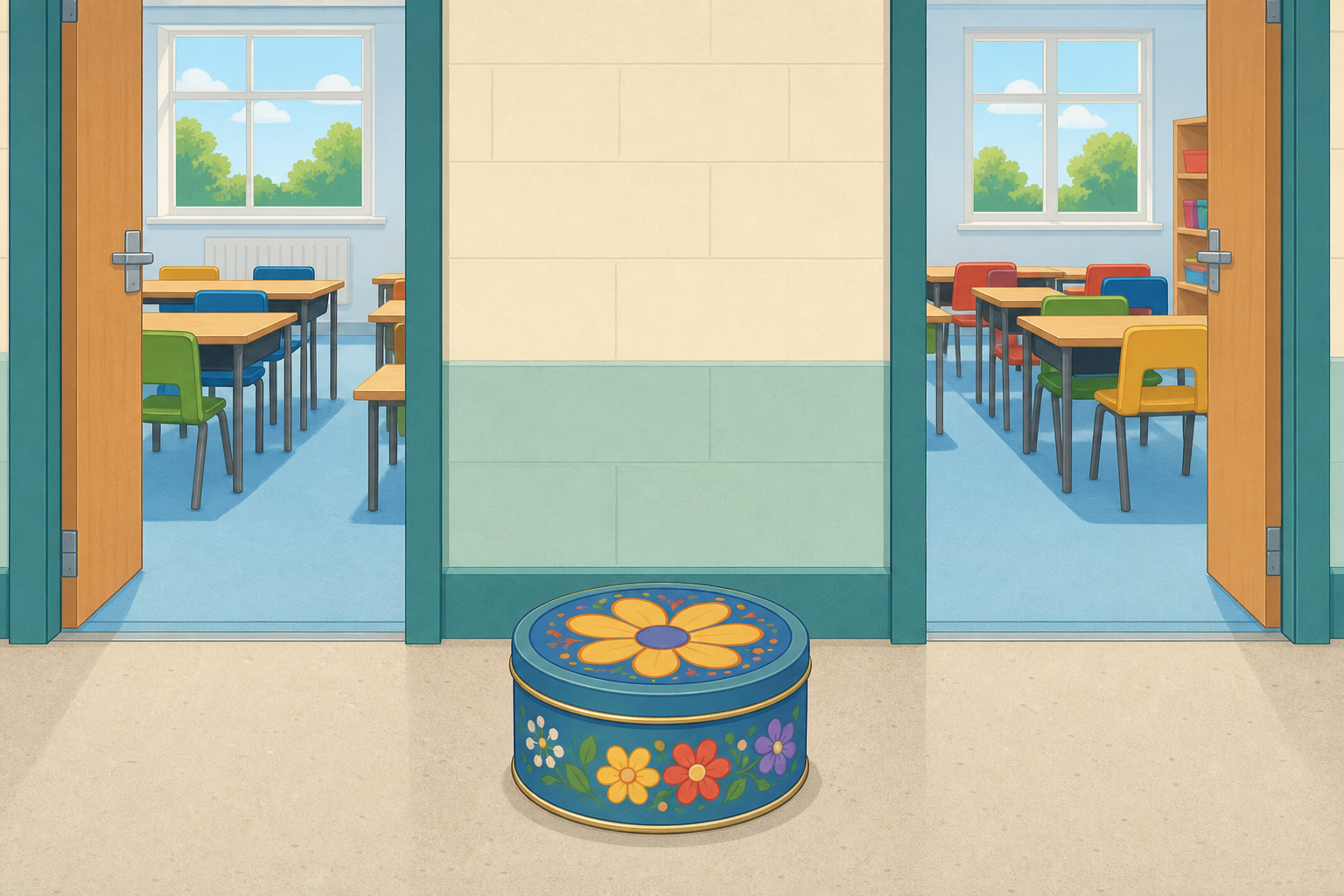
    Here is a puzzle: 36 cookies are shared between two classes in the ratio 4:5. What is the very first thing you would work out before you can share a single cookie?

    2 - Watch and Notice ~9 mins

    Three tools solve ratio and proportion problems, and the real skill is picking the right one: sharing when a total is split by a ratio, the unitary method when you find what one is worth then multiply up, and scaling when everything grows by the same factor. Read the question first, decide which kind it is, then choose the tool. We will watch two worked on the ratio bars — look at how each one is cut up before anything is worked out.

    3 - Try It Together ~10 mins

    Let's work this one together in two clear steps, and we will say out loud which method we are using before each step.

    Worked example

    Step 1: A smoothie recipe for 3 people uses 5 strawberries. We want enough for 9 people. How many strawberries do we need?

    Step 2: Now we take those strawberries we just worked out and share them between this smoothie and a second recipe in the ratio 2:3. How many strawberries go to each recipe?

    Scale to 15, then share 15 in the ratio 2:3

    4 - Note Your Method in Your Copy ~2 mins

    COPYBOOK MOMENT

    In your maths copy, for each problem write the method you chose at the top (sharing, the unitary method, or scaling), then your working line by line. Box the final answer.

    Worked example

    8 identical notebooks cost €12. How much do 5 notebooks cost?

    Name the method first, then write the working step by step underneath. Box the final answer when you finish.

    5 - Class Challenge ~11 mins

    Key point

    Today we crack a five-clue mystery. Each clue is a ratio, proportion or scaling problem, and every answer feeds straight into the next clue. The clues get harder as we go: clue 1 is a straight share, clue 5 needs two methods in one. Solve clue 1 to unlock clue 2.

    We crack clue 1 together first so everyone sees how the chain works. Then pupils take turns at the board for clues 2 to 5. Before each clue, name the method out loud (sharing, unitary, or scaling).

    Clue 1 (worked together)

    36 is shared between Ana and Ben in the ratio 5:7. How much money does Ana get?

    Method: sharing. Add the parts: 5 + 7 = 12 parts. One part is €36 ÷ 12 = €3. Ana's share is 5 × €3 = €15.

    Write €15 at the top of the chain. That number unlocks clue 2.

    Clue 2

    Ana spends her €15 on buns. 5 buns cost €2.50. How many buns does she get with €15?

    Clue 3

    Those buns would feed 6 people. How many buns are needed to feed 9 people at the same rate?

    Clue 4

    Share that new total of buns between girls and boys in the ratio 2:3. How many buns do the girls get?

    Clue 5 (two methods)

    The girls use their buns for a party. A tasting tray of 6 buns served 8 guests. First scale up to find how many times bigger their bun total is than 6, then use that factor to find how many guests they can feed. How many party guests?

    Keep the running chain on the board: each answer unlocks the next clue. No numbers come from outside the chain.

    1. Clue 1 (sharing): A €20 prize is shared between two friends in the ratio 3:1. How much does the friend with the larger share get?
    2. Clue 2 (the unitary method): One bun costs 50c. Your budget is your answer from clue 1. How many buns can you buy? (Find how many buns one euro buys, then multiply up.)
    3. Clue 3 (scaling): Your buns from clue 2 are a recipe that feeds 6 people. You now want to feed 9 people. 9 is one and a half times 6, so scale your number of buns up by the same factor. How many buns do you need?
    4. Clue 4 (sharing): Share your buns from clue 3 between the boys' table and the girls' table in the ratio 3:2. How many buns go to the girls' table? (Five parts in all, so find what one part is worth first.)
    5. Clue 5 (scaling then the unitary method): The party is 4 times bigger than the girls' table, so scale the girls' buns from clue 4 up by 4 to find the total for the whole party. Every guest eats exactly 3 buns. How many guests are at the party? (Use the unitary method.)
    Answers & strategies (teacher)
    1. Clue 1 (sharing): A €20 prize is shared between two friends in the ratio 3:1. How much does the friend with the larger share get? — €15
    2. Clue 2 (the unitary method): One bun costs 50c. Your budget is your answer from clue 1. How many buns can you buy? (Find how many buns one euro buys, then multiply up.) — 30 buns
    3. Clue 3 (scaling): Your buns from clue 2 are a recipe that feeds 6 people. You now want to feed 9 people. 9 is one and a half times 6, so scale your number of buns up by the same factor. How many buns do you need? — 45 buns
    4. Clue 4 (sharing): Share your buns from clue 3 between the boys' table and the girls' table in the ratio 3:2. How many buns go to the girls' table? (Five parts in all, so find what one part is worth first.) — 18 buns
    5. Clue 5 (scaling then the unitary method): The party is 4 times bigger than the girls' table, so scale the girls' buns from clue 4 up by 4 to find the total for the whole party. Every guest eats exactly 3 buns. How many guests are at the party? (Use the unitary method.) — 72 buns ÷ 3 buns each = 24 party guests
    Pupil practice
    Module 4 · Ratio and Proportion Measures
    Lesson 46 · Ratio and Proportion Problem-solving
    Download Activity Book page (PDF)
    123learn · Online learning platform

    Unlock the full learning experience

    You're previewing this lesson. Get full access to this lesson and hundreds more — each one ready to teach, with interactive activities, printable resources and pupil progress tracking built in.

    Hundreds of curriculum-aligned lessons
    Interactive activities in every lesson
    Printable resources & progress tracking
    Copyright Notice
    This lesson is copyright of Coding Ireland 2017 - 2025. Unauthorised use, copying or distribution is not allowed.
    🍪 Our website uses cookies to make your browsing experience better. By using our website you agree to our use of cookies. Learn more
