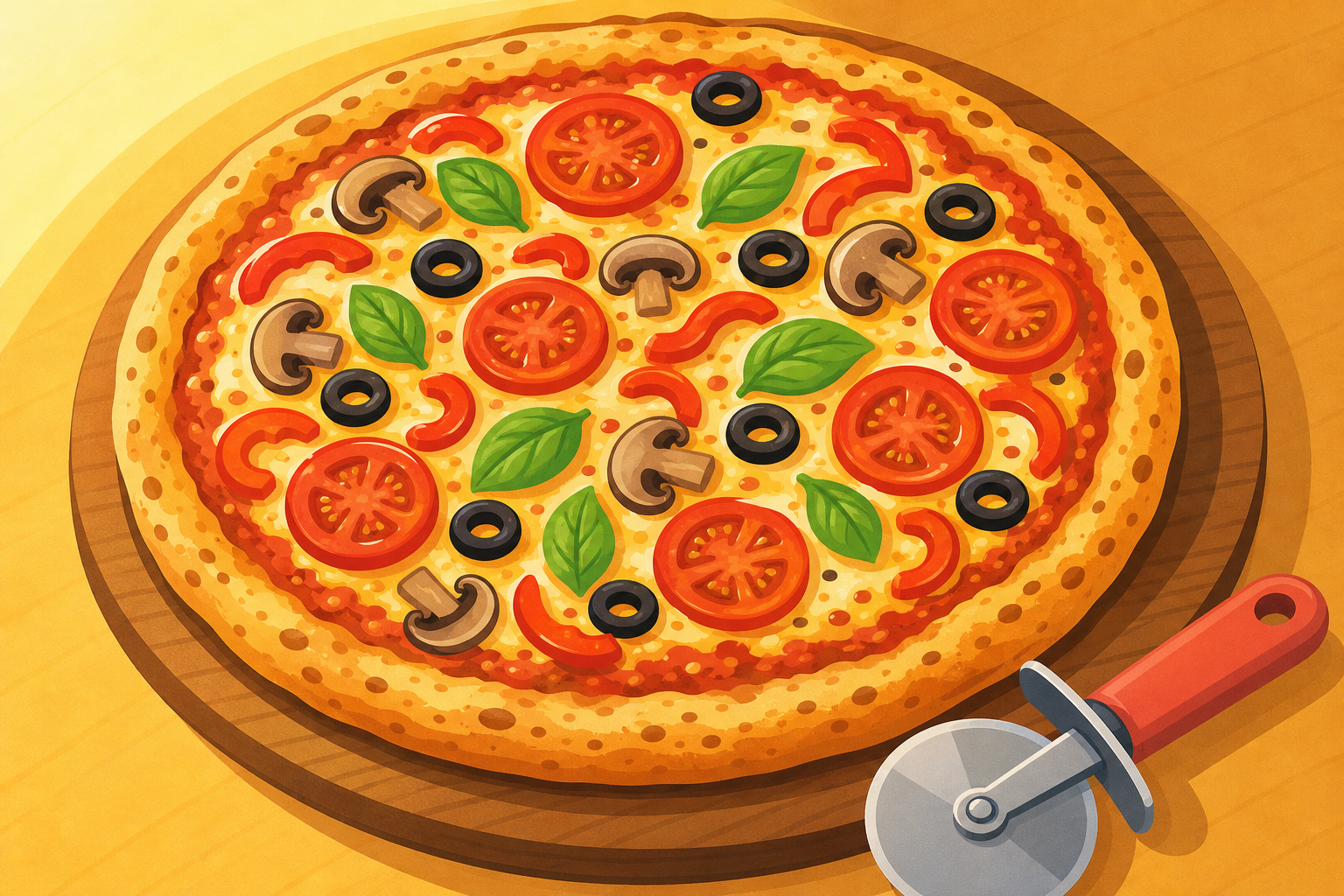
Imagine we have one big pizza to share between two people for lunch. How would we cut it so that it is fair, and both people get exactly the same amount? Hands up: where would you make the cut, and how do you know both pieces would be the same size?
Look at each pizza already cut into equal pieces with one piece shaded. Look at how many pieces the whole is cut into each time, and notice the size of the shaded piece.
Let's try this together. I'll call out a number, and one pupil at the board will cut the pizza into that many equal pieces, shade one piece, and tell us its name. We'll do a half, a quarter and a third. Everyone else: watch carefully and be ready to agree or disagree on whether all the pieces are really the same size.
In your maths copy, draw three circles. Cut one into halves, one into quarters and one into thirds. Shade one part of each circle and write its name underneath each one.
Today we work through these together on the board: show one half, then one quarter, then one third, then three quarters. So far we have shaded one piece each time. For three quarters, we shade three of the four equal pieces, because the top number tells us how many equal pieces to shade.
Each time, check that all your pieces are the same size before you decide it is right.
If we cut a pizza into four equal pieces instead of two, why does each piece get smaller? Talk it through with the class.
Next we will look at the same fractions in other shapes, in lengths and in sets of things, so you can find one half of a chocolate bar and one half of a group of counters too.
You're previewing this lesson. Get full access to this lesson and hundreds more — each one ready to teach, with interactive activities, printable resources and pupil progress tracking built in.