Secondary Junior Cycle
Digital Media Literacy Short Course

A Junior Cycle Digital Media Literacy Short Course covering online rights and responsibilities, evaluating sources and algorithms, spotting misinformation and deepfakes.

  • Mapped to the NCCA curriculum

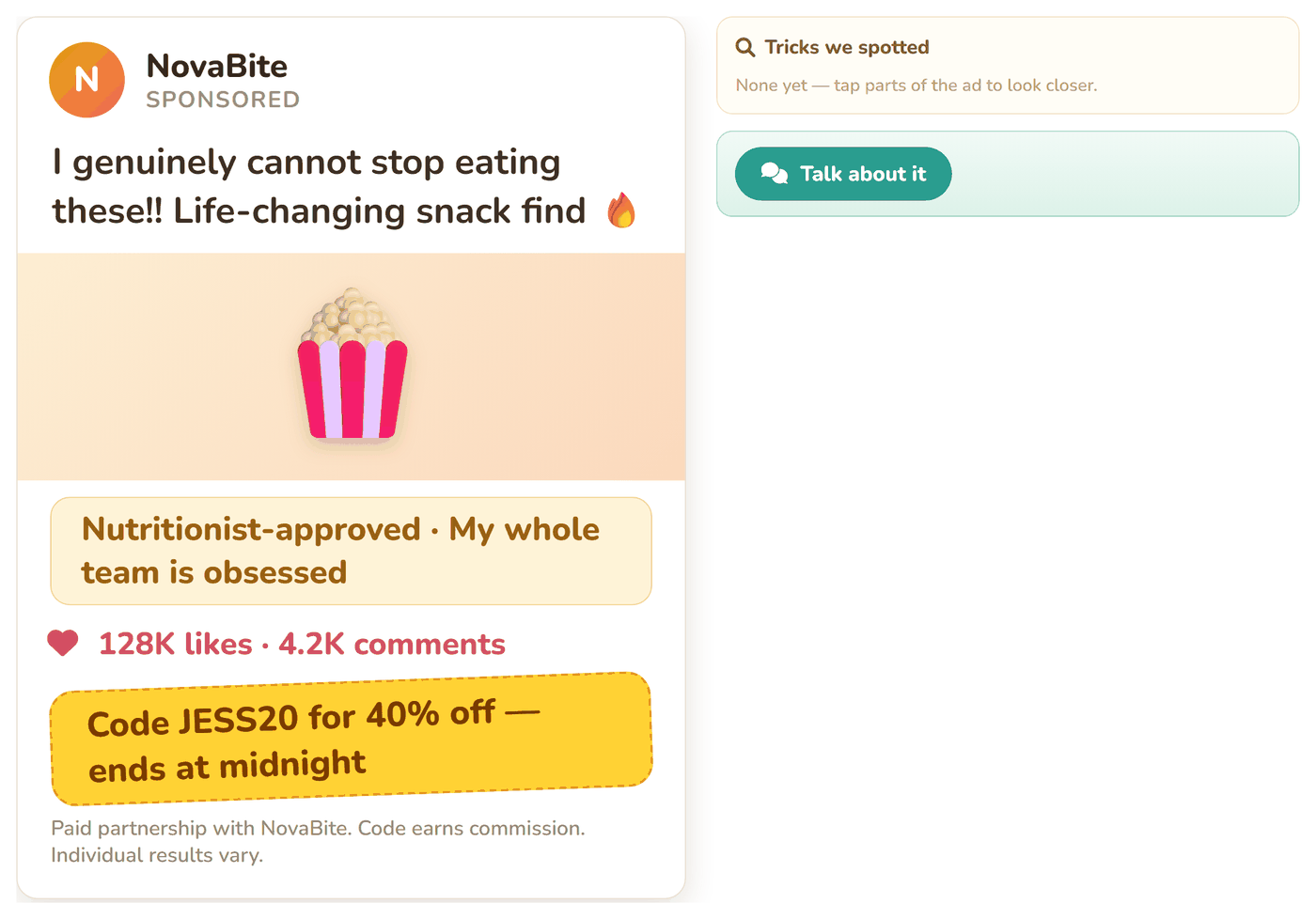
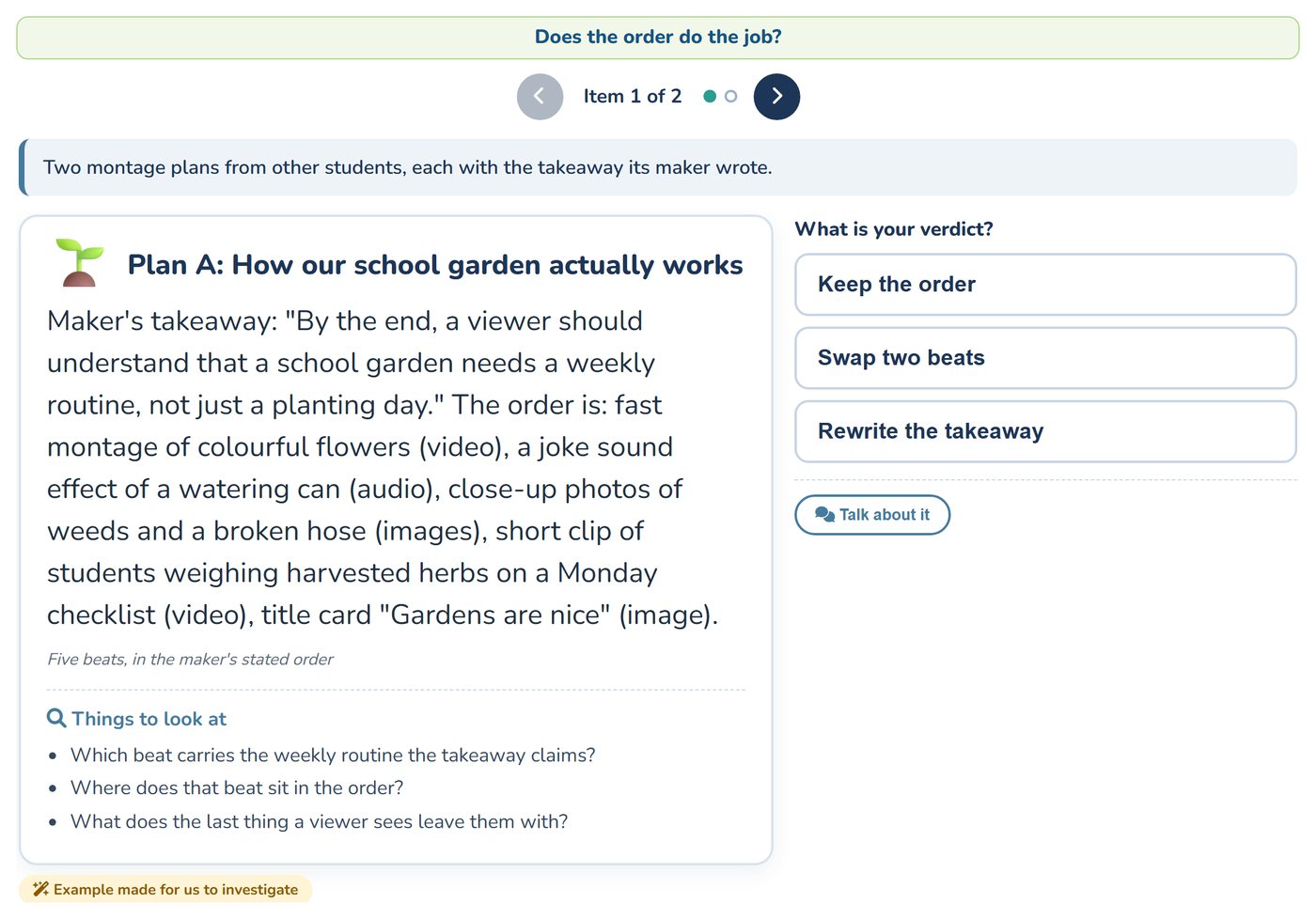
The whole first lesson, as your class sees it. No sign-in needed.

On the board, and on their devices
Be the algorithm: rank the feed
Spotting the tricks in an ad
Does the order do the job?

The same lesson opens on each student's own device, to follow in class and finish at home.

What your school gets

Everything a teacher needs to teach Digital Media Literacy Short Course this year.

In class

  • 74 lessons, ready to teach Each one planned step by step, taught from the board with the same lesson open on each student's device. 17 interactive activities across the course.
  • Quizzes and assessments A short quiz with every lesson and 4 module assessments.
  • Progress and resultsWhat each student has completed, and how they did.
  • CertificatesFor portfolios, open days and reports home.
  • Try the first lesson: Welcome: Your Digital Life Online

On paper

  • Teacher Resource BookThe whole course laid out for the teacher, lesson by lesson, ready to print.
    The sample lesson's pages

The whole books come with the course, in each class's Resources.

The curriculum it covers

Every lesson is mapped to the specification. This course teaches 33 of the 33 outcomes for this class.

Understanding myself when engaging online 7 of 7 outcomes
Evaluating online content 7 of 7 outcomes
Following my interests online 10 of 10 outcomes
Publishing online 9 of 9 outcomes
See every outcome
Curriculum Area
Outcomes
Understanding myself when engaging online
1.1 1.2 1.3 1.4 1.5 1.6 1.7
Evaluating online content
2.1 2.2 2.3 2.4 2.5 2.6 2.7
Following my interests online
3.1 3.2 3.3 3.4 3.5 3.6 3.7 3.8 3.9 3.10
Publishing online
4.1 4.2 4.3 4.4 4.5 4.6 4.7 4.8 4.9

Tap any outcome to read it. The coloured ones are taught in this course. The curriculum does not include official reference codes for individual learning outcomes, so we have assigned a code scheme to make it easier to identify and track coverage.

The course, module by module

74 lessons and 4 assessments in 6 modules. The lesson marked Sample opens in full.

1 Understanding Myself When Engaging Online 8 lessons and an assessment · about 6 hours
  1. My Digital Life
  2. 1 Welcome: Your Digital Life Online Sample lesson Quiz
  3. 2 What You Already Know About Digital Media Quiz
  4. 3 For and Against: A Digital Technology Debate Quiz
  5. The Ethics and Law of Sharing
  6. 4 Copyright, Fair Use, Plagiarism and Intellectual Property Quiz
  7. 5 Consent, Privacy and Your Personal Information Quiz
  8. 6 When Something Goes Wrong Online Quiz
  9. Our Class Charter
  10. 7 Draft Our Charter of Online Rights and Responsibilities, Part 1 Quiz
  11. 8 Agree and Adopt Our Class Charter, Part 2 Quiz
  12. End-of-module check: Understanding myself when engaging online Assessment
2 Evaluating Online Content 9 lessons and an assessment · about 6 hours
  1. What Makes Digital Content Different
  2. 9 Digital Content Vs Traditional Content Quiz
  3. 10 How Content Is Published, and the Rise of AI Content Quiz
  4. Search and Source Evaluation
  5. 11 Searching Well: From Question to Good Results Quiz
  6. 12 Reliable or Not: Comparing Sources Quiz
  7. 13 Build a Source-evaluation Checklist Quiz
  8. Algorithms, Bias and Stereotypes
  9. 14 What the Algorithm Decides You See Quiz
  10. 15 Bias and Stereotypes in Digital Media Quiz
  11. 16 Filter Bubbles and Your Feed Quiz
  12. 17 Review: Where the Checklist Breaks Quiz
  13. End-of-module check: Evaluating online content Assessment
3 Following My Interests Online 26 lessons and an assessment · about 18 hours
  1. Reading Digital Media
  2. 18 Theme, Purpose and Audience Quiz
  3. 19 How Format Shapes the Message Quiz
  4. Misinformation, Disinformation and Influence
  5. 20 Misinformation and Disinformation: What They Are Quiz
  6. 21 Why Misinformation and Disinformation Matter Quiz
  7. 22 Influencers and Content Creators Quiz
  8. Digital Media in Society
  9. 23 Digital Media, Citizenship and Decisions Quiz
  10. 24 Digital Media and Democracy Quiz
  11. Create a Digital Montage
  12. 25 Editing Images with Canva, Part 1: Crop, Resize and Adjust Quiz
  13. 26 Editing Images with Canva, Part 2: Layers, Export and the Honest Edit Quiz
  14. 27 Editing Audio with AudioMass, Part 1: Trim and Shape a Clip Quiz
  15. 28 Editing Audio with AudioMass, Part 2: Your Voice and the Mix Quiz
  16. 29 Editing Video with Snip Studio, Part 1: Import, Sequence and Trim Quiz
  17. 30 Editing Video with Snip Studio, Part 2: Transitions, Sound and Export Quiz
  18. 31 Animate It, Part 1: Frames, Onion Skinning and Playback Quiz
  19. 32 Animate It, Part 2: Layers, Timing and Getting It Out Quiz
  20. 33 Animate a Pendulum, Part 1: The Arc and the First Swing Quiz
  21. 34 Animate a Pendulum, Part 2: Reverse, Balance and Export Quiz
  22. 35 Sourcing Material You Are Allowed to Use Quiz
  23. 36 Plan Your Digital Montage Quiz
  24. 37 Source the Material for Your Montage Quiz
  25. 38 Build Your Digital Montage Quiz
  26. 39 Caption and Credit Your Montage Quiz
  27. 40 Showcase: Present Your Montage Quiz
  28. Manipulated Media
  29. 41 Spotting Image, Audio and Video Manipulation Quiz
  30. 42 How Manipulation Affects the Audience Quiz
  31. 43 Deepfakes and Synthetic Media Quiz
  32. End-of-module check: Following my interests online Assessment
4 Publishing Online 15 lessons and an assessment · about 10 hours
  1. Social Media: Opportunities and Risks
  2. 44 The Opportunities and Risks of Social Media Quiz
  3. Your Rights Online
  4. 45 Young People's Online Rights Quiz
  5. 46 Who Protects Your Rights Online Quiz
  6. 47 How Platforms Are Designed, Regulated and Report Harm Quiz
  7. AI and Emerging Technologies
  8. 48 AI Chat Tools and Large Language Models Quiz
  9. 49 See How AI Learns: Train an Image Model Quiz
  10. 50 See How AI Learns: Train a Pose Model Quiz
  11. 51 Debate: The Promise and the Pitfalls of AI Quiz
  12. Publishing Your Own Content
  13. 52 Reference Your Sources Accurately Quiz
  14. 53 Plan and Document the Piece You Will Publish Quiz
  15. 54 Build the Piece You Will Publish Quiz
  16. 55 Check It Before It Goes Out Quiz
  17. 56 Publish Your Piece Quiz
  18. 57 What Publishing Changed Quiz
  19. 58 Review: You as a Responsible Publisher Quiz
  20. End-of-module check: Publishing online Assessment
5 The CBA: The Student Project 10 lessons · about 7 hours
  1. 59 What the Student Project Is Quiz
  2. 60 Plan Your Student Project Quiz
  3. 61 Start Your Research Log Quiz
  4. 62 Project Checkpoint: Where Are You? Quiz
  5. 63 Project Checkpoint: Solve What Is Stuck Quiz
  6. 64 Project Checkpoint: Draft Complete Quiz
  7. 65 Reference Everything You Used Quiz
  8. 66 Package Your Project Quiz
  9. 67 Present Your Student Project Quiz
  10. 68 Reflect on the Whole Course Quiz
6 Working with Digital Tools (Optional) 6 lessons · about 4 hours
  1. 69 Set Up Your Research Log as a Document Quiz
  2. 70 Format a Document Someone Will Actually Read Quiz
  3. 71 Build Your Source Comparison in a Spreadsheet Quiz
  4. 72 Turn Numbers Into a Chart, and Read One Honestly Quiz
  5. 73 Build the Slides for Your Student Project Quiz
  6. 74 Share It, and Keep Every Version Quiz

What students learn

This Junior Cycle Short Course develops students’ digital media literacy through four integrated strands and an independent Student Project. Learners examine their own online behaviour and rights, critically evaluate digital content for bias and manipulation, explore misinformation and deepfakes, and understand the societal impact of algorithms and AI. They create a digital montage and complete an independent project, learning to publish responsibly, reference accurately, and engage ethically as informed digital citizens. Delivered flexibly over one, two or three years: 72 lessons of one class period each, plus 6 optional lessons on digital tools, with the digital montage, published piece and Student Project students build between them making up the specification's ~100 hours of student engagement.

By the end of the course, students can

  1. Debate the benefits and drawbacks of digital technologies using structured arguments
  2. Explain copyright, consent, and privacy laws and apply them when sharing content online
  3. Evaluate the reliability of online sources using a self-created checklist that considers bias, stereotypes, and filter bubbles
  4. Identify misinformation, disinformation, manipulated media, and deepfakes, and describe their effects on audiences
  5. Plan, create, reference, and publish original digital content or a digital montage safely and ethically

What you'll need

Used in some of the lessons. Students can share in groups of two or three.

Canva account (school email) Chromebook/Laptop/PC Wick Editor needs no account

Ready to bring Digital Media Literacy Short Course to your school?

Get in touch to discuss pricing and ordering for your school.

Back to Junior Cycle courses
Ready to get started?
Pricing & Ordering Contact Us
🍪 Our website uses cookies to make your browsing experience better. By using our website you agree to our use of cookies. Learn more