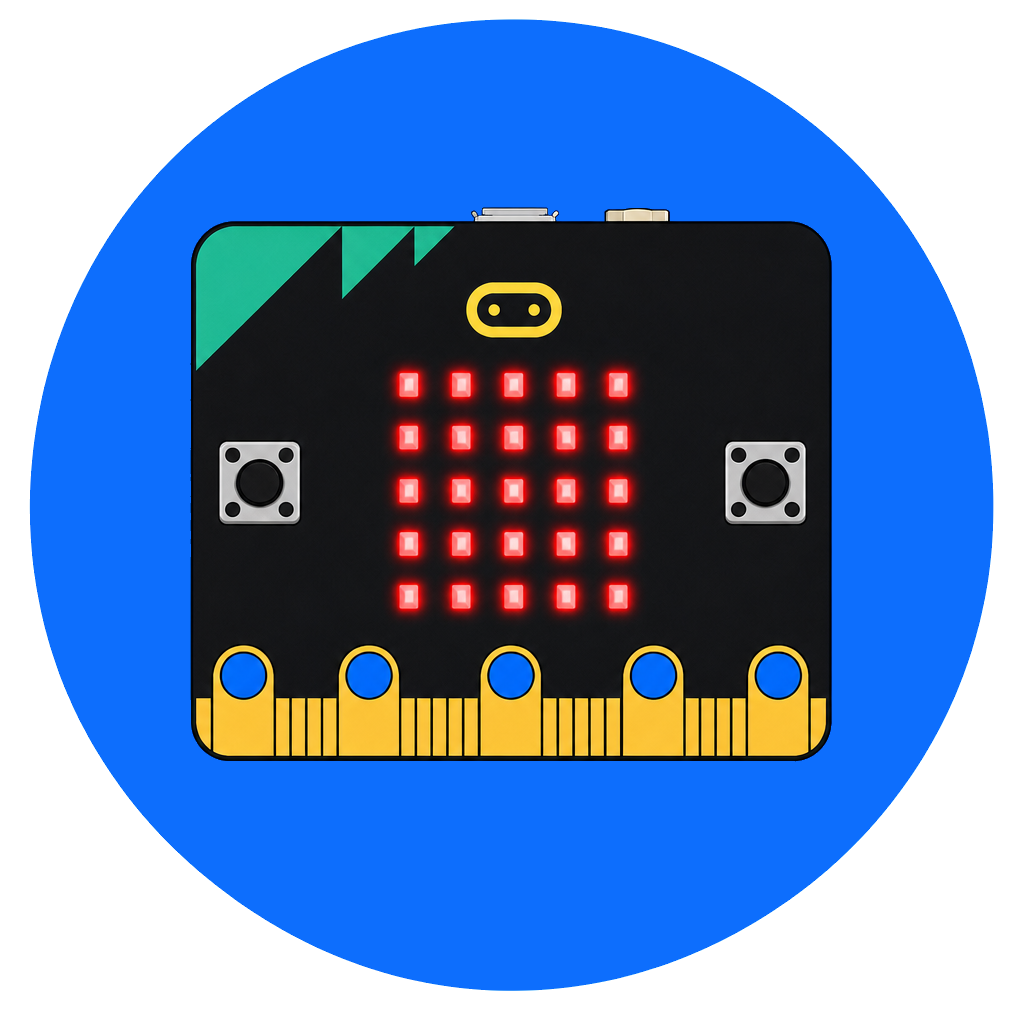
A complete, spec-aligned way through the Junior Cycle Short Course in Coding, ready to teach as it stands or to borrow from. It carries 51 core lessons across the three strands and the CBA, about 49 hours of class time including the five CBA checkpoint guides, plus 20 optional project-studio sessions you can timetable after the matching strand for about 17 hours more. The remaining time in the NCCA's roughly 100-hour model is the project and independent work students do between lessons and during the CBA itself. Every code-along uses classroom-tested code from the platform's existing coding courses, so what students type is code that runs.
Read more
Explore the Course

Click any lesson with to preview it

Curriculum Mapping

See exactly how this course maps to official curriculum specifications

Curriculum Area
Outcomes
Introducing computer science
1.1 1.2 1.3 1.4 1.5 1.6 1.7 1.8 1.9
Let’s get connected
2.1 2.2 2.3 2.4 2.5 2.6 2.7 2.8 2.9 2.10 2.11 2.12 2.13
Coding at the next level
3.1 3.2 3.3 3.4 3.5 3.6 3.7 3.8 3.9 3.10

The curriculum does not include official reference codes for individual learning outcomes, so we have assigned a code scheme to make it easier to identify and track coverage.

What Students Will Learn

Learning Goals

  1. Develop computational thinking through decomposition, pattern recognition, abstraction and algorithms, applied to something being built.
  2. Work confidently in blocks and in text, and understand that both describe the same program.
  3. Use coding to solve a real problem and to make something worth showing.
  4. Understand the ethical, legal and safety questions that computing raises, including the use of AI.
  5. Take a project from an idea to a finished, documented piece of work.

Learning Outcomes

  1. Build and debug sequenced Scratch programs using loops, variables, conditionals and events, and apply a named debugging routine when something does not work.
  2. Plan before building with pseudo-code and flow charts, and explain how a computer stores and processes the data your program uses.
  3. Design and build a website with HTML and CSS, and explain how the internet moves data between machines.
  4. Program a BBC micro:bit to sense, log and share real-world data, including radio between two devices.
  5. Train and use a machine-learning model in your own program, and judge where AI should suggest rather than act.
  6. Read, document and debug unfamiliar code, and move from blocks to text in Python.
  7. Carry one piece of work through research, design, build, test and documentation for the Classroom-Based Assessment, and present it.

Ready to bring this course to your school?

Get in touch to discuss pricing and ordering for your school.

Ready to get started?
Pricing & Ordering Contact Us
🍪 Our website uses cookies to make your browsing experience better. By using our website you agree to our use of cookies. Learn more