The whole first lesson, as your class sees it. No sign-in needed.
Everything a teacher needs to teach SEE for 2nd Class this year.
The whole books come with the course, in each class's Resources.
Every lesson is mapped to the specification. This course teaches 17 of the 17 outcomes for this class.
Tap any outcome to read it. The coloured ones are taught in this course. The curriculum does not include official reference codes for individual learning outcomes, so we have assigned a code scheme to make it easier to identify and track coverage.
108 lessons in 6 modules. The lesson marked Sample opens in full.
September to early October. The class goes past the school grounds: high and low ground on the school's contour map, the street at the gate, the hedge, the way the rain runs, the oldest thing nearby, the townland names and a place that matters to people. Each lesson asks why a thing is where it is, and why one place differs from another. Six lessons go outside while the weather is still dry and bright.
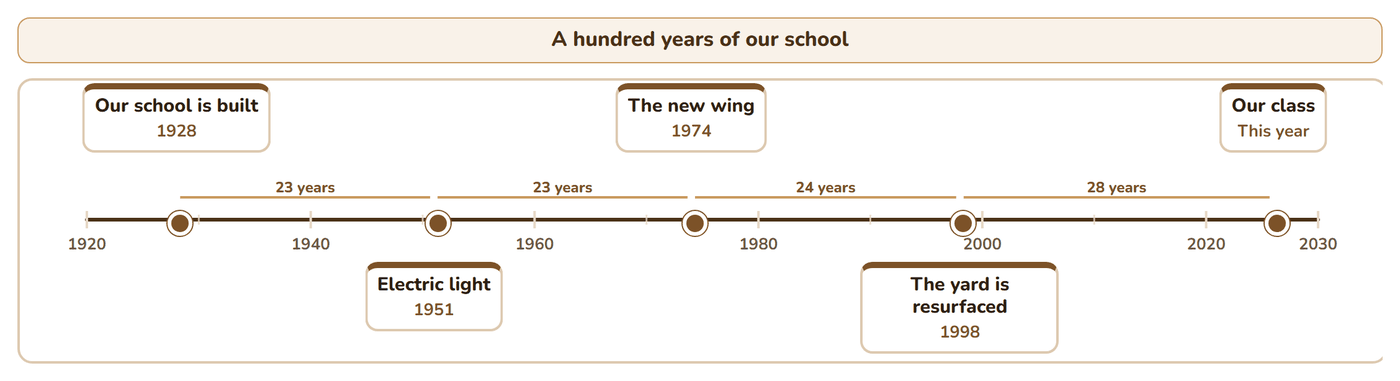
Mid-October to November. Three generations of change, read from real objects, photographs and records: how people sent news, mended, shopped, worked, lit their homes and got about, set against life now, feature by feature. Halloween in 1783 and now falls in the week before the October break, and a visitor who remembers is invited. The class records a verdict for each feature and gives its reason.
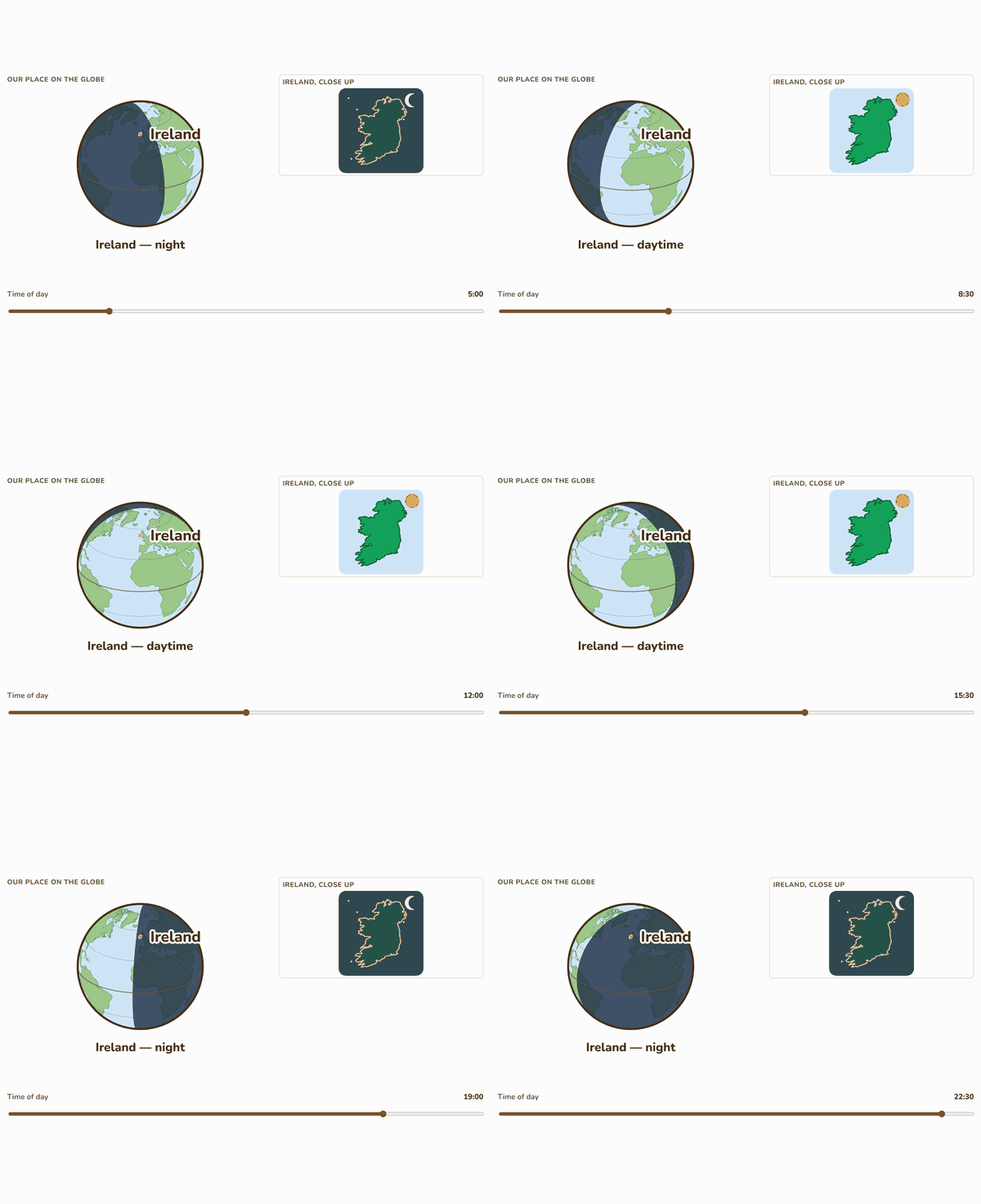
December and January. The sun and the moon measured and modelled: why December days are short, how long a midday shadow is in December, the moon through a month, tides, how soon the days grow after the shortest day, and temperatures here and far away. Christmas around the world falls in mid-December and Little Christmas on 6 January, and January's storms and snow lead to how weather changes work and travel, here and in places with real winters.
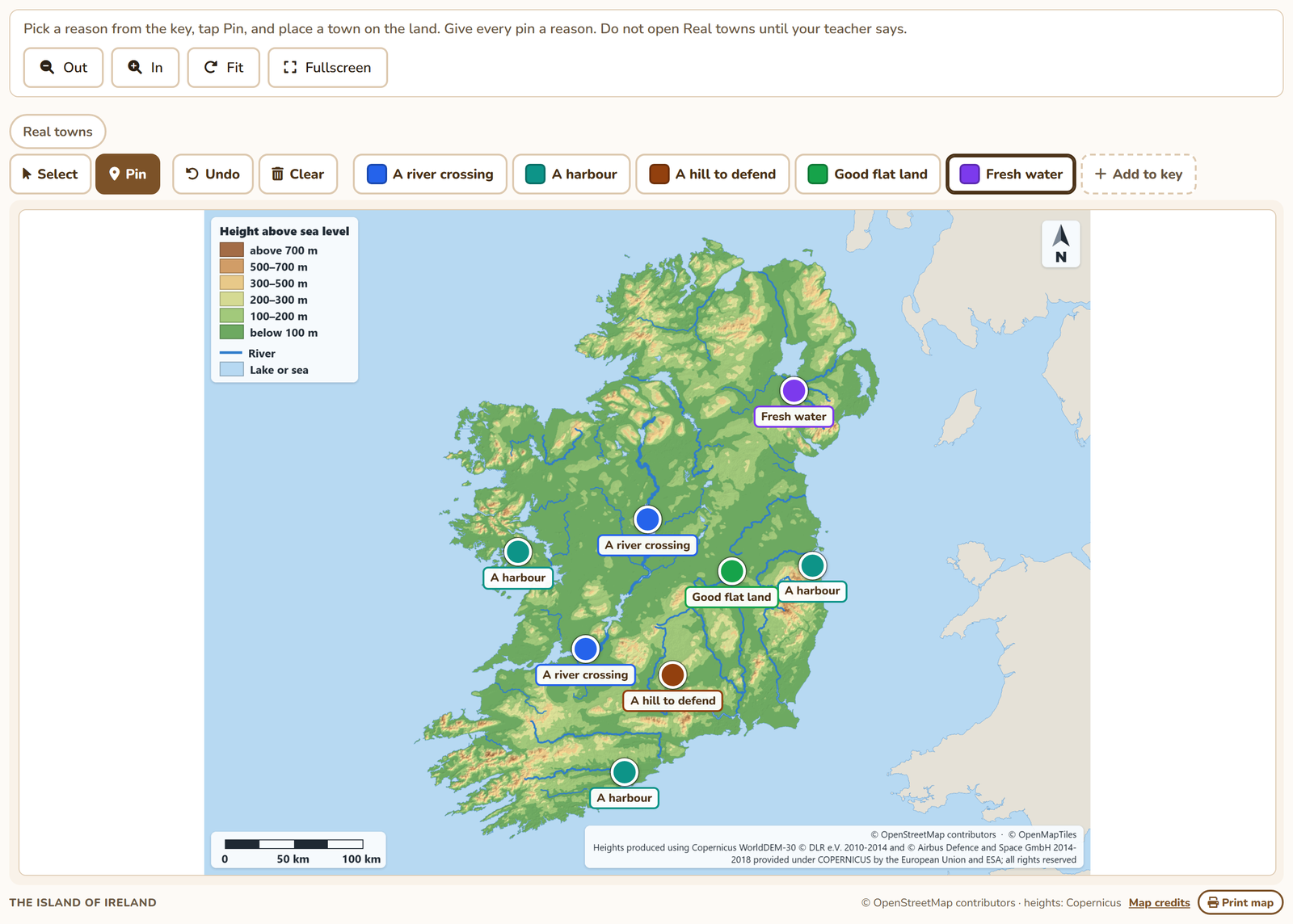
Late January to mid-March. Ireland's land, water and names, read on the real maps of Ireland on the board: counties and provinces, the border on our island, a long river and a short one, mountains, lakes, islands, bogs, seas and coasts, the national parks, place names in Irish, and the legends told about places. St Brigid's Day falls at the start of February. The module ends on how weather reaches every part of the island: the people who mend the power lines in a storm, and what the warning colours ask.
Mid-March to early May. St Patrick's Day customs of 1681 and now open the module. The class keeps its own weather station, watches which trees wake first and where bees feed, counts the litter on its street and weighs what it could do about it, as an invitation. It looks at how weather shapes farming, sport and events, and at places, customs and stories that matter to people here and in other countries.
May and June. Children, stories and climates of the wider world: continents, oceans and borders, rain and growing months compared across four places, children's lives in Mongolia, Ghana, Finland, Japan and India, stories from England, India, ancient Egypt and the Jewish tradition, greetings, and the midnight sun. The year ends back on the street outside the gate, on the school's own map, and with midsummer customs here and in Sweden.
Get in touch to discuss pricing and ordering for your school.
Back to 2nd Class courses