Primary 5th Class History and Geography

History for 5th Class

  • Activity sheets
  • Mapped to the NCCA curriculum

The whole first lesson, as your class sees it. No sign-in needed.

On the interactive whiteboard
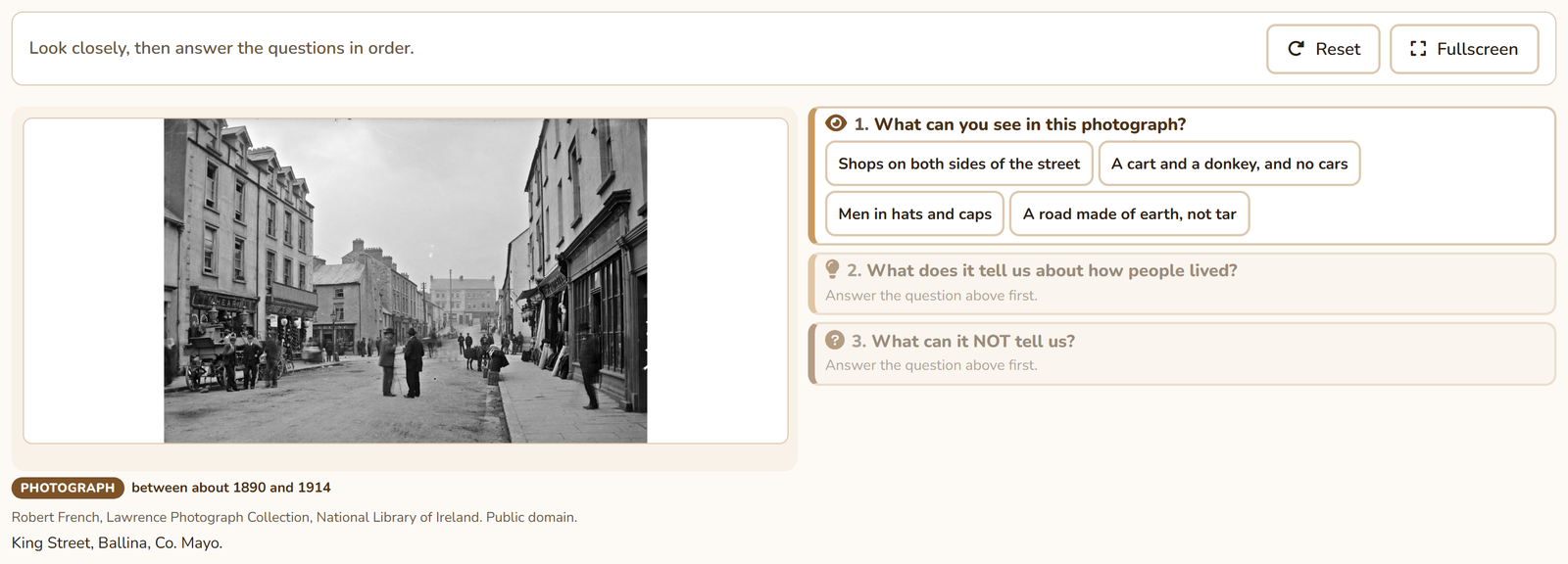
Reading an old photograph
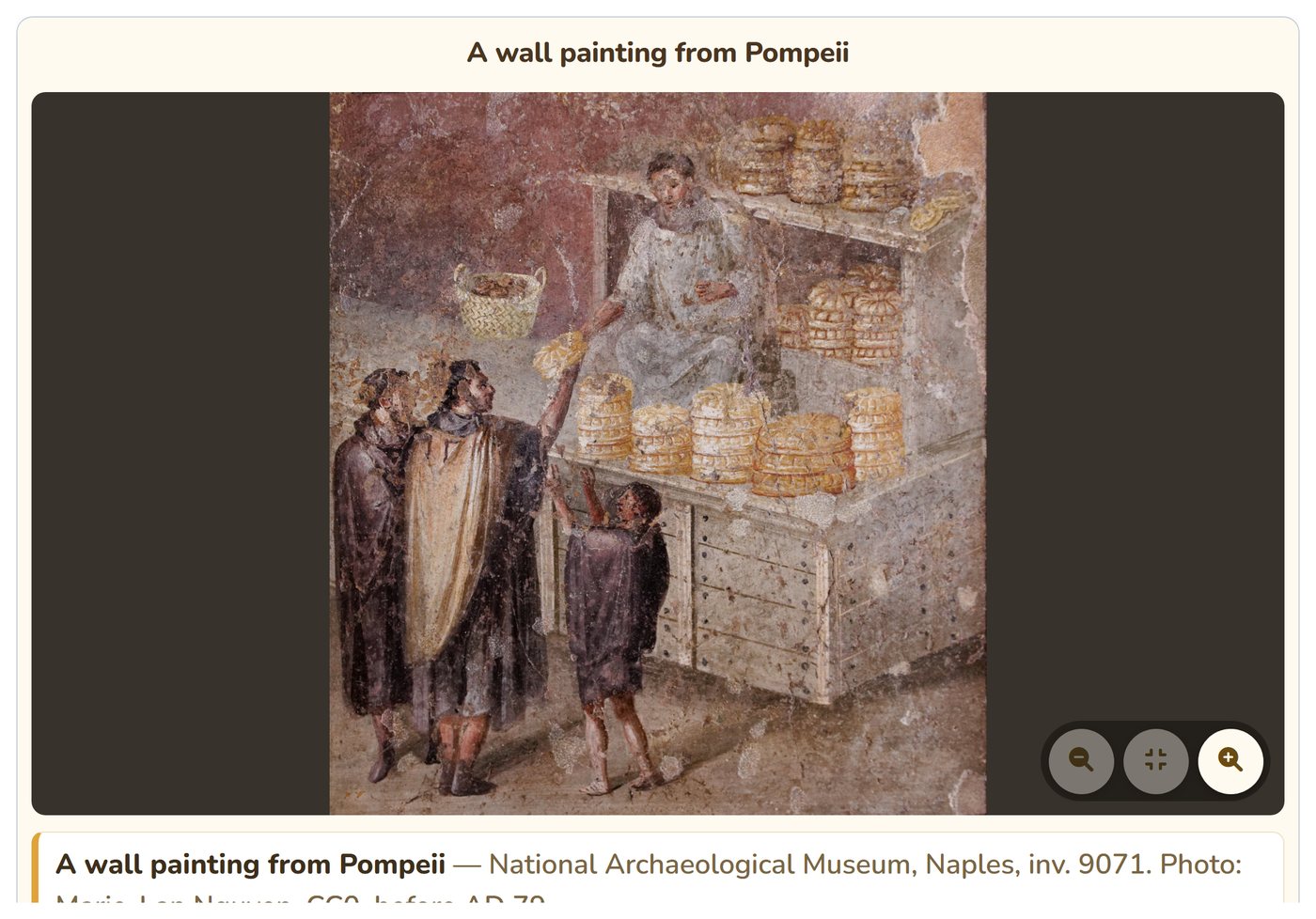
A wall painting from Pompeii
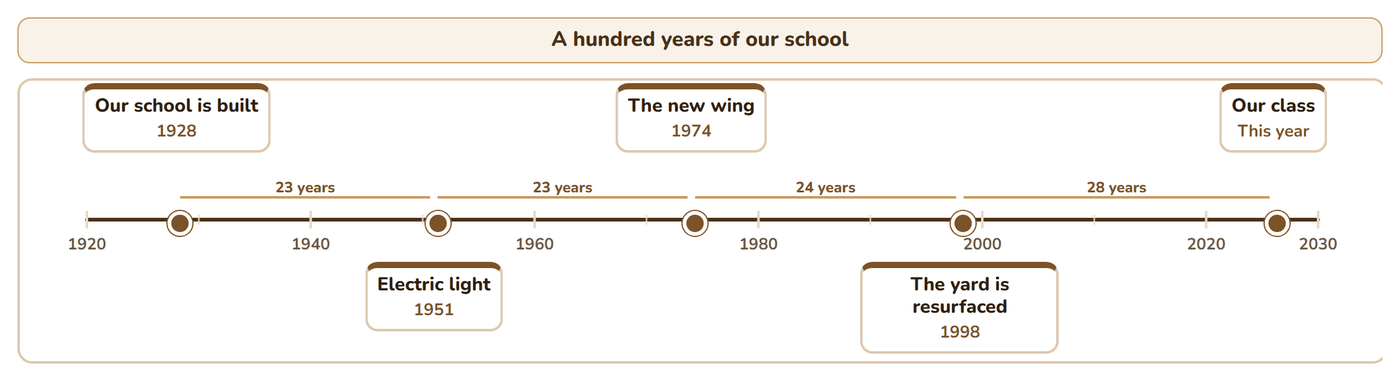
A hundred years of our school

What your school gets

Everything a teacher needs to teach History for 5th Class this year.

In class

On paper

The whole books come with the course, in each class's Resources.

The curriculum it covers

Every lesson is mapped to the specification. This course teaches 10 of the 10 outcomes for this class.

NCCA Primary Social and Environmental Education Specification (2025): History
My locality 3 of 3 outcomes
The island of Ireland 3 of 3 outcomes
Europe and the wider world 4 of 4 outcomes
See every outcome
Curriculum Area
Outcomes
My locality
Identity and heritage
ml.ih.1.s4 ml.ih.2.s4
People and places
ml.pp.1.s4
The island of Ireland
Identity and heritage
ii.ih.1.s4 ii.ih.2.s4
People and places
ii.pp.1.s4
Europe and the wider world
Identity and heritage
eww.ih.1.s4 eww.ih.2.s4
People and places
eww.pp.1.s4 eww.pp.3.s4

Tap any outcome to read it. The coloured ones are taught in this course. The curriculum does not include official reference codes for individual learning outcomes, so we have assigned a code scheme to make it easier to identify and track coverage.

The course, module by module

36 lessons in 6 modules. The lesson marked Sample opens in full.

1 Our School, and the Schools Before It 6 lessons · about 6 hours

The school outcome, and the year's idea of perspective, built on the thing the class knows best. School in Ireland is seen from six places in turn: a pupil remembering, a government counting, two people who opened schools, the books the state chose, the building itself and somebody who went to school long ago. The class finds that where each stood decides what it tells, and sets its own school among the changes in Irish schooling since the 1690s.

  1. 1 Two Views of Country Schools Sample lesson
  2. 2 Where Our School Fits
  3. 3 Reading Our School Building
  4. 4 Schools Before the State Paid
  5. 5 The National Schools' Reading Books
  6. 6 School in Living Memory
2 People and Events in Our Place 6 lessons · about 6 hours

The people, customs and events of the place and the county, each read for whose view it keeps. The class finds whose names its streets remember, sets Halloween in 1783 beside Halloween now, works its county's own important event from the county's record and two tellings of it, walks the parish as it was described in 1837, and closes by placing the oldest things near the school on the long line of Ireland's ages.

  1. 7 Who Our Streets Remember
  2. 8 Halloween, Then and Now
  3. 9 Our County's Important Event
  4. 10 Two Tellings of Our County's Event
  5. 11 Our Parish in 1837, and Now
  6. 12 Our Place on the Long Line
3 Before Writing 6 lessons · about 6 hours

The eras outcome at the start of the story: the first people, the first farmers, the builders of Newgrange, the Bronze Age and the Iron Age, met through what they left in the ground, and then the first words written about Ireland and in it. Perspective is sharpest here, because these people left no words of their own: everything said about them was said by somebody else, a monk a thousand years ago, a Roman who never came, or an archaeologist reading a bog.

  1. 13 Who Came First?
  2. 14 Walls Under the Bog
  3. 15 Newgrange and the Shortest Day
  4. 16 Gold in the Ground
  5. 17 A Road Across the Bog
  6. 18 The First Words
4 Saints, Scholars and Raiders 6 lessons · about 6 hours

The eras outcome from the coming of Christianity to the Battle of Clontarf in 1014: Patrick, Brigid, the monasteries and their scholars, and the Vikings as raiders and as townspeople. Almost every written source of these centuries was made by churchmen, so each lesson sets that view beside another: a saint's own words beside a later Life, an annal beside a dig, a short entry beside a long story written for a king's family.

  1. 19 Patrick, in His Own Words
  2. 20 Brigid
  3. 21 A Scholar and His Cat
  4. 22 Raiders from the Sea
  5. 23 Viking Dublin from the Ground
  6. 24 Two Tellings of Clontarf
5 How Ireland Is Run 6 lessons · about 6 hours

The political system outcome, from the Constitution's own words and real records rather than from a description of them: who makes the law and who must agree, how a bill becomes an Act, what TDs spend their time on, how a single transferable vote is counted, how Presidents have been chosen, and who gets a vote at all. No party, politician or position is praised or blamed, and the one arguable question, the voting age, gives every view a fair hearing.

  1. 25 Who Makes Ireland's Laws?
  2. 26 From Bill to Law
  3. 27 What Our TDs Do
  4. 28 The Count
  5. 29 Choosing a President
  6. 30 Should Children Have a Vote?
6 The First Cities, and Traditions That Travelled 6 lessons · about 6 hours

The wider-world scale. Mesopotamia and the Indus Valley, the first cities, in depth: they reach back to the first writing anywhere, they flourished while Ireland's first farmers built Newgrange, and they put the year's question at its sharpest, because the Mesopotamians wrote, so we read their own accounts, laws and school work, while nobody can yet read the Indus writing, so we know those people only from what they left and from what their neighbours wrote about them. The module closes on traditions people carried with them: the Huguenot families who came to Ireland from France, and the holy books different faith communities have written by hand, kept and used.

  1. 31 The First Writing
  2. 32 School in Babylon
  3. 33 Laws Written in Stone
  4. 34 A Writing Nobody Can Read
  5. 35 The Huguenots: Kept and Changed
  6. 36 Holy Books, Kept by Hand

Ready to bring History for 5th Class to your school?

Get in touch to discuss pricing and ordering for your school.

Back to 5th Class courses
Ready to get started?
Pricing & Ordering Contact Us
🍪 Our website uses cookies to make your browsing experience better. By using our website you agree to our use of cookies. Learn more