Mathematics
Intermediate
50 mins
Teacher/Student led
+60 XP
Teacher-led from the board. Pupils do not need a device, but can follow on one.

Adding and Subtracting Money: Written and Mental
Learn to add and subtract money accurately by lining up decimal points in columns. Handle carries when cents total over 100, and manage empty-zero subtractions where borrows cascade across zeros.
 Here is a receipt from the shop: a sandwich for
 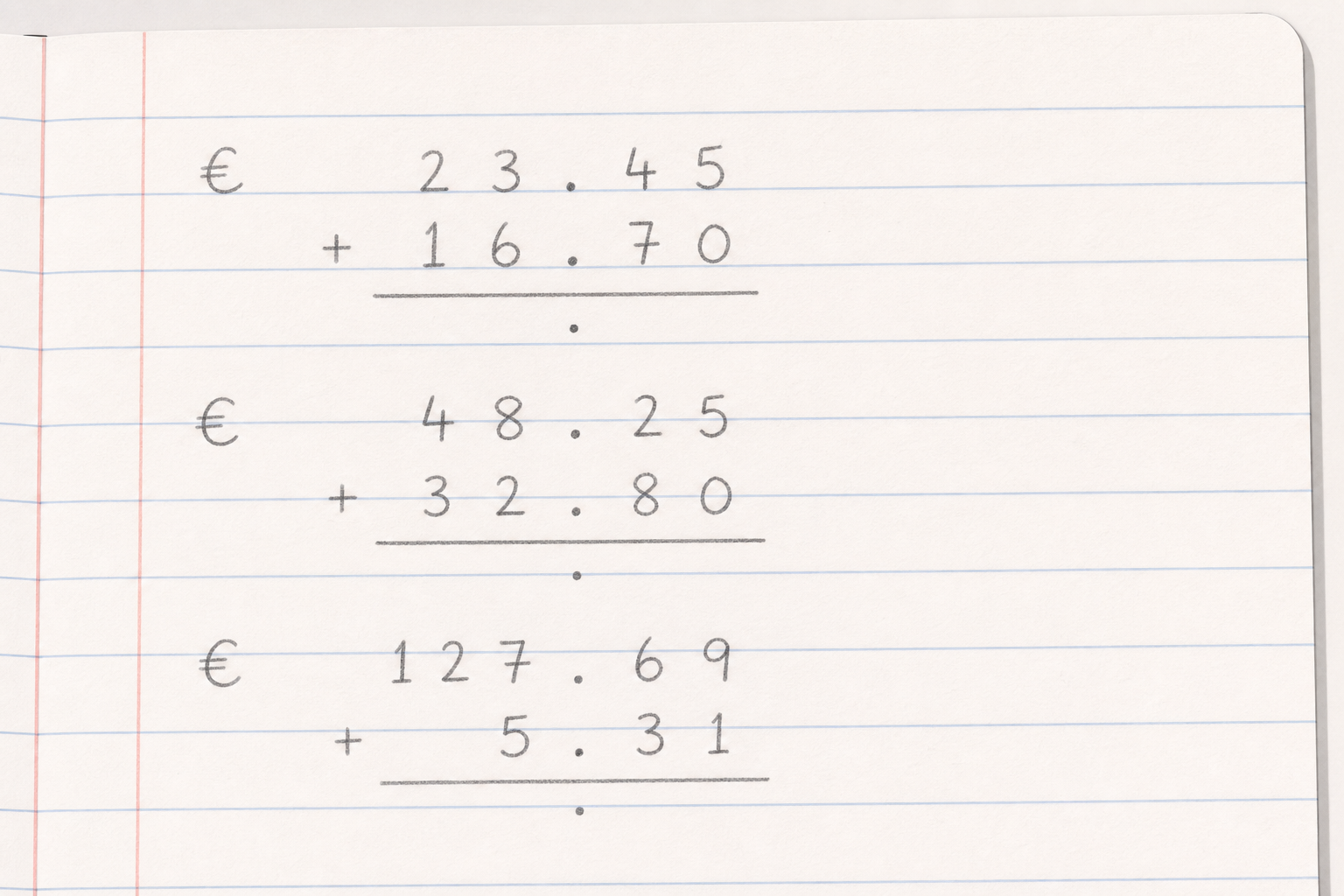 In your maths copy, set up each money sum vertically with the decimal points lined up straight down the page. Work each column with the class and write the euro sign (€) at the answer.