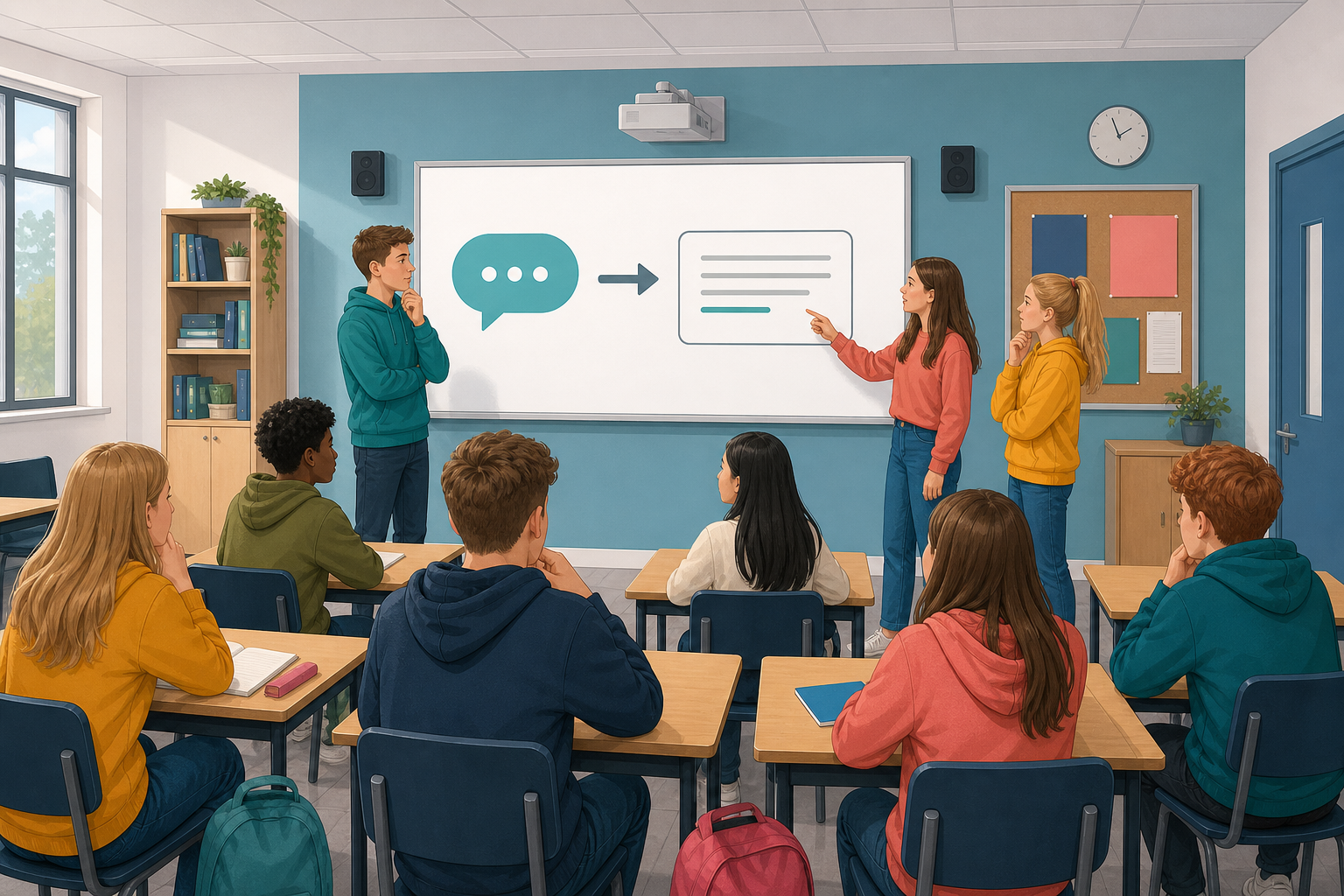
 You have already practised spotting when media is trying to persuade you. Today you will look at a different kind of source, an AI chat tool.
Before you go on, think of two things:
- One way AI chat tools help with schoolwork
- One way they can mislead you in schoolwork
By the end you will know how these tools work, and you will decide whether to trust, verify or reject some made-up AI answers.
A large language model (LLM) is the engine inside most AI chat tools. It has read huge amounts of text and learnt which words usually go together. When you ask a question, it predicts the likely next words, bit by bit, until it has a full answer.
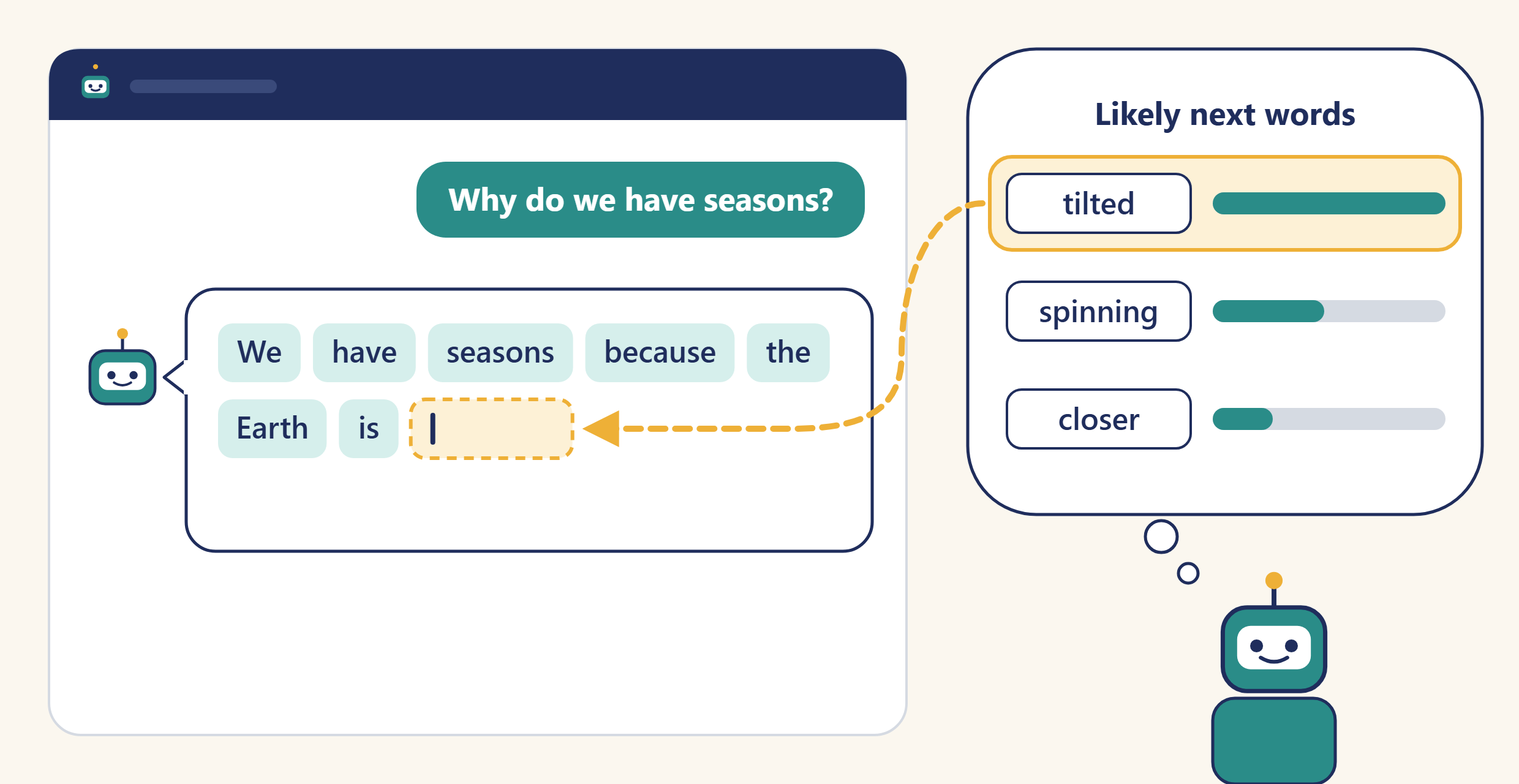
That is why the answers usually sound smooth and confident. The model is not checking facts, and it does not know when it is wrong. It sounds just as sure when it has made up a detail.
Think about what would make you trust a smooth AI answer straight away, and what would make you double-check it.
Your teacher will run this activity with the class. For each made-up AI answer, look for tells, which are clues in how it is written, like an oddly exact number, a wrong basic fact or a study with no source. Then choose your verdict, meaning your decision:
- Trust it for now.
- Verify it, meaning check it first.
- Reject it and do not rely on it.
AI answer audit

On your own, look back at the AI answers you did not simply trust. For each one, write down one specific check you would do before using it. For example, you could look up the date in a second source, search for the study it names, ask a teacher, or open a trusted reference page.
- you have listed every answer you marked verify or reject, with one check beside each.
- for at least one answer, you have said exactly where you would look, such as which person you would ask or which website you would open.
- you can say in one sentence why a confident tone is not enough.
A large language model predicts likely text from patterns. That is why it sounds just as sure when it is wrong, or has made up a detail, as when it is right.
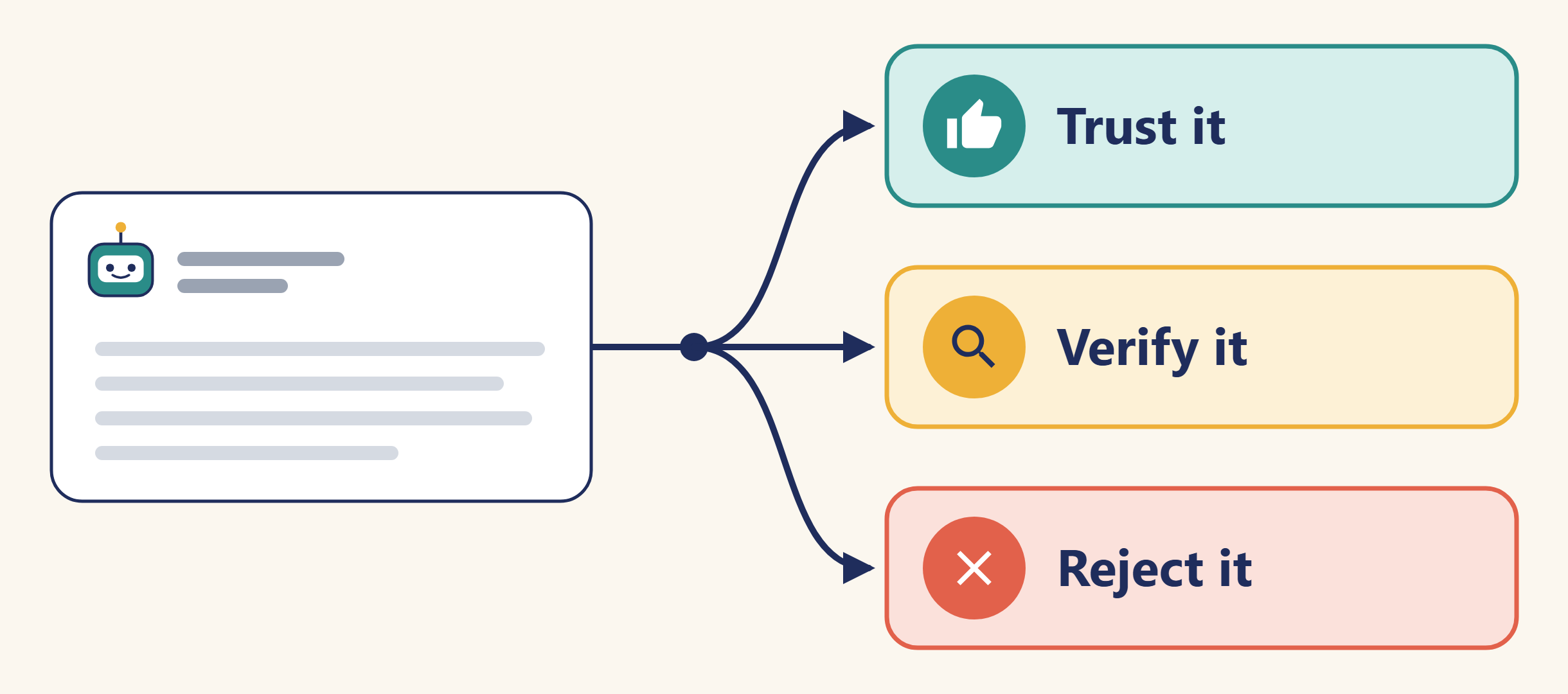
So you do not need to ban these tools, and you should not trust them blindly. Instead, check them the way you did today. Trust an answer when it is careful and shows where its facts come from, verify it when a particular detail needs proof, and reject it when you find several tells.
Unlock the full learning experience
You're previewing this lesson. Get full access to this lesson and hundreds more — each one ready to teach, with interactive activities, printable resources and pupil progress tracking built in.
This lesson is copyright of Coding Ireland 2017 - 2026. Unauthorised use, copying or distribution is not allowed.