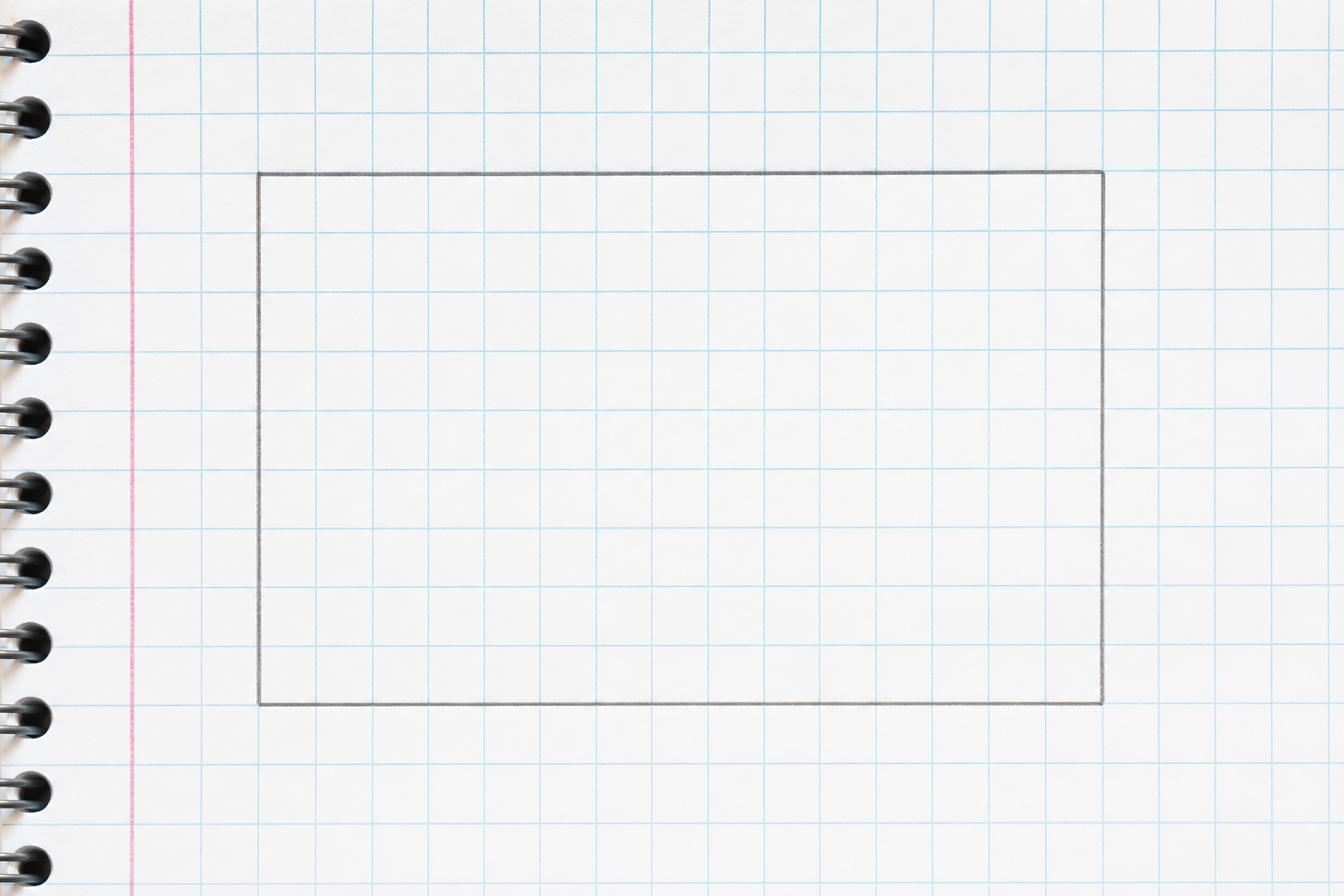
Look at this rectangle made of little squares. There are 4 squares in each row, and there are 3 rows.
Is there a faster way to work out how many squares there are altogether than counting them all one by one?
Four rectangles made of squares. Read how many squares are in one row, then how many rows there are, and see how the squares add up.
For the last two, say how many squares are in one row before we check the total.
We work through four rectangles together, one after another. First 2 rows of 3. Then 3 rows of 4. Then 4 rows of 5. Last, 6 rows of 2.
For each one, one pupil comes to the board and counts the squares in one row, then adds it on row by row to find the total area in squares.
Everyone else watches the board. Once the row has been counted, put your hand up to say what the total area will be.
In your squared copy, draw a 3-by-4 rectangle. Then write how many squares are in one row, and how many rows there are. Underneath, write the total area in squares.
Now we build and read the area of four more rectangles in turn. First 2 rows of 4. Then 3 rows of 3. Then 4 rows of 5. Last, 6 rows of 2.
For each one, count the squares in one row, then read the area by adding it on for the rows.
While a pupil builds each rectangle at the board, everyone else predicts. Once the row is counted, put your hand up to say the total area before the pupil checks it.
You're previewing this lesson. Get full access to this lesson and hundreds more — each one ready to teach, with interactive activities, printable resources and pupil progress tracking built in.