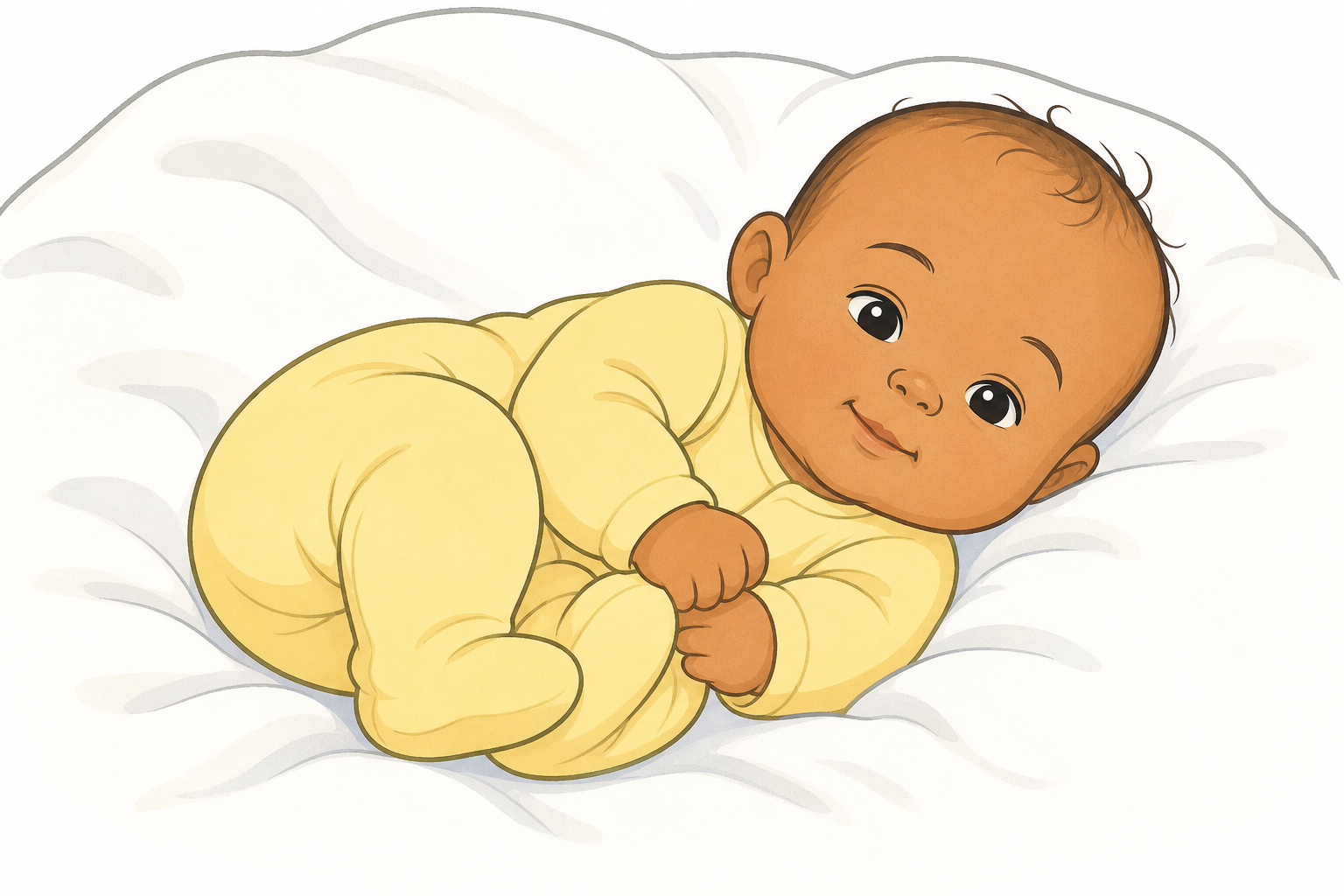
Look at this tiny person. Who do you think this is?
Were you ever this small? Hands up if you think you were once a baby!
Hold up one clear baby picture (from the provided cards or a photo a child has brought). Keep the hook light: one picture and two short questions only. Do not hand out card sets or start ordering yet.
Key questions: Who is this? Were you this small once?
Smile and accept every idea. If a child says they were never a baby, gently say we all start as babies and grow.
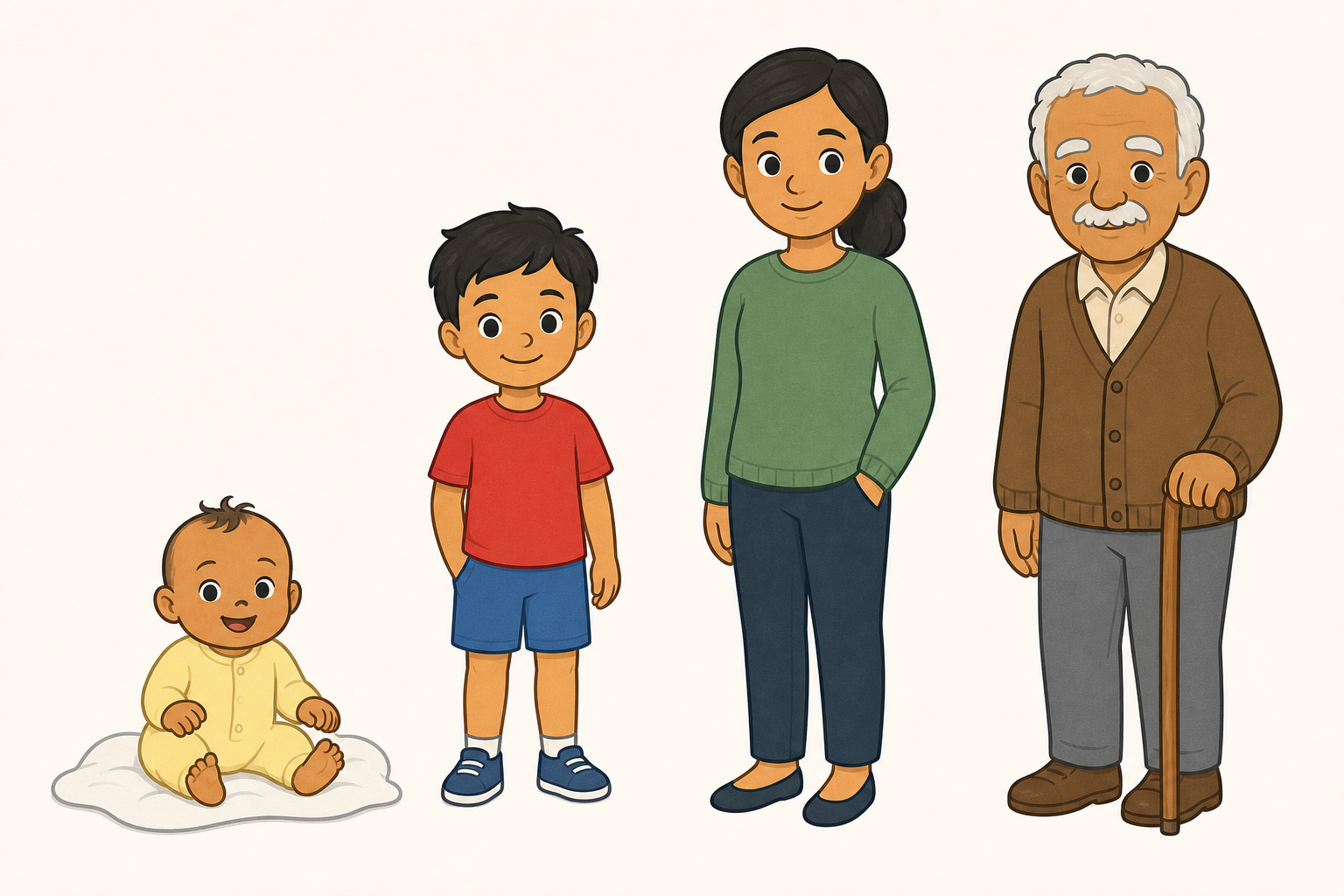
Today we meet four people: a baby, a child, a grown-up, and a granny or grandad.
People start as a baby and grow bigger over time. Can you show me with your hands how tiny a baby is?
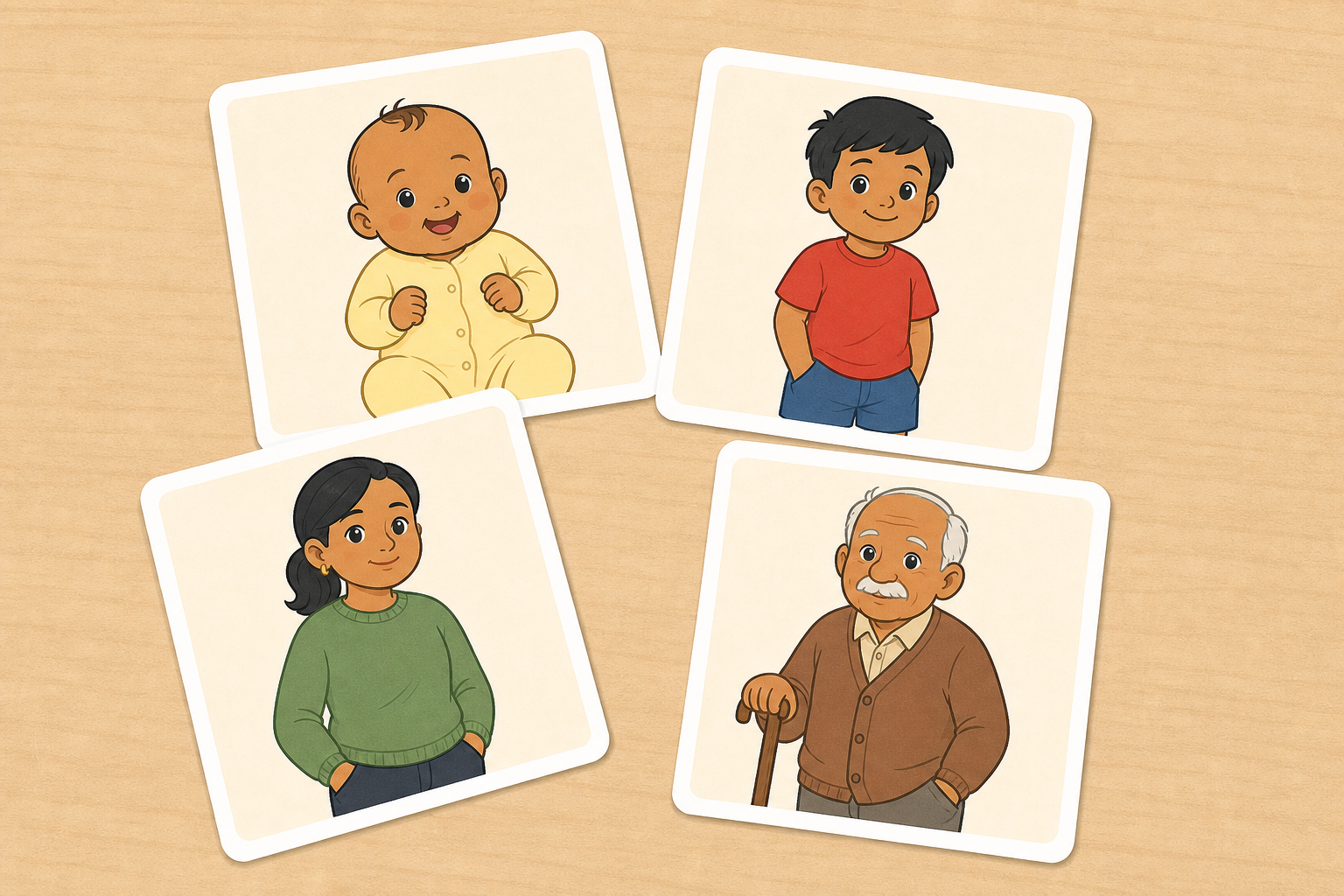
Board stays short: just the four stage names and the hand-show prompt. Use the table and card talk below for your own reference while you point to each picture card in turn.
| Concept | Why it matters | Example |
|---|---|---|
| Growing up — people start small as a baby and get bigger over time | It helps children see that their body has already changed and will keep changing | A baby cannot walk; a Junior Infants child can walk into school |
| Baby — a tiny person who needs lots of care | Babies need grown-ups to feed, hold and keep them safe | A baby drinks milk and sleeps in a cot or buggy |
| Child — a growing person, like the children in this class | Children can do more each year as their bodies grow | A child can walk, talk, play and learn at school |
| Grown-up — an adult who can work and look after others | Grown-ups help families, schools and people who need care | A parent, teacher or nurse is a grown-up |
Fourth card (say this aloud while showing the card): granny or grandad is still a grown-up, just an older one who has lived a long time. The growing line is baby → child → grown-up → older grown-up (granny or grandad), not a totally new kind of person. Keep size talk for the ordering game (bigger / older), not as the definition of grown-up.
Modelled cycle (you do this live with one set of cards before groups try):
Misconception to head off: some children think only babies grow. Say we keep growing and changing for a long time. Some children treat granny as “just another grown-up” and freeze on sequence: point again to the older-grown-up idea and the visual cue that this card comes after the grown-up card. Keep the talk gentle: no talk of dying or getting poorly.
Who helps us: later we will name a nurse who looks after babies, children and grown-ups as they grow.
Your group has four picture cards: a baby, a child, a grown-up, and a granny or grandad.
Work together. Put them in a line from the tiniest person to the oldest person. Start with the baby.
Print the provided life-phase cards (one set per small group). Laminate if you can. Keep a spare set for the board.
Card A — Baby: A tiny person who needs lots of care. Babies drink milk and sleep a lot.
Card B — Child: A growing person like you. A child can walk, talk, play and learn.
Card C — Grown-up: An adult who can work and look after others.
Card D — Granny or grandad: An older grown-up in a family who has lived a long time and can still do many things.
Each card should show a clear, friendly picture of that person. Labels stay as the short names above.
Only hand out sets after you have named and modelled all four cards with the class (see step 2). Groups of about three to four. Give one mixed-up set per group. Children order by looking and talking, not by reading long text.
Circulate and ask: Who is the tiniest? Who comes next? How can you tell? If a group freezes on granny or grandad, remind them: Granny or grandad is an older grown-up who comes after the grown-up card.
If a set is back to front, invite the group to check again rather than fixing it for them. Celebrate different ways groups talk about “older” and “bigger”.
Differentiation: offer a starter hint (place the baby card for a group that is stuck). Stretch: ask a ready group to say one thing each person can do.
Teacher answer order: baby → child → grown-up → granny or grandad.
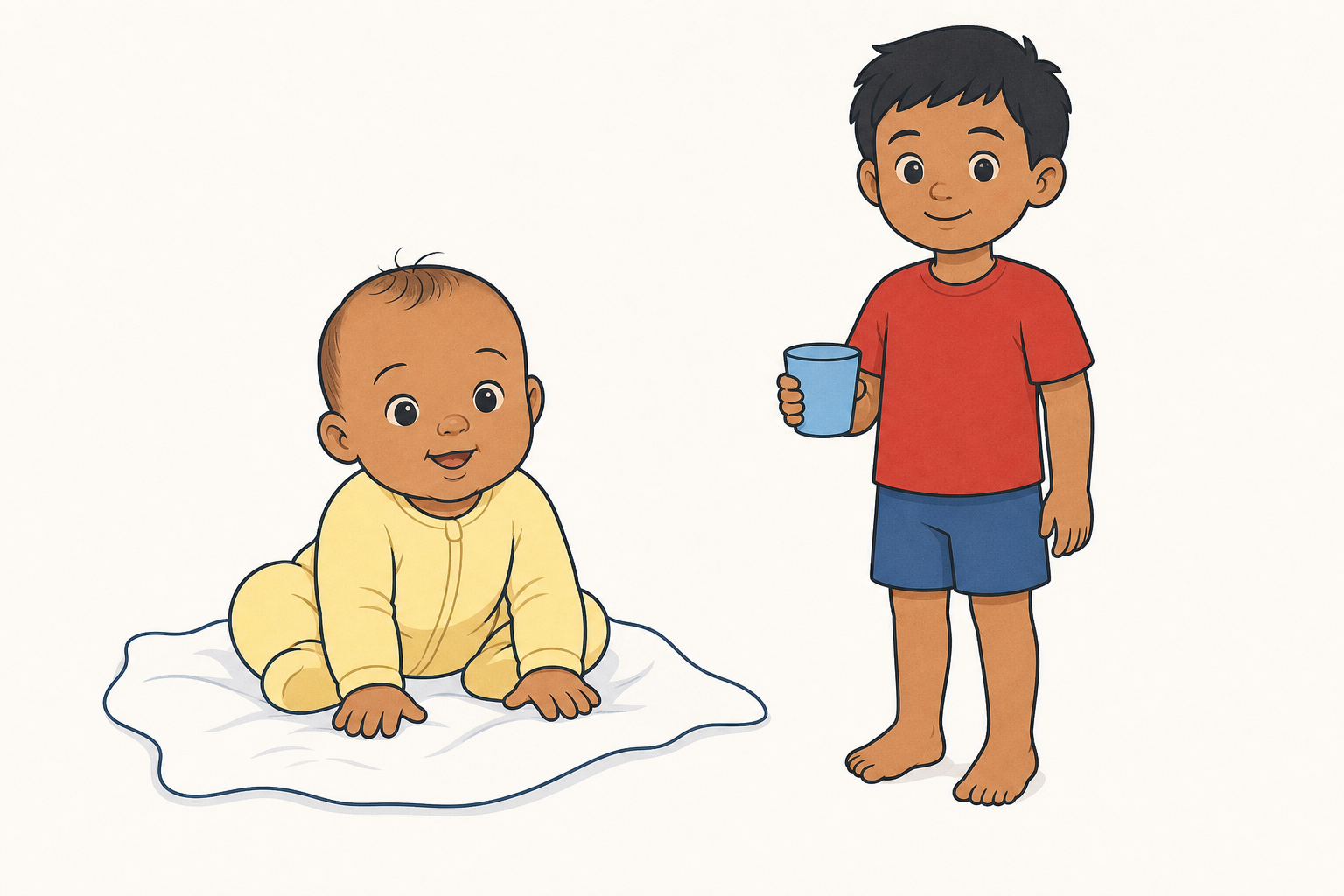
Look at a baby picture and a child picture.
What can a baby do? What can you do now that a baby cannot do yet?
Use photos children brought from home if they have them. If a child has no photo, use the provided teacher picture cards of a baby and a child so nobody is left out. Never pressure a family to share photos.
Sit in a circle or stay at tables. Hold up one baby picture, then one child picture. Keep the talk oral and short. No drawing or writing in this beat.
Prompts to use:
What to expect: children often say babies cry and sleep; they proudly name walking, talking and school jobs for themselves. Revoice gently: Yes — as we grow, our bodies can do more.
Handle family photos carefully and return them at the end of the lesson.
Let’s act out growing! Curl up small like a baby. Now slowly grow into a child. Stretch up tall like a grown-up.
People help us while we grow. A nurse helps babies, children and grown-ups stay well.
Whole-class movement in a clear space. Keep it calm and slow so nobody bumps. Movement is the main beat of this step.
Sequence to lead:
Then gather standing or on the carpet for one short bridge into the helper idea.
Focus question: How do people change as they grow?
Bridge, then who helps us: first revoice the growth idea: People change as they grow: we get bigger and can do more. Then one familiar helper: People help us while we grow. A nurse looks after babies, children and grown-ups as they grow. Nurses help us stay well. Ask lightly: Have you ever met a nurse at the doctor or in hospital? Do not dwell on illness. If time is tight, keep the nurse line to one sentence only.
Display only: no writing. Children talk and move.
You're previewing this lesson. Get full access to this lesson and hundreds more — each one ready to teach, with interactive activities, printable resources and pupil progress tracking built in.