What makes a ball go a long way down the hall: a little push, or a big push?
Hands up if you think a little push. Hands up if you think a big push.
Keep this beat light and quick. No lane, balls or cars on the floor yet — the guess comes first. The board shows the ramp-and-roll activity: a ramp with a flag where the last go stopped. Point at it as you ask, so the children know what they are guessing about, and let it go only after the hands are up. Stand where the class can see you and put the question with both hands: a tiny finger-tap in the air for little, a bigger arm swing for big.
Count hands for each guess so every child feels heard. Guesses are never wrong. Say something like: We will find out with our own hands in a minute.
Who helps us: later you may offer a footballer kick as a quick teacher example of a big push with the foot. Do not name that yet unless a child offers it.
Which will go further: a little push or a big push?
Show me with your hands. Little push. Now big push.
Keep the board almost empty: just the question. Do the definitions in your talk and with gestures, not as a reading block.
Say and show: A push moves something away from you (push hands forward). A little push is gentle (tiny tap). A big push is strong (bigger push). Classroom demos stay as hand pushes; a kick is a push with the foot, which you can name later if it helps.
| Concept | Why it matters | Example |
|---|---|---|
| Push — when you move something away from you with your hands or your foot | Pushes help us move toys, balls, doors and wagons every day | Rolling a soft ball along the classroom floor with one hand |
| Little push — a gentle push that only moves something a short way | A soft push is safe indoors and still lets us see what happens | A soft tap that sends a toy car just past your knees |
| Big push — a strong push that can send something much further | A bigger push can make something go faster or further, so we choose how hard to push | A footballer kicks hard to send the ball far down the pitch |
Misconception to head off: some children think the colour or size of the ball is what makes it go far. Gently keep the talk on how hard we push, not on which toy looks bigger.
Ask: Show me with your hands a little push. Now show me a big push. Children point or use hands to show how far they think each push will go.
We have two floor lanes. When it is your pair's turn, give a little push, then a big push.
If you are watching, stay by the lane, look at the stop marks, and call little push or big push with me.
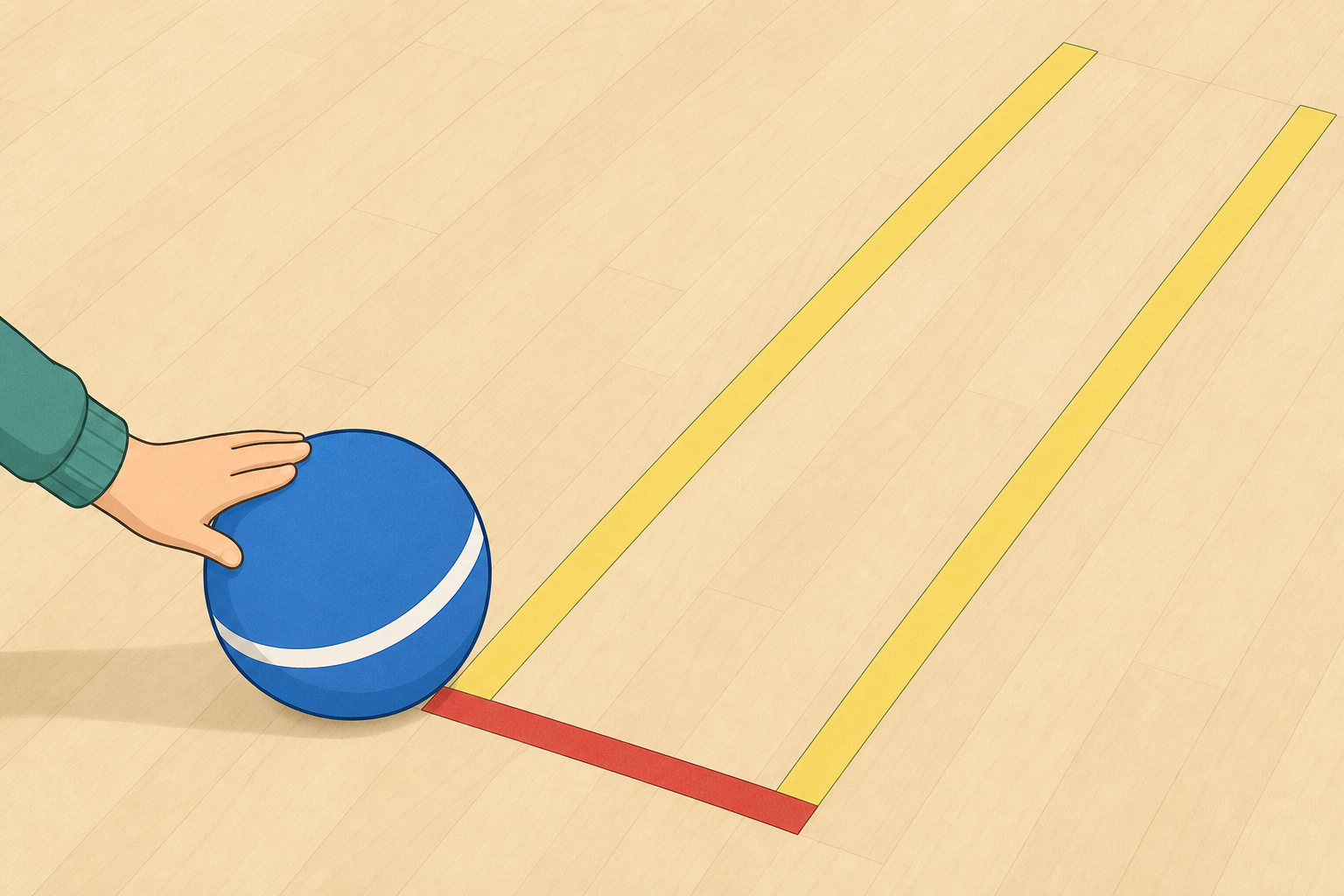
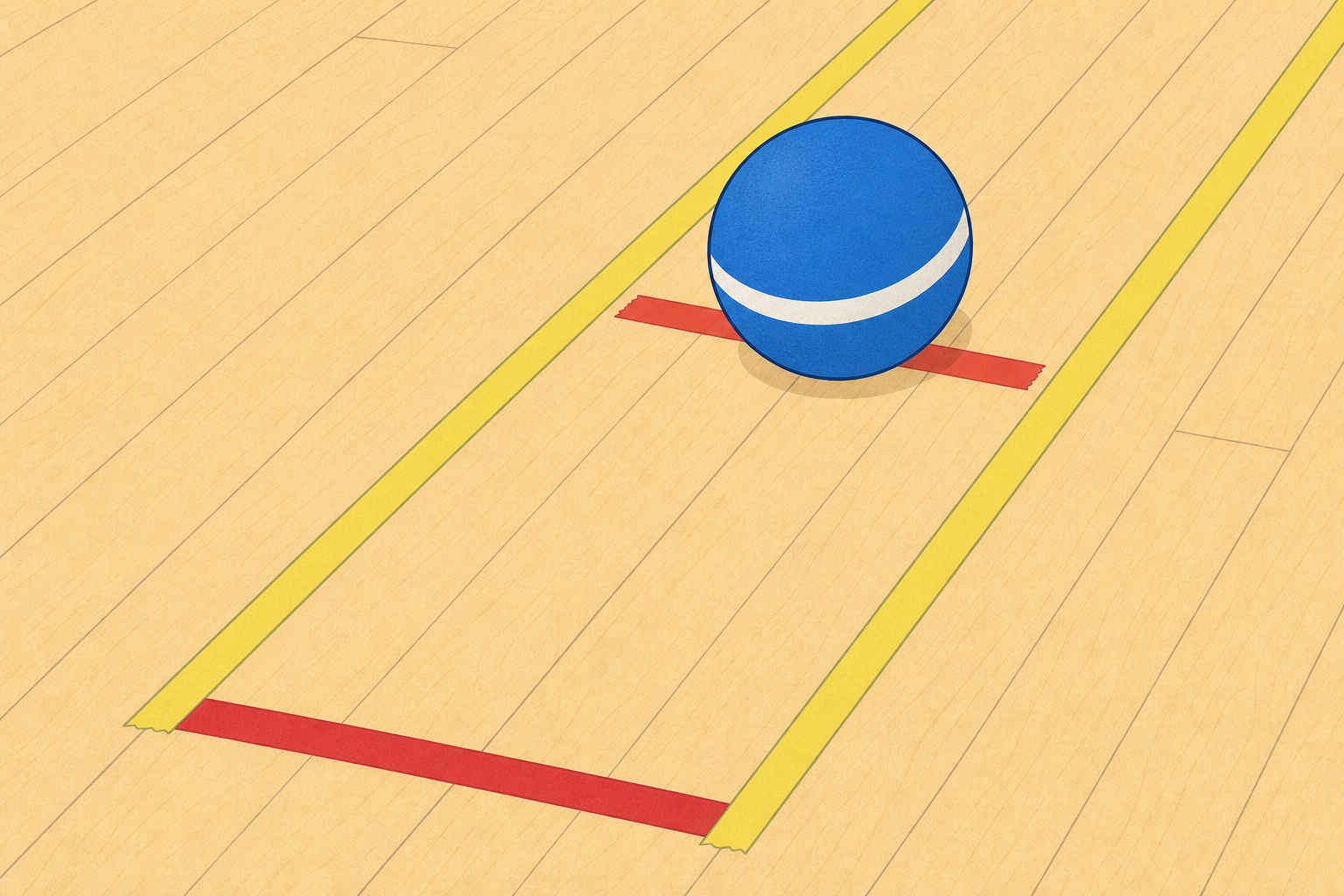
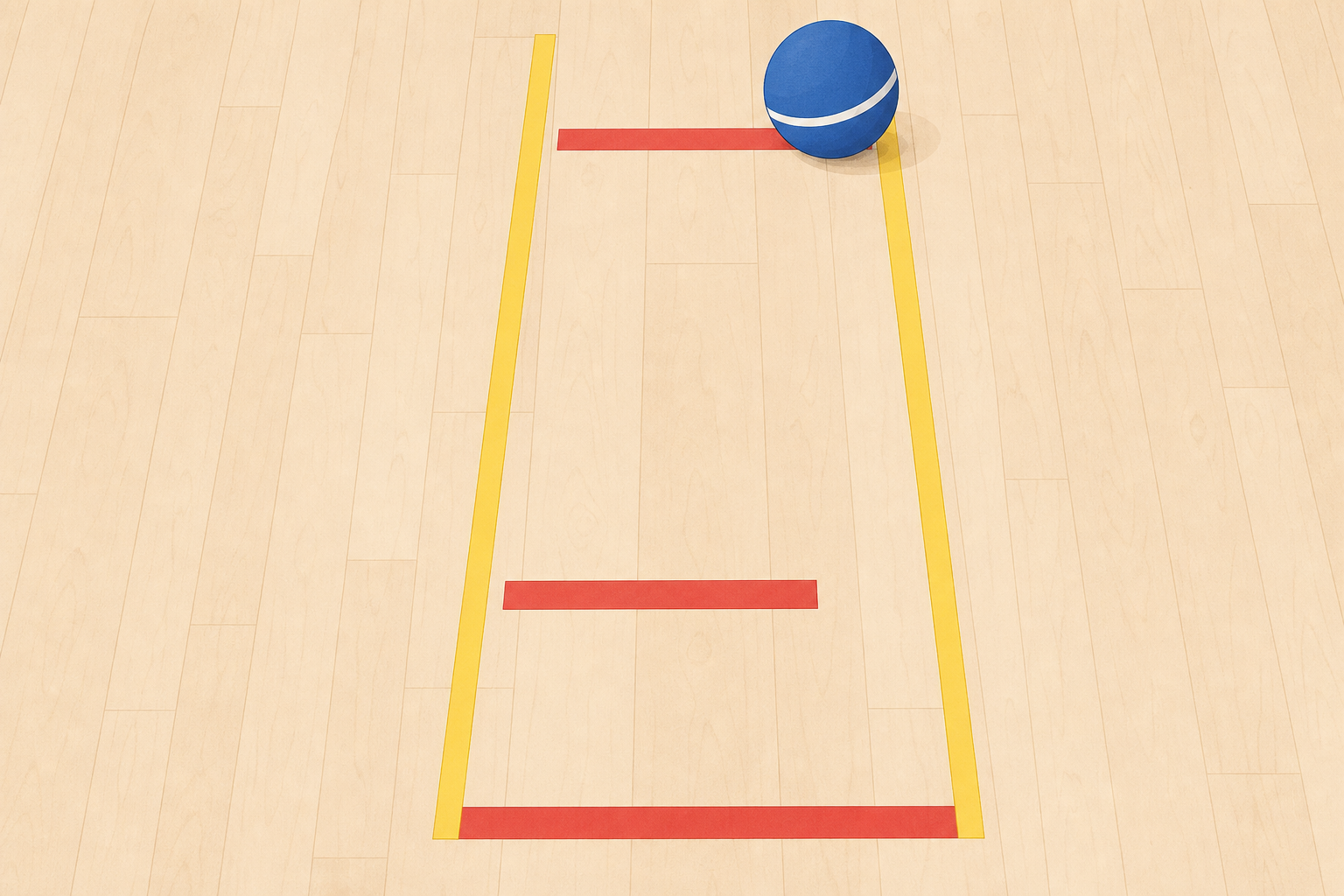
Tape two clear floor lanes (each about 3 to 4 metres) with masking tape, spaced so two pairs can work safely. Push desks back so feet and toes stay clear of both roll paths. Put one soft ball or toy car and two stop markers at each lane.
Split the class into two lane groups (about half the class at each lane). Within each lane group, children work in pairs and rotate: one pair on the start line, the rest of that group kneeling beside the lane as watchers.
If you only have one adult, run both lanes in the same room so you can see both paths, or run one lane at a time with the other half as a close watching ring (same call-and-notice role).
Kneel at the start with one soft ball or toy car. Think aloud:
Keep the model marks: leave both stop marks from your model (or from one clear pair run) on one lane for the next step. Do not clear that lane until after the compare talk.
What to expect: the big-push run should clearly pass the little-push mark on a smooth floor. If both stops look the same, the little push was still too strong: model an even softer tap.
Safety: roll only along the lane and away from feet. No throwing. Stop play if a lane gets crowded or anyone steps into the path.
Key questions while you circulate: Was that a little push or a big push? Which one went further?
Look at our two stop marks on the lane. Which push sent it further: the little push or the big push? Point to show me.
Bring everyone to the lane that still has both stop marks from your model (or from one clear pair run you preserved). Point to each mark. Keep this fully oral: children point, nod or call out. No drawing yet.
Prompts: Where did the little push stop? Where did the big push stop? Which mark is further down the lane?
If a pair's big push did not go further earlier, treat it as useful noticing: Was that push really bigger, or about the same? You may do one more careful pair of pushes on this lane so the class sees a clear difference, then leave both new marks.
Revoice the science in infant words: A bigger push can make something go further.
Watch this last little push and big push on our lane. Look at both stop marks. Which one went further? Point to it.
No screen for this beat. Stay on the real floor lane so the idea stays a hand push on a flat floor.
Clear only the active path if needed, then do one slow, clear pair of runs yourself (or invite one confident pair). Same ball or car, same start:
Say the finding with them: The big push went further. A bigger push can make something go further.
These two marks are the shared class picture children will draw next, including children who only watched during rotations.
You're previewing this lesson. Get full access to this lesson and hundreds more — each one ready to teach, with interactive activities, printable resources and pupil progress tracking built in.