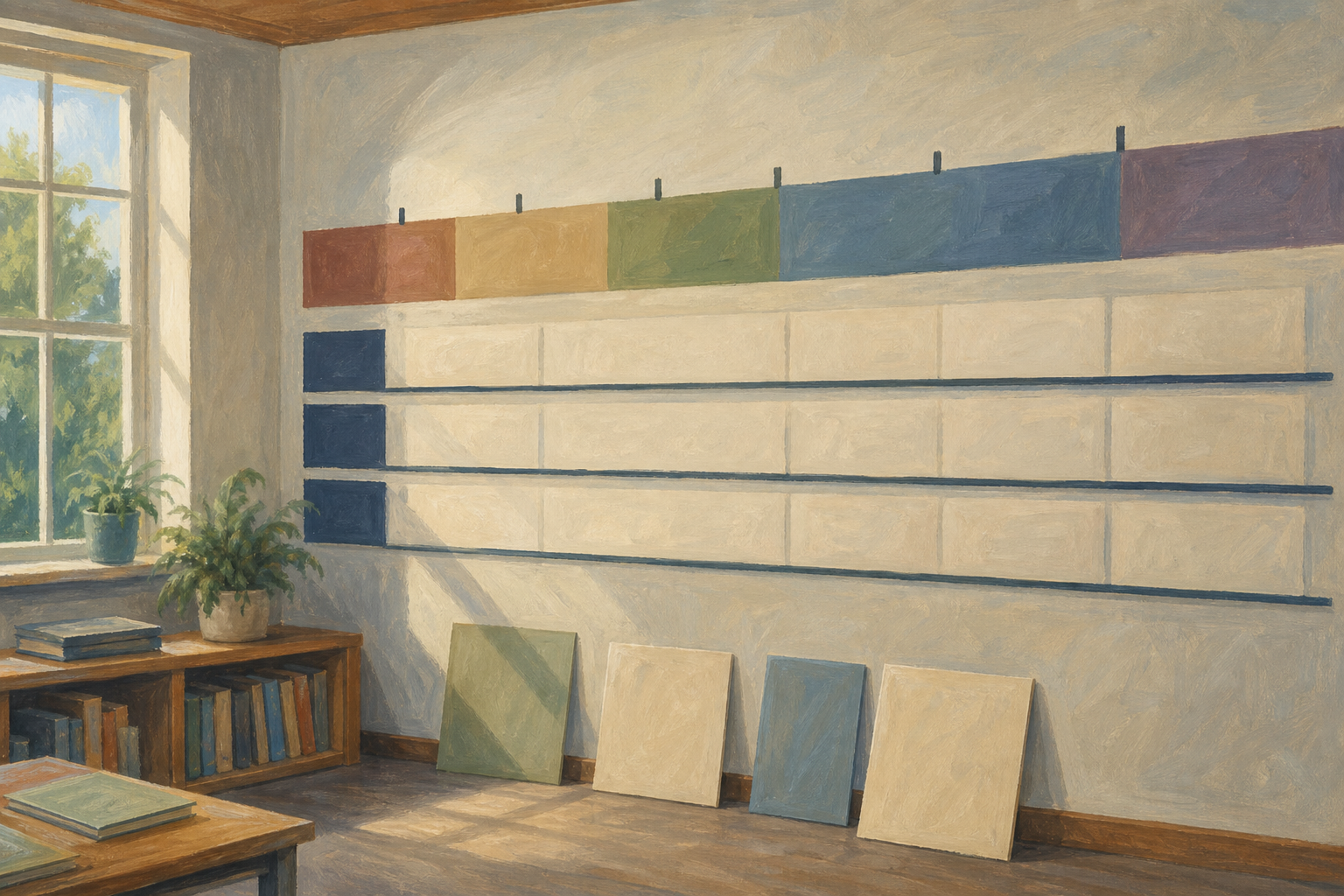
A human rights story needs more than famous dates. Documents put claims in writing. People push a claim when the law still ignores it. Events force a country, or the world, to answer. The class will build across four eras: Early foundations, Revolutions and declarations, A world answer, and Rights expand.
An entry only earns its place if something was different afterwards.
A stirring speech that left the law unchanged the next morning does not count; a written text that courts and parliaments later had to answer to does.
Open Our human rights timeline together. First, place two entries as a class so everyone sees how track, era and a one-sentence change work. Then work in pairs on the rest: use each card's clue to agree the track and era, then write in one sentence what changed because of it.
Before anything goes on the board, every pair writes one entry and what changed because of it on a slip or mini-whiteboard.
Then pairs bring their entries to the board, two pairs at a time. Move any entry that feels misplaced. Stop once at least five solid entries stand, with documents, people and events all represented if you can manage it.
Our human rights timeline
Unlock the full learning experience
You're previewing this lesson. Get full access to this lesson and hundreds more — each one ready to teach, with interactive activities, printable resources and pupil progress tracking built in.
This lesson is copyright of Coding Ireland 2017 - 2026. Unauthorised use, copying or distribution is not allowed.