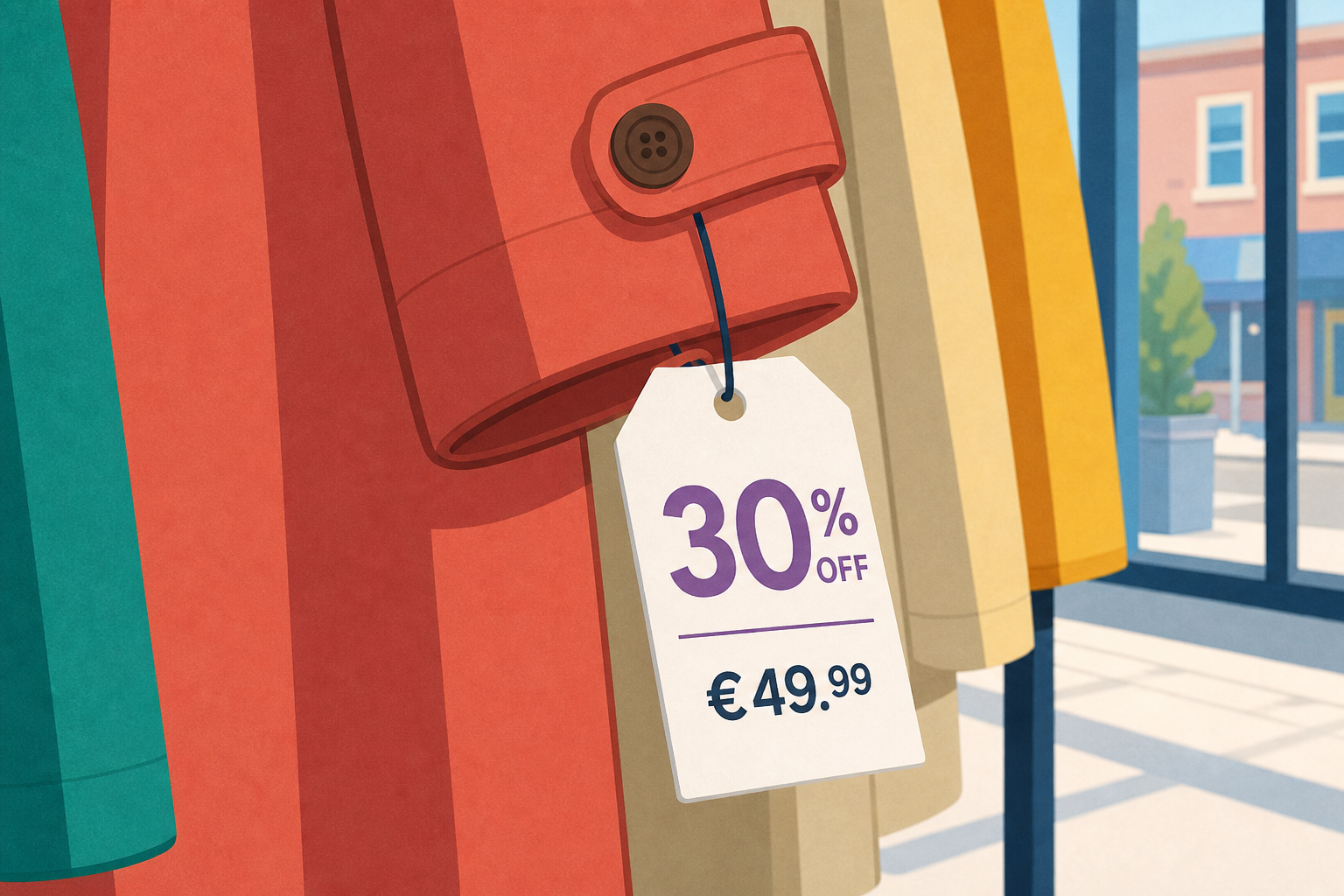
Here is a sale tag from a shop window: 30% OFF a coat priced €50.
Before we work anything out: roughly, do you pay a bit less than €50, half of €50, or nearly nothing? And what is the quickest way you can think of to find the actual price you'd pay at the till?
Look at each price bar split into its percentage parts. Look for where the discount lands, and how much of the price is left to pay. On the last one, notice that VAT is an extra part of the bar, making the total bigger, not taken away.
Now look at VAT going the other way, added on top:
Here are three more price bars, one under the other. The first is a €40 jacket with 20% off. The second is a €120 bill with 10% off. The last is a €30 net price with 23% VAT added on top.
Read each bar together. For every bar, explain how the euro amount of each part comes from the percentage.
In your maths copy, for each example draw a price bar split into its percentage parts. Beside each bar write the percentage amount in euro and the final price you'd pay.
Today we work through these together in your copy, each one a step harder:
Work out the price at the till for each shopping situation, showing your discount and VAT working.
Ways to start:
Stretch:
You're previewing this lesson. Get full access to this lesson and hundreds more — each one ready to teach, with interactive activities, printable resources and pupil progress tracking built in.