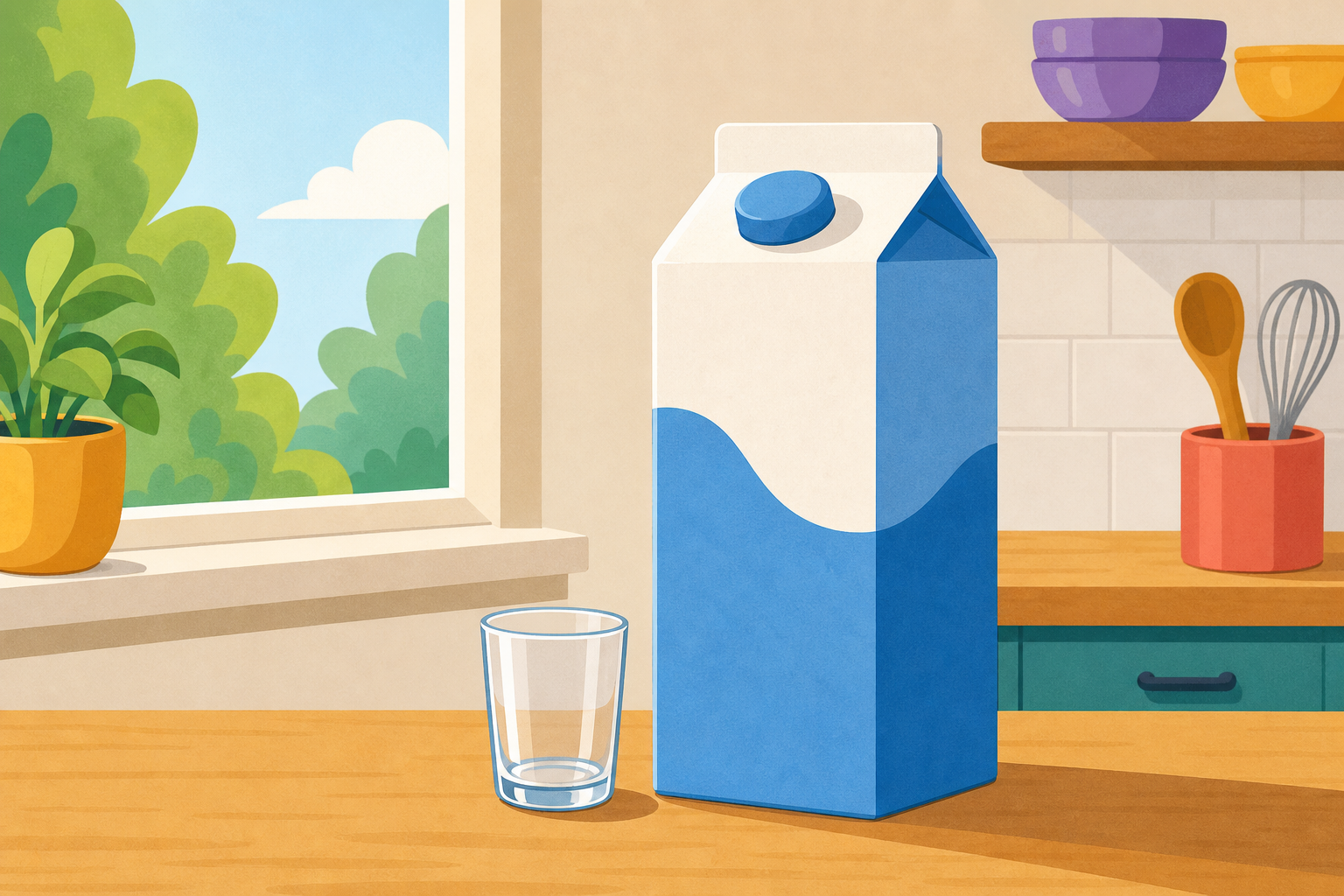
Here is a 250 ml glass next to a 2 l carton of milk. Capacity means how much a container can hold.
Roughly how many of those glasses do you think we could fill from one full carton? Have a guess before we work it out.
Look at the jugs in the picture. Read the level on each and notice how the marks are spaced — some count in 50 ml, some in 100 ml. Look closely at the top of the water: it curves up at the sides. That curve is the meniscus, and we read the flat dip in the middle, with our eye level with the mark.
Today we work through setting the liquid level to a called-out volume: first 100 ml, then 250 ml, then 500 ml, then 750 ml. Watch how far up the scale the level has to climb each time.
Remember the fractions of a litre as we go: 250 ml is a quarter, 500 ml is a half, and 750 ml is three quarters of a litre.
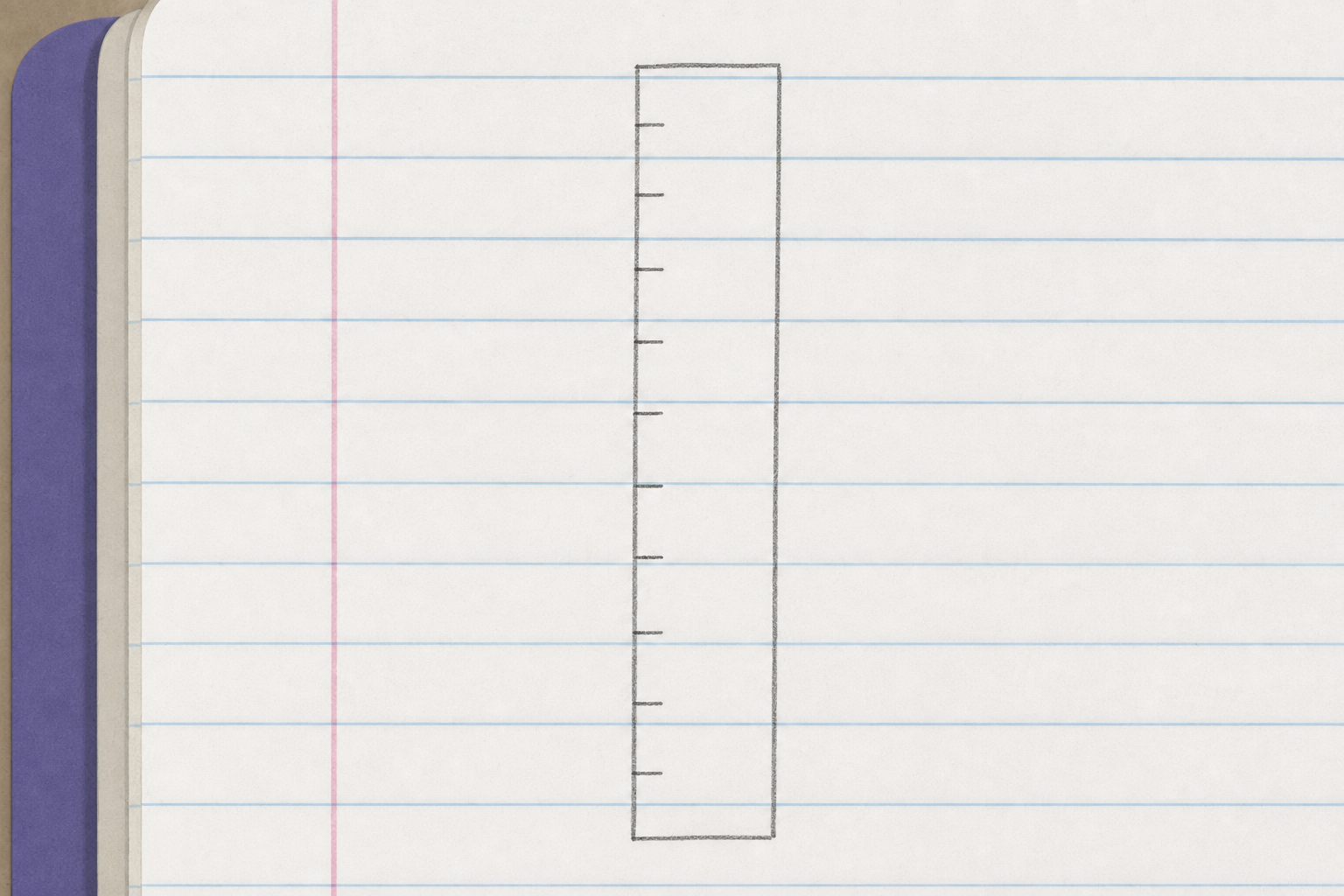
In your maths copy, sketch each jug as a tall rectangle. Mark the key readings up the side: 100 ml, 250 ml, 500 ml and 1 l.
Then draw the liquid level (the meniscus) at 100 ml on the first jug, 250 ml on the second, 500 ml on the third and 1 l on the fourth, and write the volume underneath each jug.
Today we set the level to match each target in turn: 100 ml, then 250 ml, then 450 ml, then 750 ml, and finally 1.25 l on the bigger jug. The 450 ml one lands exactly on a minor mark between the 400 and 500 marks.
The last target is on the bigger jug: its scale goes up to 2 l and its small marks jump by 100 ml, so read it more carefully. The level climbs a quarter past the litre line to 1.25 l.
You're previewing this lesson. Get full access to this lesson and hundreds more — each one ready to teach, with interactive activities, printable resources and pupil progress tracking built in.