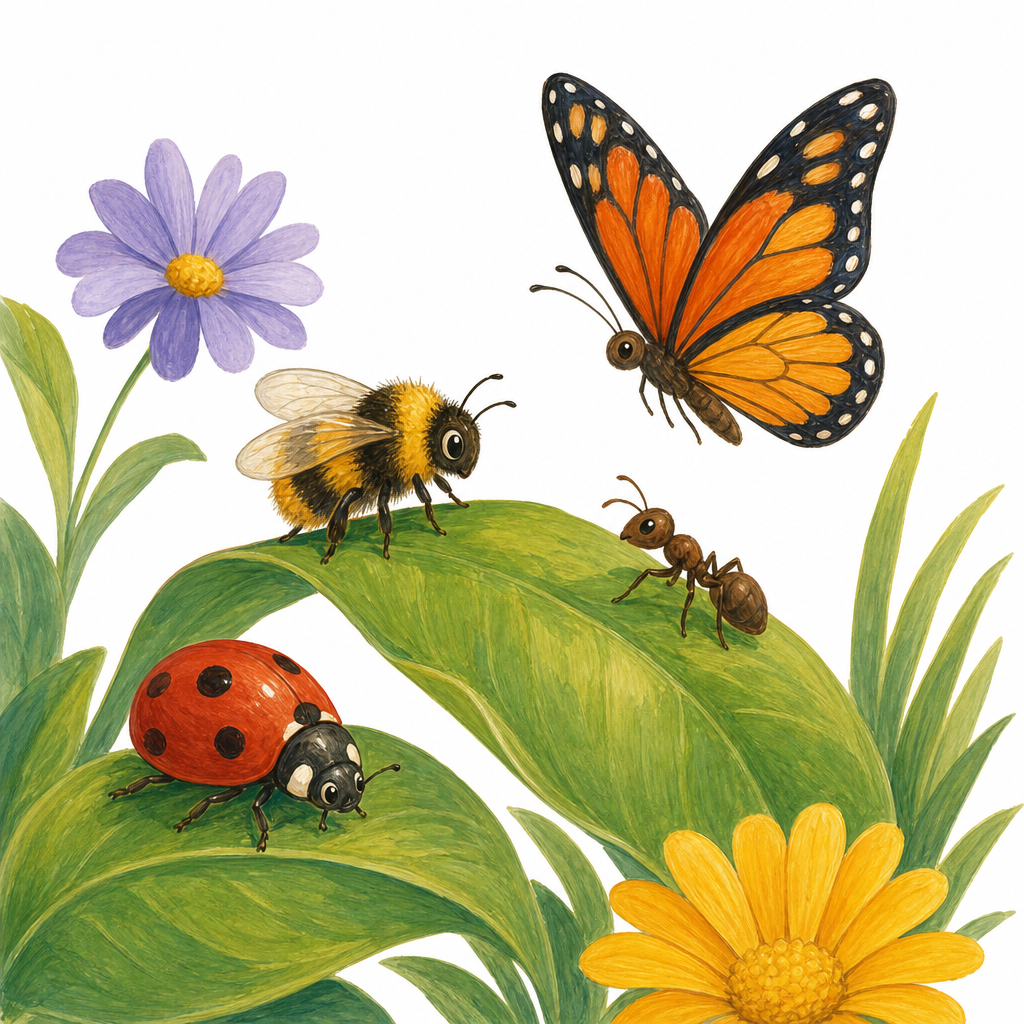
 How many legs does an insect have? Six. Now, how many insects can you name in English in twenty seconds?
By the end of this lesson, you will be able to:
- Name eight insects in Spanish, each with el or la
- Spot the hardest sound in each new word
- Recognise the insect words quickly when you hear them
Some of these are beautiful, some are itchy, and one has a very long name — let's meet all eight.
Here are today's insects in two batches. Listen to each one, then say it back together. Watch for the j sound in abeja and escarabajo: it is like a soft h in the throat, not like the English j in jam. Also listen for the ñ in araña (a ny sound).
First four, then a quick chorus check. Second four, then all eight once more together.
You are in a park in Andalucía under almond trees. The wheel lands on an insect. Whisper its Spanish name with el or la together first, then one pupil says it aloud and adds one thing in English: would you be happy to see it on the blossom, what colour it is, or where you might spot it.
Look at the insect list still on the board. Copy four into your copy with el or la, then underline the hardest bit to say.
- la mariposa — Butterfly
- la abeja — Bee
- la hormiga — Ant
- el escarabajo — Beetle
- la mariquita — Ladybird
- la araña — Spider
- la avispa — Wasp
- el saltamontes — Grasshopper
Everyone gets a paper bingo card (or you will copy six of the eight insects from the board onto your mini whiteboard or copy). Listen hard — la avispa is sneaky and la mariquita is tiny on the card. Cross off each insect on your card when you hear its Spanish name. When every insect on your card is crossed off, call Bingo!
Unlock the full learning experience
You're previewing this lesson. Get full access to this lesson and hundreds more — each one ready to teach, with interactive activities, printable resources and pupil progress tracking built in.
This lesson is copyright of Coding Ireland 2017 - 2026. Unauthorised use, copying or distribution is not allowed.