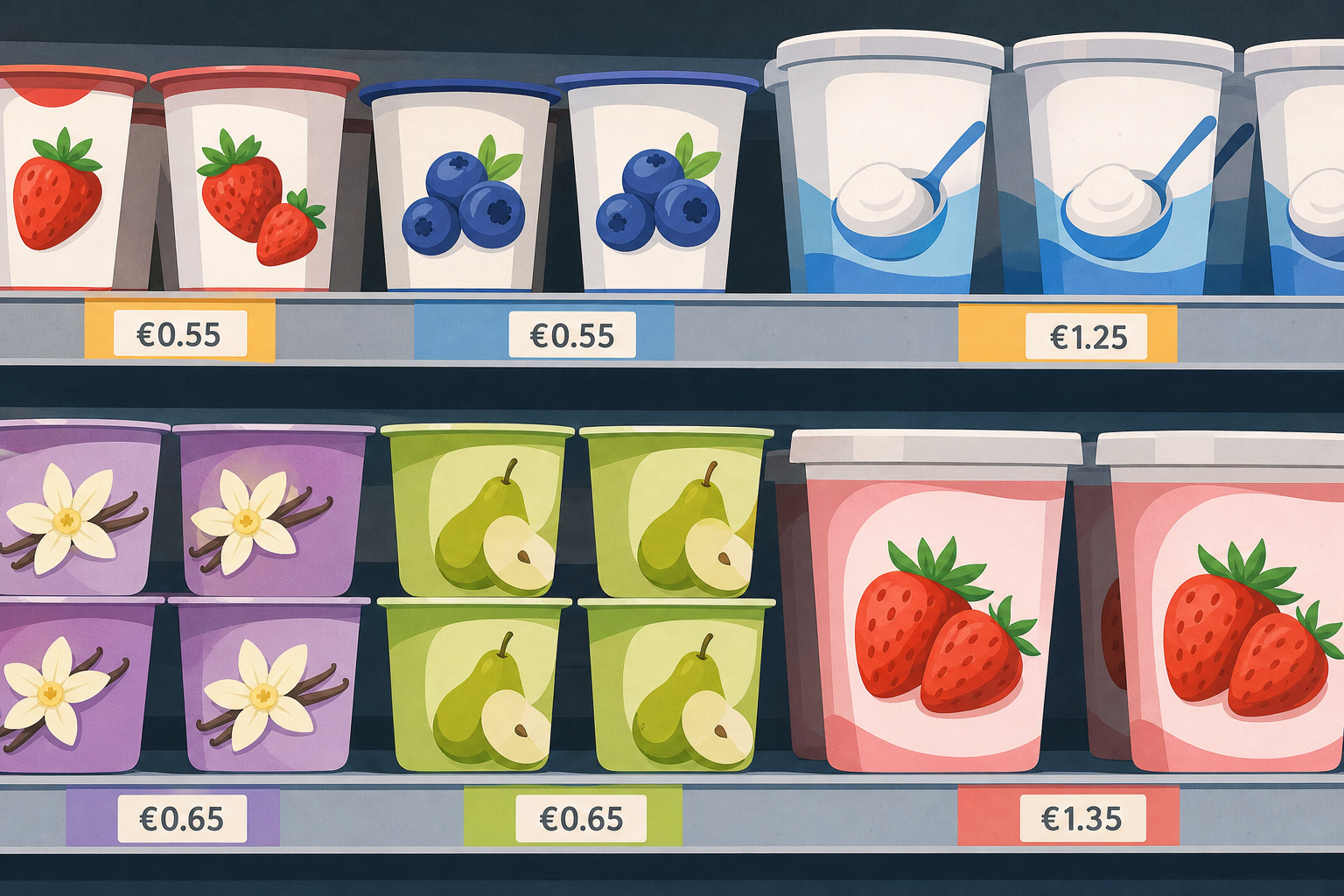
Two shelf tags for the same yoghurts: Lidl has a 6-pack for €2.40, and Tesco has an 8-pack for €3.20. Which one is better value?
Hands up: what would you need to work out before you could be sure?
Three comparisons on the board. For each one, watch how we get to the price of one before we decide anything. The first one is a surprise: two very different yoghurt tags.
Next is a lunch deal. One shop sells 4 sandwiches for €6.00. The other sells 6 of the same sandwich for €8.40. We divide each total price by its pack size to find the cost of one sandwich, then compare those two single prices to see which pack is better value.
This next one is sold by weight, so counting items will not help. We line both packs up on the same measure: the price of one 100 g piece. The 1 kg block is ten 100 g pieces, and the 250 g block is two-and-a-half 100 g pieces. Watch which pack costs less for the same 100 g, even though one looks dearer at first.
Today we work this one together on the board: €3.60 for 3 chocolate bars against €4.80 for 4 of the same bar. We work out the price of one bar for each pack, then tap to reveal the per-unit prices and see how they compare.
In your maths copy, work out the price of one for each pack on its own line. Show the division for both tags, then circle the better deal. For the water, work out the price of one litre.
Today we work through these four shop comparisons, each one a little harder than the last. For each tag pair, predict the winner before we tap reveal:
You're previewing this lesson. Get full access to this lesson and hundreds more — each one ready to teach, with interactive activities, printable resources and pupil progress tracking built in.