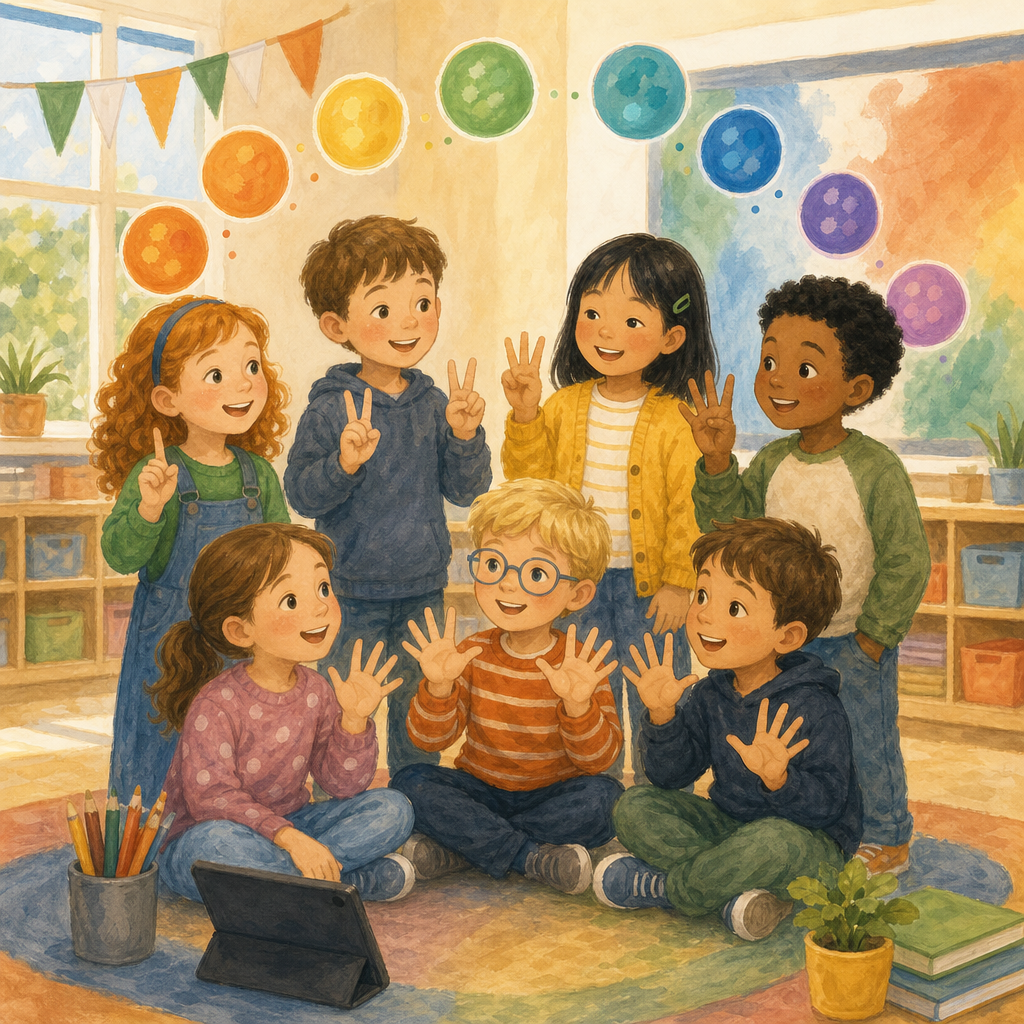
 Count to ten in English together. Now try it in Irish: a haon, a dó, a trí… What sounds the same?
Today you will hear the French way. Listen for any numbers that feel familiar.
By the end of this lesson, you will be able to:
- Count from one to ten in French
- Spot French numbers when you hear them
- Notice which ones sound like English or Irish
Listen to each French number, then say it with the class. We meet 1 to 5 first, count them back together, then 6 to 10.
After you have heard and said each one, flip the card to see how it is written. Six (sees) and dix (dees) are the sneaky ones: they look like English but sound different. If you catch yourself saying the English version, laugh and switch to French. That is how brains learn!
First, a quick ear warm-up: when you hear a French number, hold up that many fingers.
Then cross off each French number on your bingo card as you hear it called. The first few calls come with the English once so you can settle in; after that, French only. Listen hard for close pairs like six and dix. When every number on your card is crossed off, call Bingo. Bravo when someone calls it!
Copy the ten French numbers from the board into your copy in a column, with the digit beside each word.
- un — one
- deux — two
- trois — three
- quatre — four
- cinq — five
- six — six
- sept — seven
- huit — eight
- neuf — nine
- dix — ten
You are at a French bakery counter. The wheel lands on how many you want. Say that French number aloud clearly (whisper to your shoulder partner first if you like), then the class echoes it back.
No worries if you need the first sound, that still counts as brave French. Ready to order?
Unlock the full learning experience
You're previewing this lesson. Get full access to this lesson and hundreds more — each one ready to teach, with interactive activities, printable resources and pupil progress tracking built in.
This lesson is copyright of Coding Ireland 2017 - 2026. Unauthorised use, copying or distribution is not allowed.