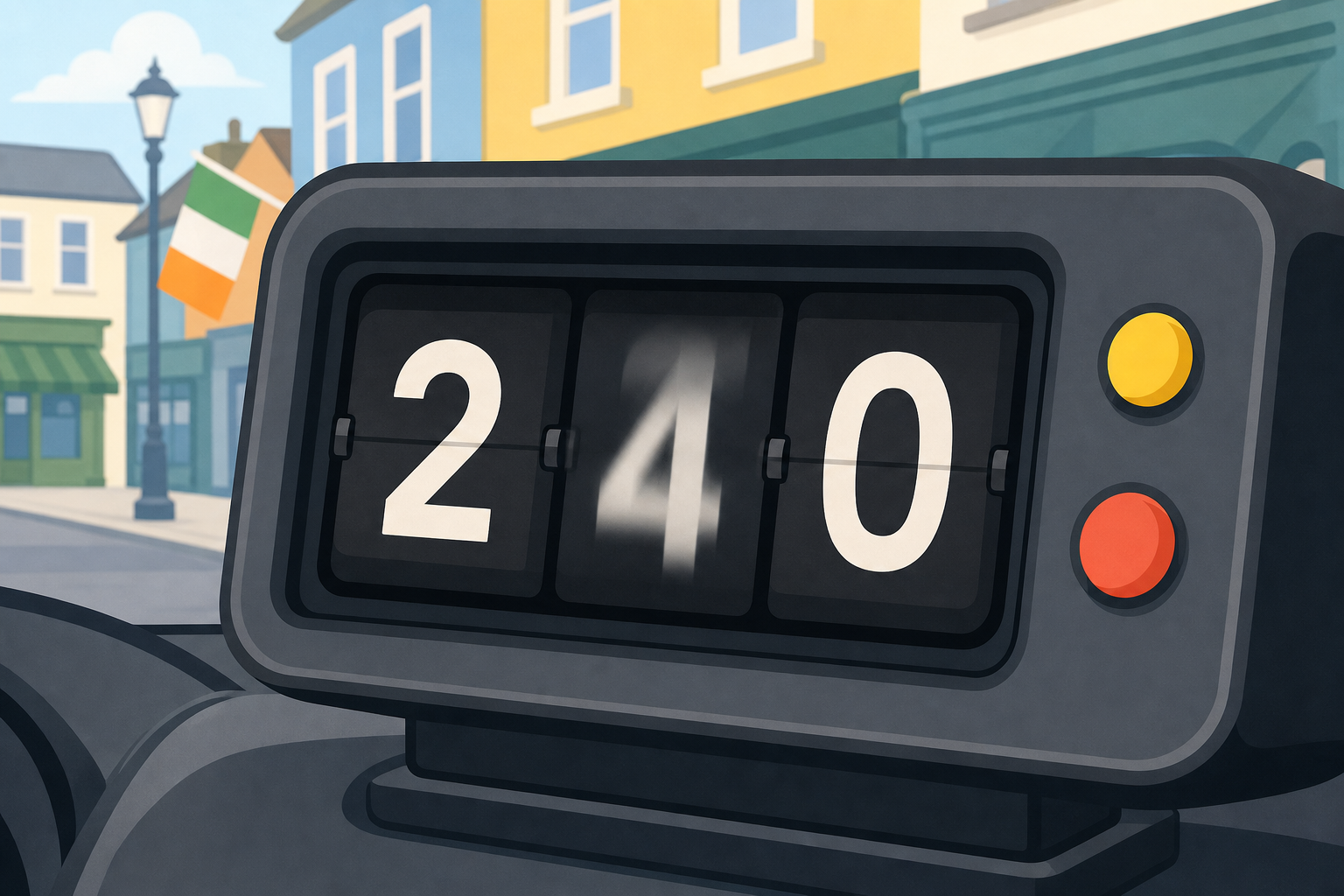
Here is a start number: 240. Let's count on together in tens — 240, 250, 260, 270. As we go, keep your eyes on the number. One part of it keeps changing, but the other parts sit perfectly still. Which part is on the move?
Watch each jump on the number line and read the numbers before and after out loud. Keep your eye on the digits, which one changes, and which ones stay still?
Today we work these jumps together on the board, all starting from 315, one at a time: 10 more than 315, then 100 more than 315, then 10 less than 315, and finally 1 more than 315.
Before each hop lands, the whole class says out loud together which column you think will change. Then the pupil at the board makes the jump and reads the landing number, and we check whether our prediction was right. The last one is small but sneaky — a jump of just one — so watch the units carefully.
In your maths copy, write each of these two start numbers. Beside each one, write its 1 more, its 10 more, and its 100 more. Read each new number aloud after you write it, and check which column changed. Aim to finish both numbers. Remember 290: when the tens are a 9 and you add ten, they roll over into the hundreds.
If you finish both, write the 10 less and 100 less for each as well.
The middle one is the tricky one — the tens are already a 9, so count carefully as they roll over into the hundreds.
Today we work through these reach-the-target jumps together: 100 more than 260, then 10 more than 290, and finally 10 less than 400. The whole class predicts where each jump will land before we check on the board.
You're previewing this lesson. Get full access to this lesson and hundreds more — each one ready to teach, with interactive activities, printable resources and pupil progress tracking built in.