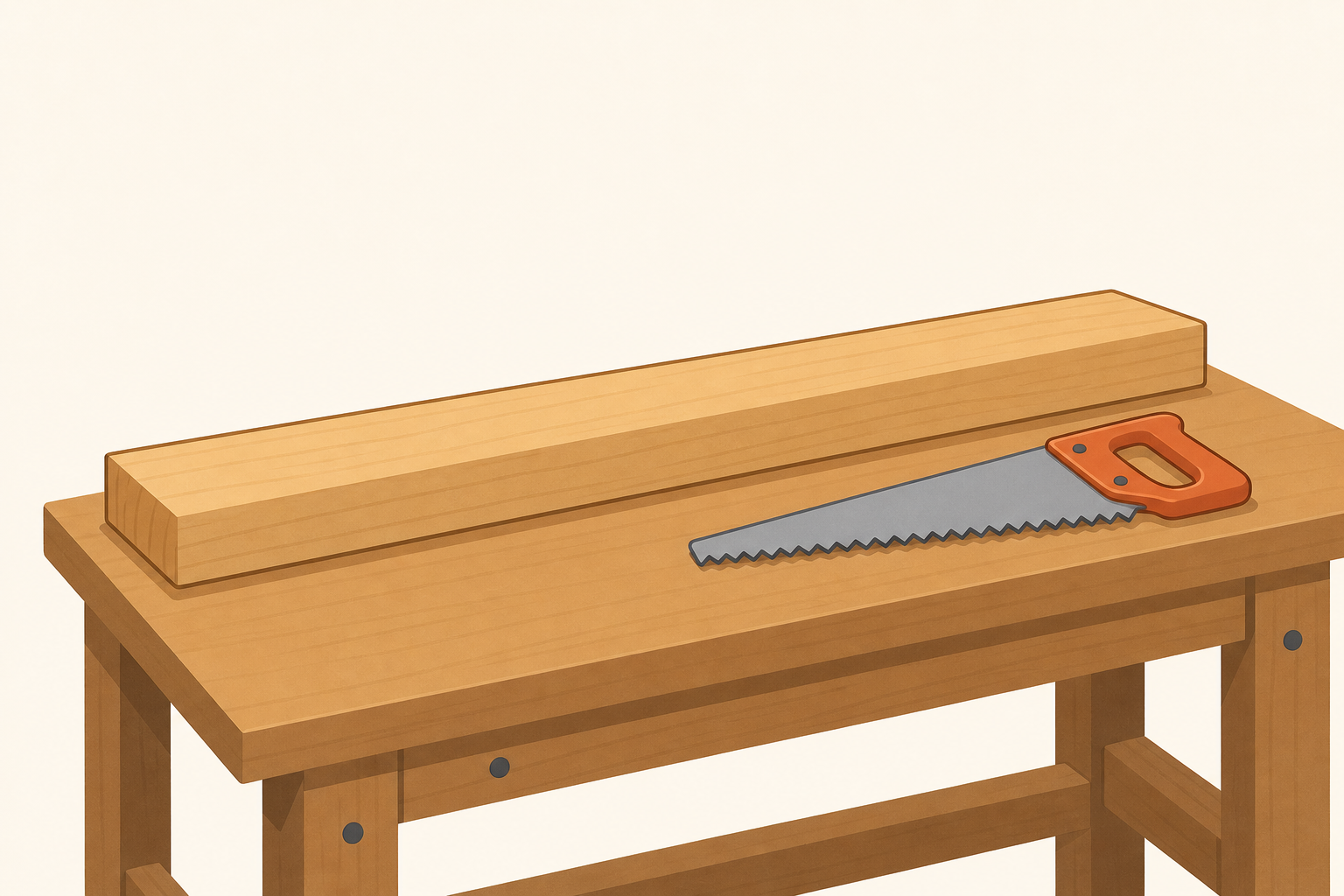
A 2.4 m plank is cut into pieces, each 0.6 m long. How many pieces will you get, and how could you check your answer?
We will work through four measures problems. None of the measurements land on tidy whole numbers, so watch how we handle decimals and fractions of a unit. For each one, look for two things: which operation the words are asking for, and which unit the answer belongs in.
Now we work through these measures problems together, one after another. First: ¾ of a 2 litre carton of juice is poured out — how many litres is that? Remember the two steps we just saw: find one quarter of the 2 litres first, then take three of those quarters. Next: a 5.6 m roll of ribbon is cut into 0.7 m lengths — how many lengths? Last: 4.5 litres of paint is shared equally between 3 rooms — how much paint does each room get? We say the operation aloud before we solve each one.
In your maths copy (or on the problem sheet), set out one decimal-measure problem and one fraction-measure problem in full. For each, write the given facts, then your working, then the answer with its unit. Box each final answer.
Now we work through this set of measures problems on the interactive, each one a step harder than the last. The last one is the stretch: a bag holds 3 kg of compost, and 1.8 kg of it is used. How many kilograms of compost are left in the bag? After Check, we write that leftover as a fraction of the whole bag together.
You're previewing this lesson. Get full access to this lesson and hundreds more — each one ready to teach, with interactive activities, printable resources and pupil progress tracking built in.