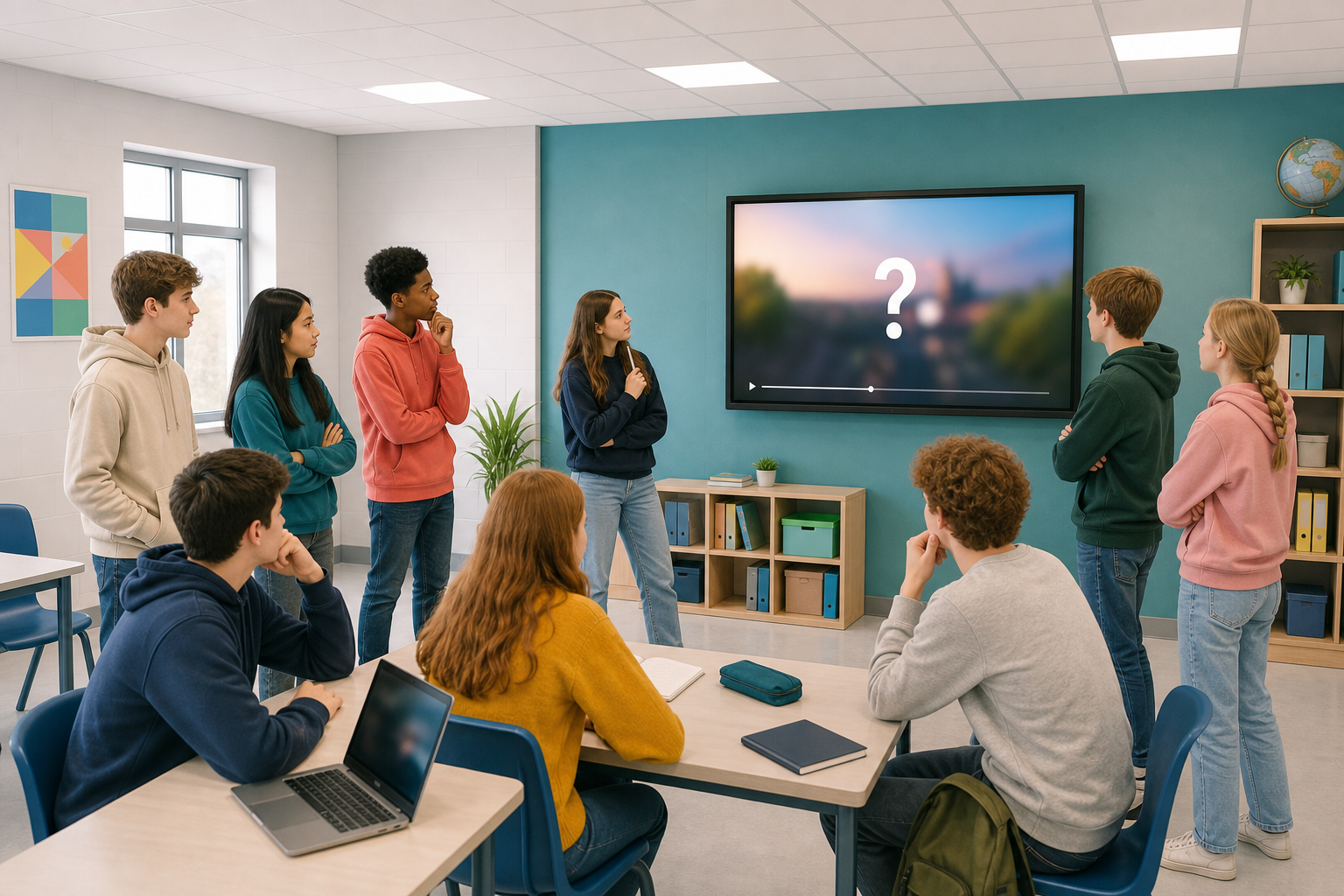
 You have already practised spotting when a photo, clip or recording has been changed. Today's question is harder. Can you still tell when something was made by a computer and never recorded from real life?
You will learn what deepfakes and synthetic media are. Then the class will vote on some examples, calling each one real, likely synthetic, or cannot tell. After that, you will talk about what this means for news, evidence and trust.
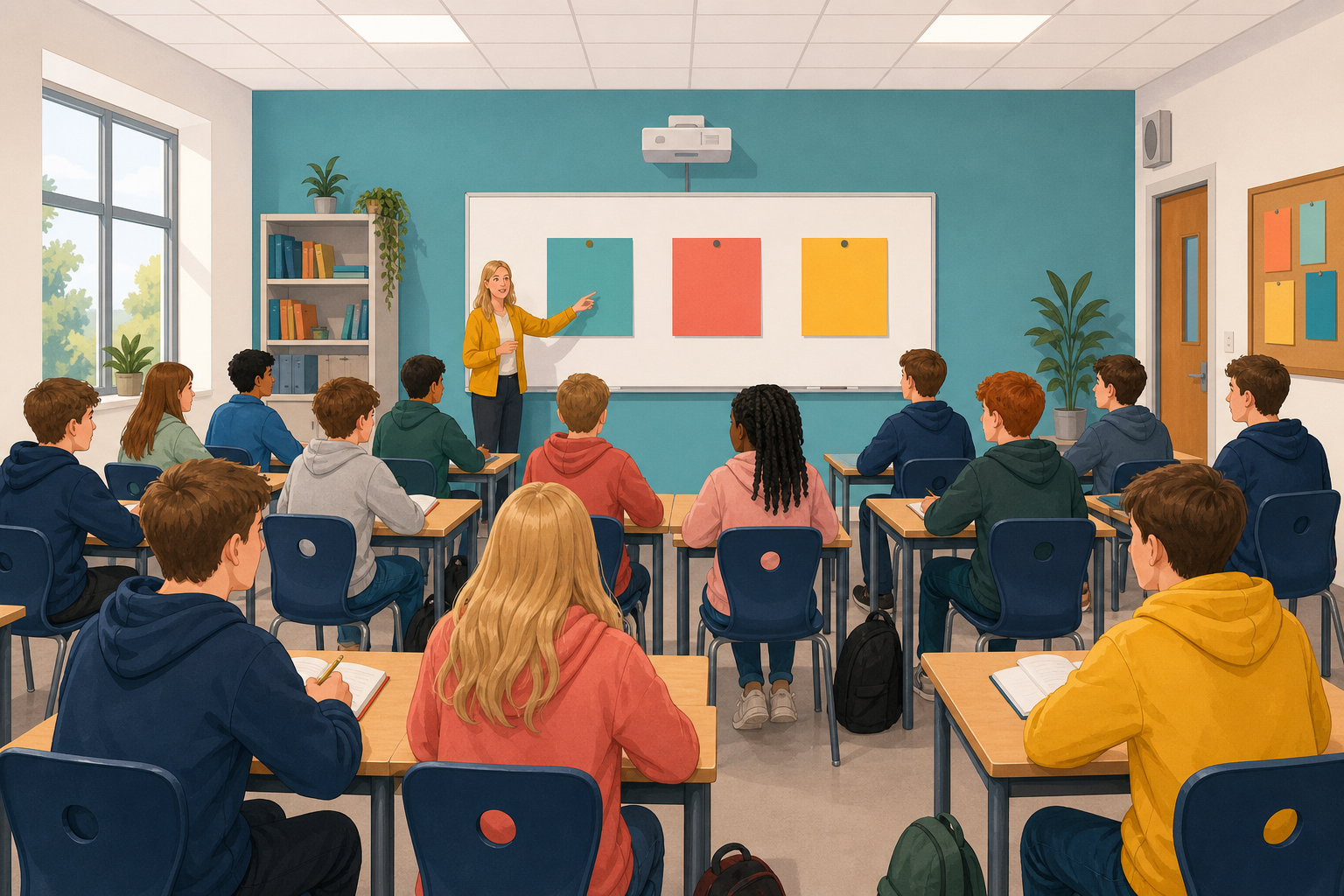 Synthetic media is pictures, sound or video made fully or partly by a computer. A deepfake is synthetic media that makes a real person seem to say or do something they never did.
You will give each example one of three answers:
- Real: it was recorded from real life, with small natural flaws and a source you can check.
- Likely synthetic: there are strong signs that a computer made or changed it.
- Cannot tell: what you can see or hear is not enough to decide.
A sharp picture does not prove something is real. Saying cannot tell at the right time is part of the skill.
Your teacher will run this challenge on the board. The activity has five made-up items, and the class will work through them together.
For each item, read it closely with a partner and talk about what you notice. Then the class agrees on one answer and says why, and after that the activity shows the reasoning. Your reasons count more than your score.
Be ready to say which detail helped you most, and when you chose cannot tell on purpose.
Real, likely synthetic, or cannot tell?
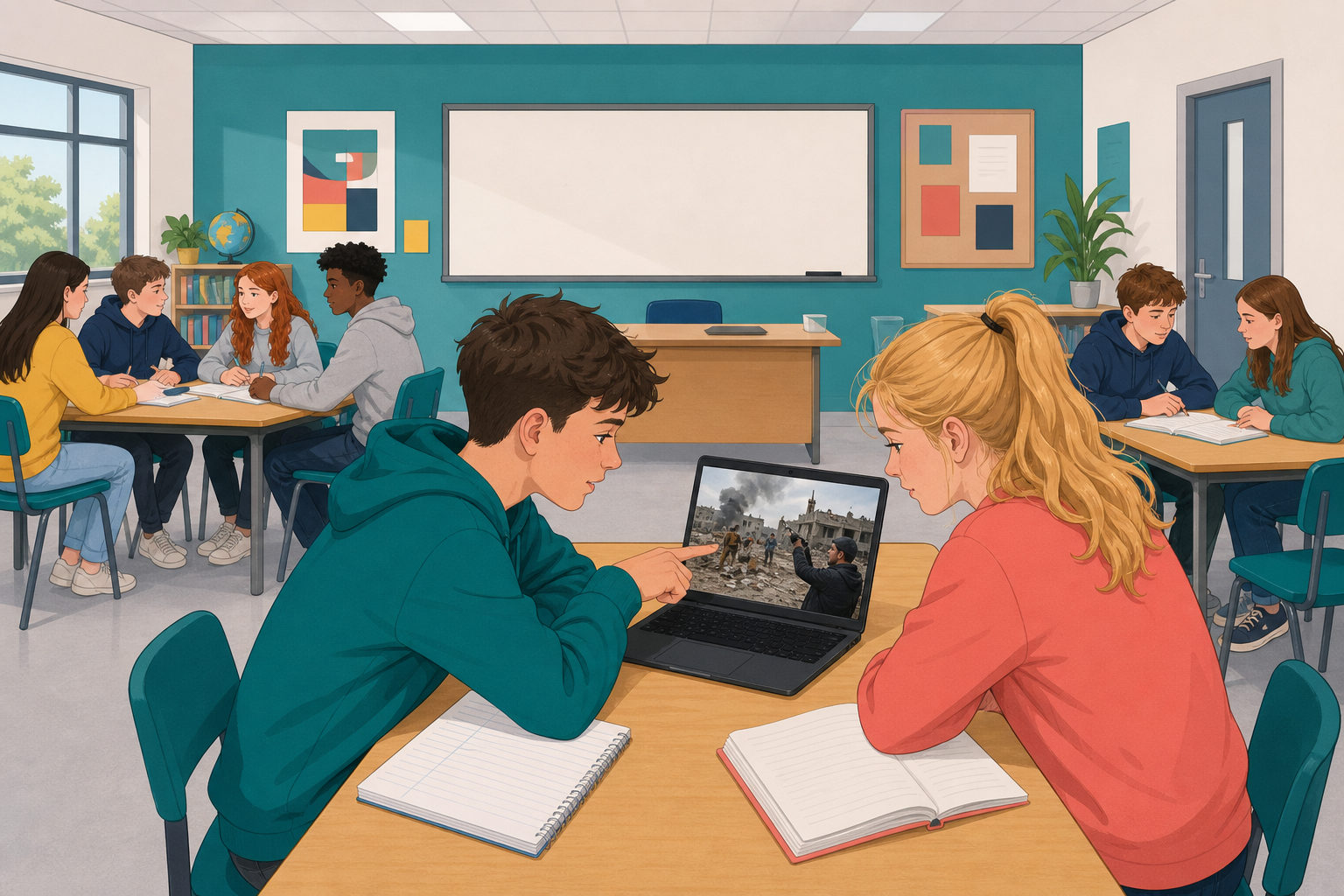 Talk about this open question with a partner first, and then as a class. There is no single right answer that you are meant to reach.
When any picture, voice or video could be faked, what changes for evidence, and for trust between people?
Use the two case cards below. For each card, name one risk and one habit that would help, and be ready to share one sentence with the class.
1. Evidence: A voice note appears in a club group chat. In it, a committee member seems to admit spending bake-sale money wrongly. They say they never said it. What would make the clip stronger or weaker as evidence?
2. Trust: A sports star that students follow posts an emotional apology video. The comments are split between "finally" and "this is fake". What do you lose if you never believe anything, and what do you lose if you believe everything?
Before you finish, check that:
- you and your partner have one risk and one helpful habit for both cards, or at least for the Evidence card if time is short
- you can give your view in one clear sentence, even if not everyone agrees with you
- you can say when "cannot tell yet" is the responsible answer
Some pictures, voices and videos are made or changed by computers.
A sharp picture does not prove something is real, and sometimes "cannot tell" is the honest answer.
Remember these three steps:
- Pause when a clip is serious or makes you feel strongly.
- Look for a source you can check.
- Check before you treat a clip as evidence or pass it on.
Better ways to label and spot fake media are still being built. Your part is to judge carefully, not to panic.
Unlock the full learning experience
You're previewing this lesson. Get full access to this lesson and hundreds more — each one ready to teach, with interactive activities, printable resources and pupil progress tracking built in.
This lesson is copyright of Coding Ireland 2017 - 2026. Unauthorised use, copying or distribution is not allowed.