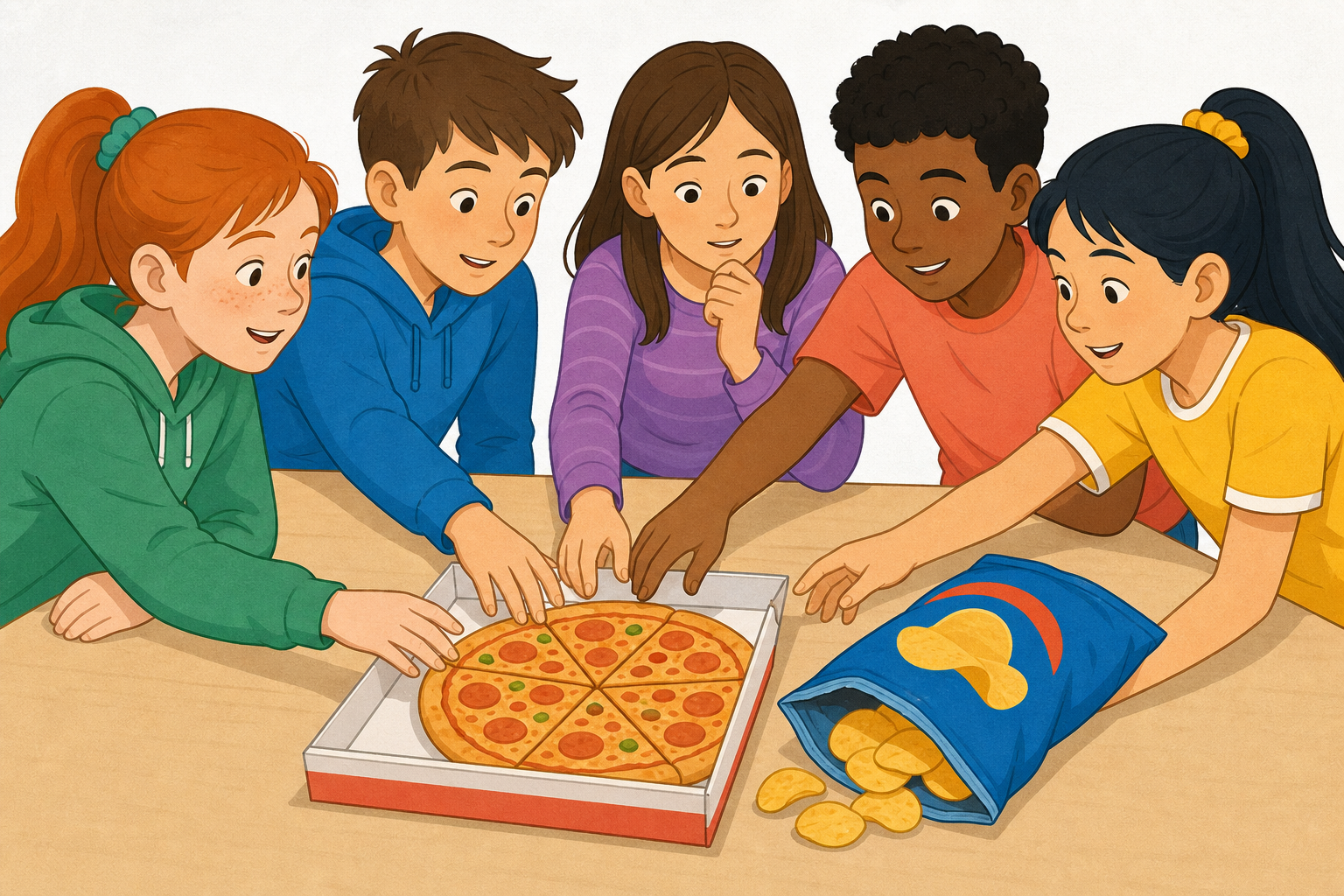
Five friends buy a €15.75 pizza-and-chips deal and agree to split the cost exactly. Hands up: how much should each friend pay, and will it come out evenly?
The interactive shares each amount into equal groups, one example at a time. Watch how each amount splits into equal groups, and see what happens when the last one doesn't share out evenly.
We work through three shares together on the interactive. Before each reveal, say the answer to yourself, then watch the answer appear and notice that the decimal point stays in the same place-value position as in the amount we started with.
In your maths copy, set out each of these decimal divisions with the decimal point in the answer lined up directly above the point in the amount you are sharing:
Beside each answer, write the unit (€ or m) and one short note on how you handled any leftover.
Now we work through these bill-and-bottle shares together, each one a step harder than the last: split a €23.40 bill among 4, share a €14.55 taxi among 5, pour a 2.5 l bottle into 4 equal glasses. Then comes a different kind of question. The last one is not a straight share — it asks how many you can buy and what change you get. You have a €50 note and each item costs €7.25. To answer it you count how many €7.25 items fit inside €50, then work out what is left over as change.
Share real bills and bottles into equal parts, then work out how much you can buy and what change is left.
You're previewing this lesson. Get full access to this lesson and hundreds more — each one ready to teach, with interactive activities, printable resources and pupil progress tracking built in.