Intermediate
40 mins
Teacher/Student led
+80 XP
Teacher-led from the board. Pupils do not need a device, but can follow on one.

Doubles: Two of the Same

In this maths lesson you explore doubles by building them as two matching rows of counters on a ten-frame. You will notice that the totals climb in twos and follow a clear pattern.

Teacher Class Feed

Load previous activity
    Your turn
    Your teacher is running this lesson on the board. Here is the part you can try yourself.
    Ten frame
    Ten frame

    1 - Getting Started ~3 mins

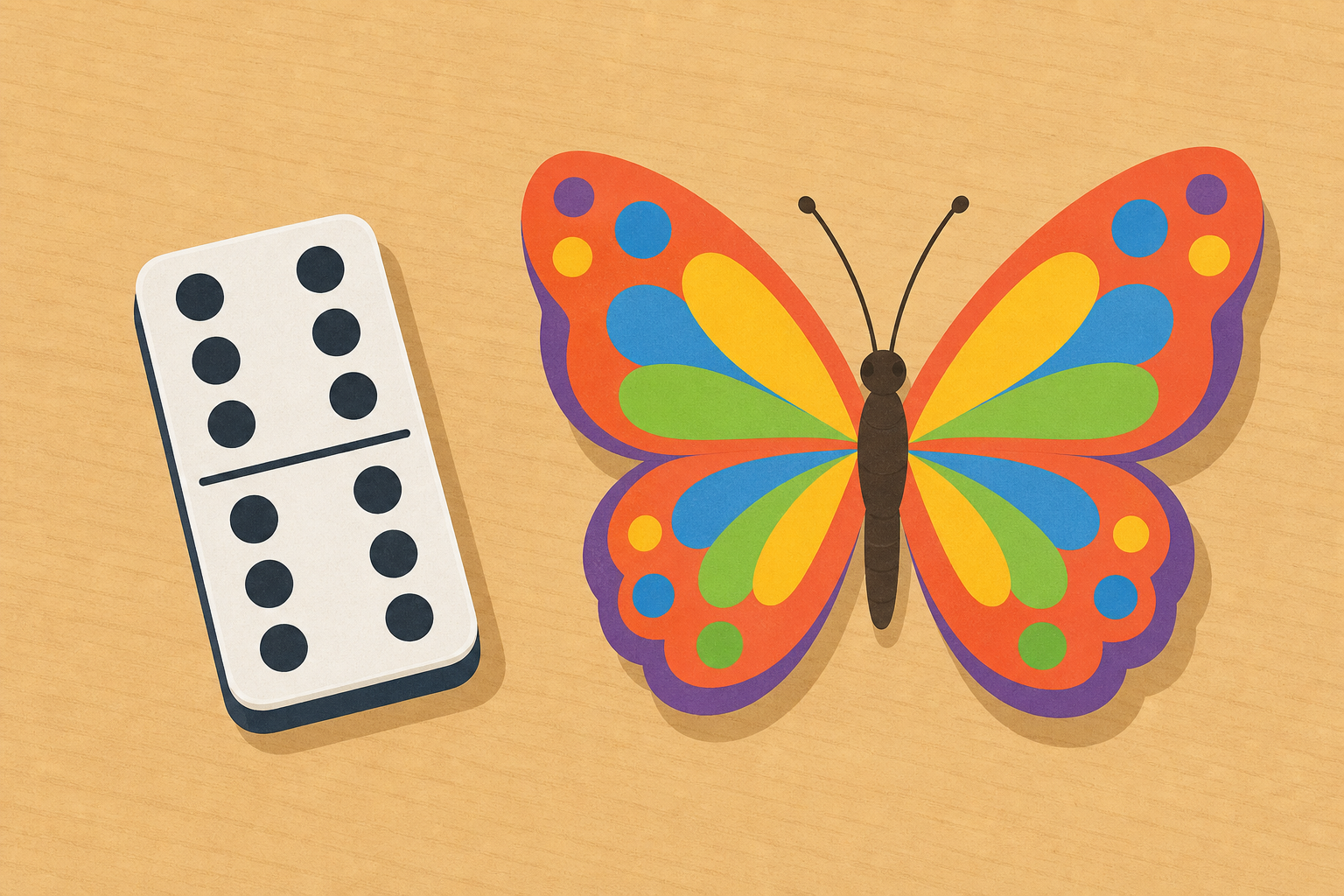
    Illustration for Getting StartedLook at the domino with the same count on both ends, and the butterfly with matching wings. What do you notice about the two sides?

    2 - Watch and Notice ~8 mins

    A double is the same number twice: two matching parts.

    Look: two matching rows. What total do they make?

    For the last one, say the total before we reveal it.

    3 - Try It Together ~8 mins

    We build double 2, double 3, double 4 and double 5 together on the ten-frame. Watch the matching rows.

    Build a double

    4 - Write the Doubles in Your Copy ~2 mins

    COPYBOOK MOMENT

    In your maths copy, write these two doubles, one under the other:

    • 4 + 4 = 8
    • 5 + 5 = 10

    5 - Class Challenge ~8 mins

    We check these doubles together on the ten-frame: double 2, double 3, double 4 and double 5. Watch how the matching rows grow.

    Build the double

    Pupil practice
    Module 2 · Addition Within 20: Combining, Plus and Equals Number
    Lesson 22 · Doubles: Two of the Same
    Download Activity Book page (PDF)
    123learn · Online learning platform

    Unlock the full learning experience

    You're previewing this lesson. Get full access to this lesson and hundreds more — each one ready to teach, with interactive activities, printable resources and pupil progress tracking built in.

    Hundreds of curriculum-aligned lessons
    Interactive activities in every lesson
    Printable resources & progress tracking
    Copyright Notice
    This lesson is copyright of Coding Ireland 2017 - 2025. Unauthorised use, copying or distribution is not allowed.
    🍪 Our website uses cookies to make your browsing experience better. By using our website you agree to our use of cookies. Learn more