1 - Start ~4 mins
2 - Eight Kinds, One Example Each ~6 mins
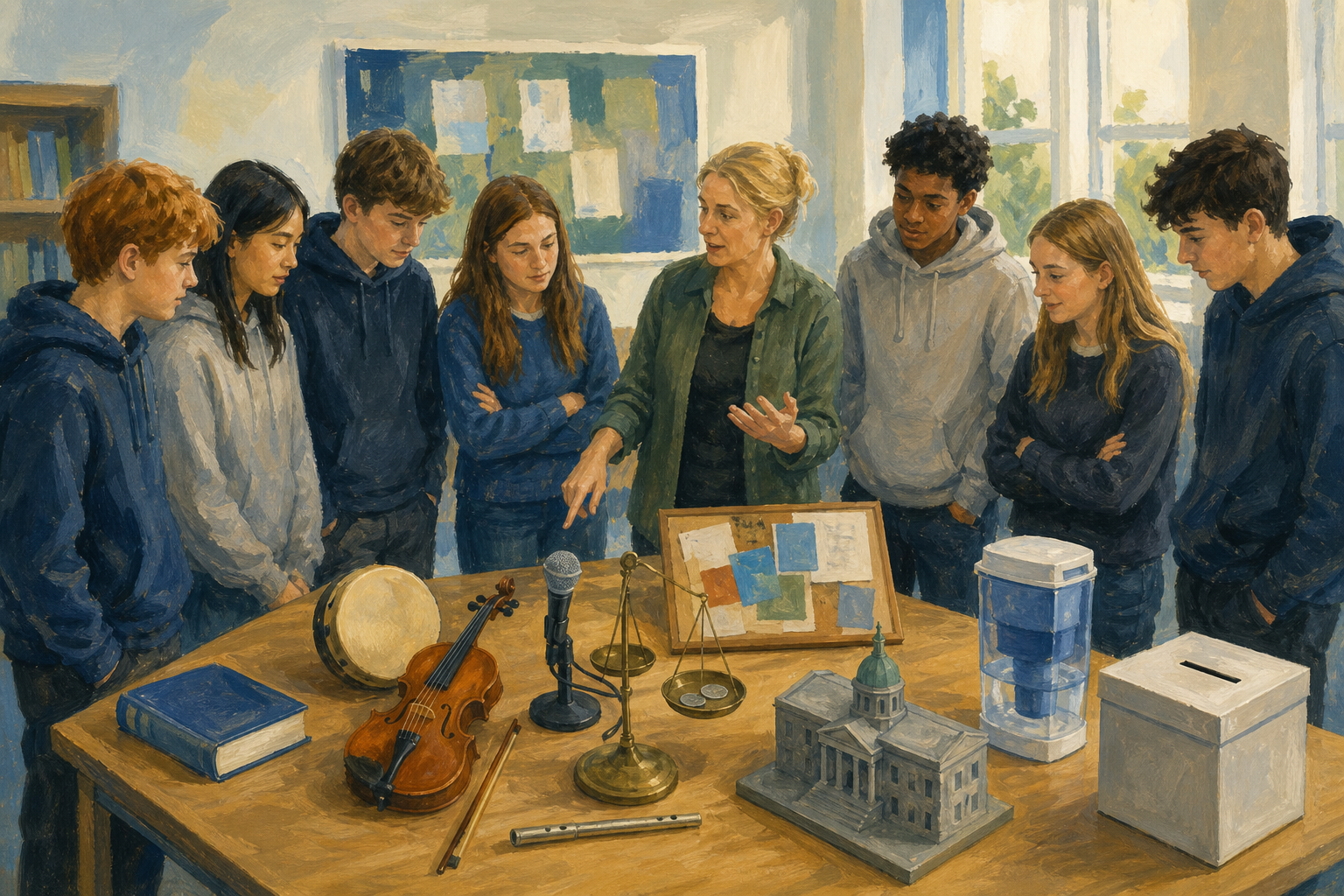
These are the eight kinds of rights this course uses. Each one protects a different part of a person's life. Learn the name and one short example; you will place real situations into these kinds next.
- Social rights: for example, the right to education and to healthcare.
- Cultural rights: for example, the right to take part in the arts, traditions and cultural life of your community.
- Language rights: for example, the right to use your own language in public life where the law provides for it.
- Economic rights: for example, the right to fair pay and to an adequate standard of living.
- Civic rights: for example, the right to take part in community life and to be treated equally by public services.
- Religious rights: for example, the freedom to practise a religion, or none, without the State forcing a choice on you.
- Environmental rights: for example, the right to clean air, safe water and a healthy environment.
- Political rights: for example, the right to vote, to stand for election, and to have a say in how the country is run.
A single real situation often engages more than one kind. That is not a mistake in the list. It is how rights work in ordinary life.
3 - Sort the Situations ~18 mins
Work in pairs with the cards below. Drag each everyday situation into the kind of right it engages. Place each card where your pair can best defend the choice, then be ready to say why.
Some cards fit more than one kind of right. Those cards have no single right answer, so a clear reason matters more than finding the "correct" kind.
You do not need to place every card. Make sure your pair argues at least one card that fits two kinds, and gives a real reason.
Keep an eye on the two pairs on the board that are easy to mix up: social and economic rights, and civic and political rights.
Which kind of right?
4 - Make Sense of It ~9 mins
Look back at any card the class filed under two kinds. What made both placements defensible?
Now find one situation from your own week that engages two of the eight. If nothing comes to mind straight away, pick one of these: a bus journey, a shop, a sports training, a group chat rule, or a school notice.
Use the stems on the board and write three short sentences:
- Something that happened to me this week was...
- That touches my right to... because...
- It also touches my right to... because...
Read your three sentences to a partner.
5 - What You Covered ~3 mins
Unlock the full learning experience
You're previewing this lesson. Get full access to this lesson and hundreds more — each one ready to teach, with interactive activities, printable resources and pupil progress tracking built in.
This lesson is copyright of Coding Ireland 2017 - 2026. Unauthorised use, copying or distribution is not allowed.