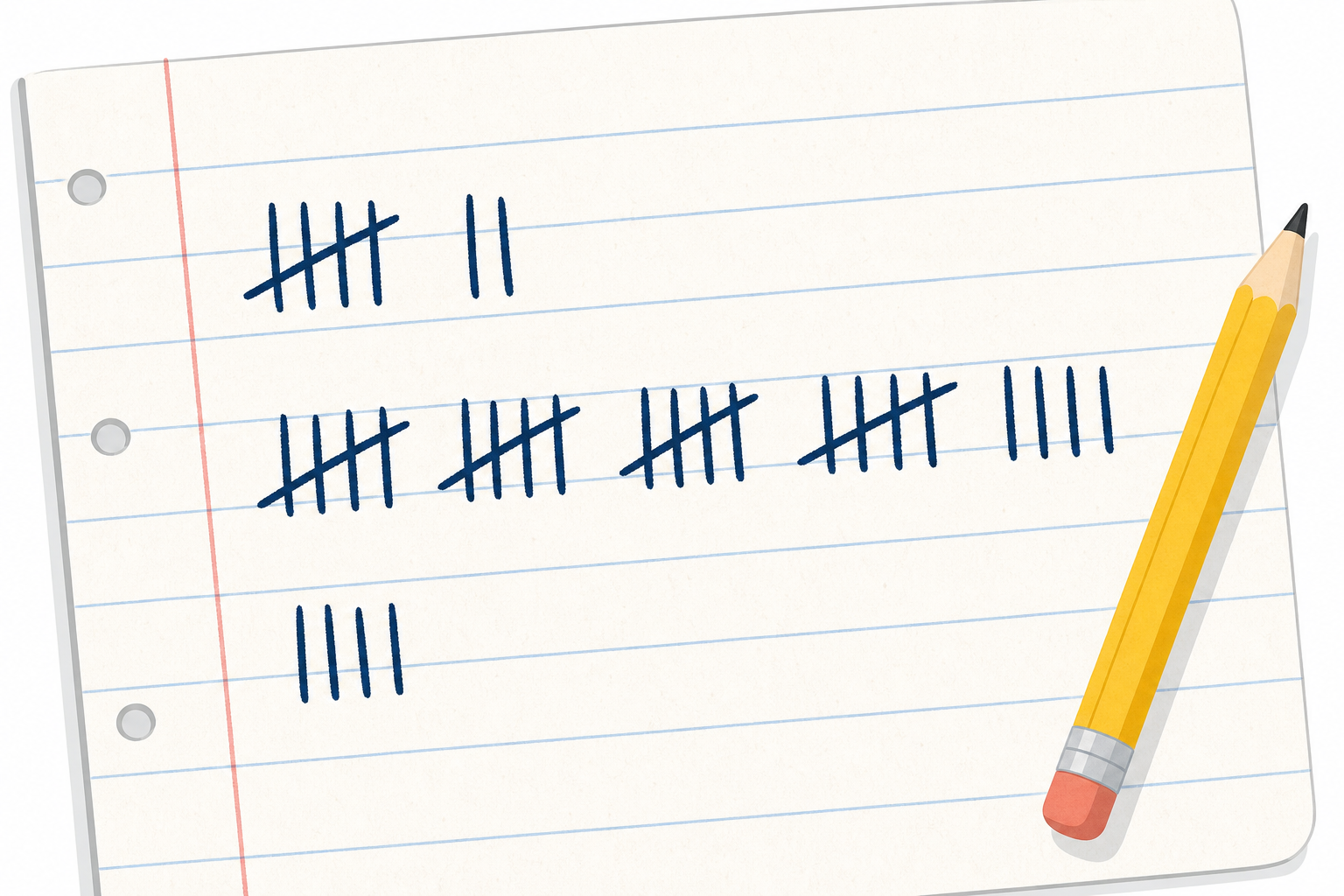
Here is a tally of one thing our class enjoys. Look at it for a moment. What is the very first thing it tells you, just at a glance, before you count anything carefully?
Two pieces of maths from our year are on the board, and a third we will do out loud together. First a bar chart of lunch choices for our class and the class next door, then a likelihood line drawn live, then a balance where a letter stands for a hidden number. To read a bar, run your eye from the top straight across to the number on the side. Watch and be ready to say which lunch won, where each event belongs, and what keeps the balance level.
Now we solve four missing-number sentences together on the balance. We slide the unknown until both pans match. Then we read the whole sentence back to check.
The sentences are a + 5 = 9, then b + 4 = 12, then 7 + c = 15, and finally d + d = 10. The last one is special. Both blocks show the very same number d, so when one block changes the other changes with it. That means we need one number that, added to itself, makes 10.
In your maths copy, do three short pieces of today's review:
Read your work back to yourself when you finish.
Now we build a few bar charts of our year's favourite activities, one at a time, and read each one back to answer questions. First set each bar to the given height. Then read the finished chart against the scale.
Each card asks its own reading questions after the bars are set. One asks which is least popular and how many chose it, one asks how many chose the most popular, one asks for the total of all bars, and the last mixes least popular with the total. Add every bar carefully when you need a total.
You're previewing this lesson. Get full access to this lesson and hundreds more — each one ready to teach, with interactive activities, printable resources and pupil progress tracking built in.