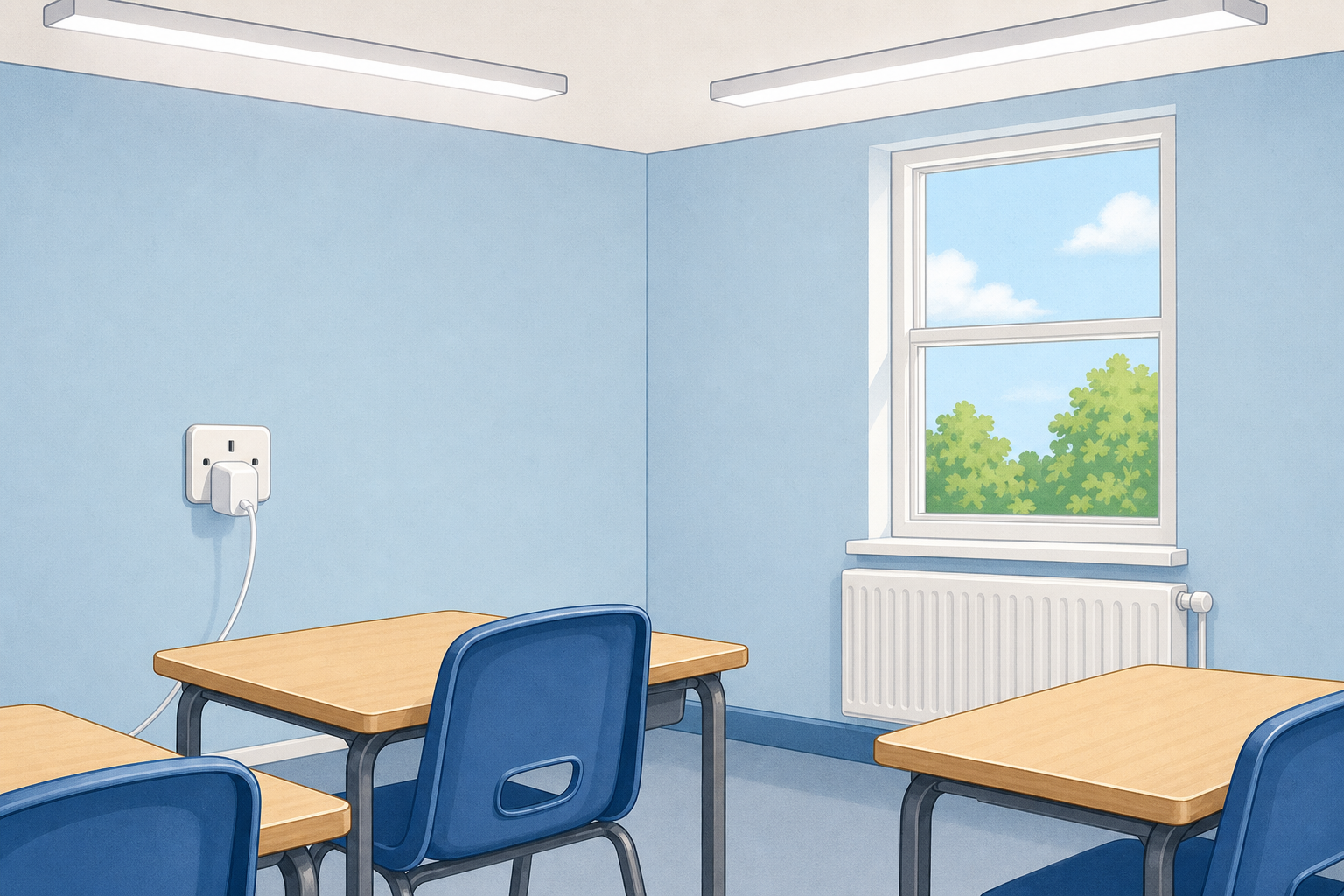
Look around this room for a moment. Which things are using energy right now? Which ones might still be using energy even when nobody needs them?
The same kinds of lights, heating and chargers work at home too, but today we audit energy use and waste around our school, meet one clean energy source used in Ireland, and design one saving action we could really try.
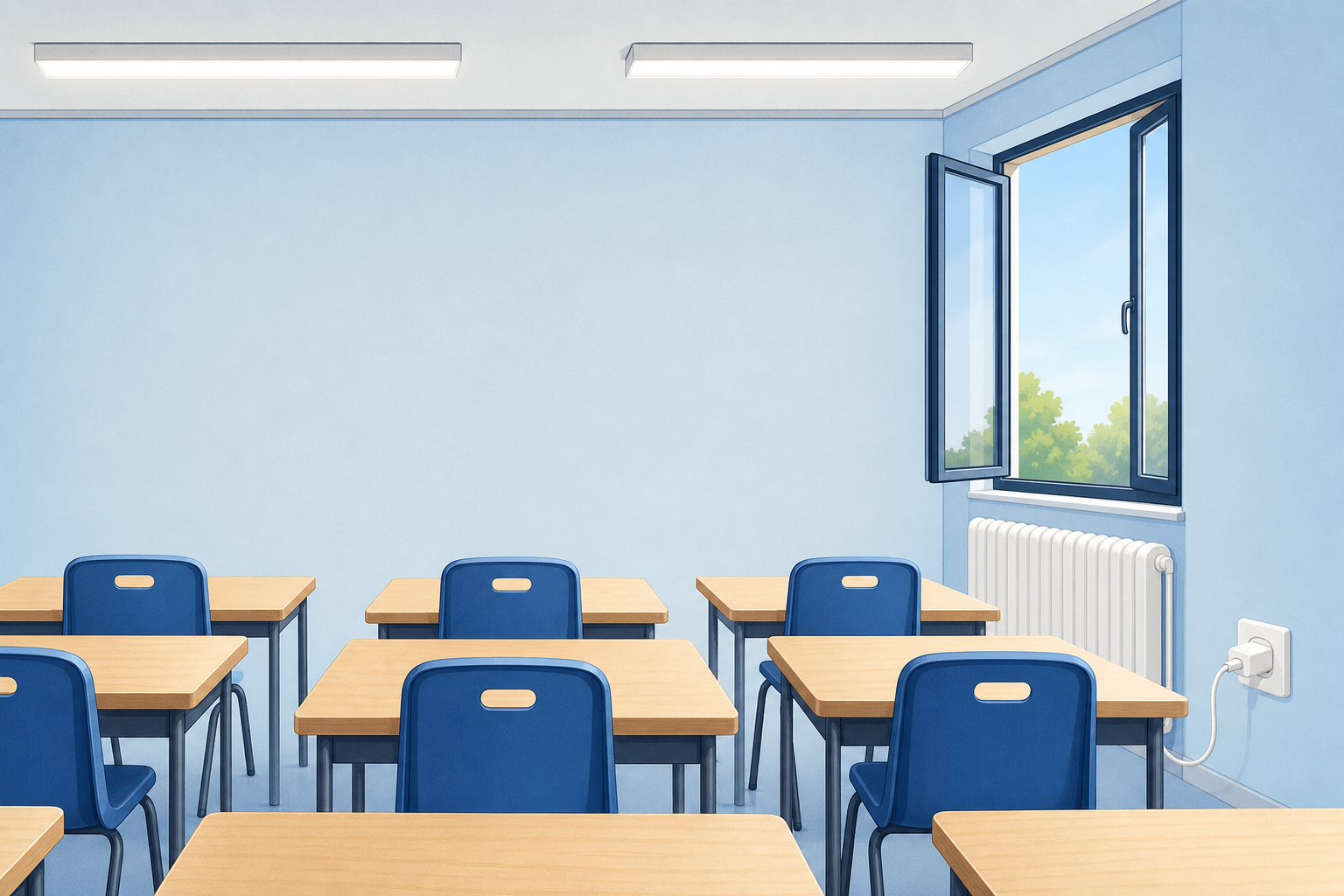
Keep this as a curiosity beat only. Do not hand out audit sheets or walk the corridors yet. Invite three or four quick answers from the class (lights, board, radiators, chargers, kettle in the staff room). One short home link is enough: the same use-and-waste ideas apply at home, but the evidence work today is school-based. Leave the full audit for the investigation step.
Key question: If energy costs money and can harm the climate when it comes from dirty sources, where are we using more than we need?
Have the audit route ready in your mind (for example classroom, corridor, hall, toilets viewed from a doorway) and one adult helper if your school expects it for corridor work.
On the walk we only need two labels. Energy use is where energy is needed to make something work, such as lights, heating or devices. Energy waste is energy used when nobody needs it, or more than is needed, such as lights left on in an empty room.
We'll meet Irish clean energy and invent one saving action after we come back. On the walk, notice where energy is used and where it might be wasted.
| Concept | Why it matters | Example |
|---|---|---|
| Energy use and waste — use is where energy is needed to make something work; waste is energy used when nobody needs it, or more than is needed | You cannot cut waste until you notice where energy is actually going in a real building, and waste is the part we can change fastest without buying new equipment | Classroom lights and the interactive whiteboard are use; lights left on in an empty room or a window open while heating is on are clear waste; a charger left plugged in with nothing attached is small waste, still worth spotting |
| Renewable energy — energy from sources that nature keeps topping up, such as wind, sun and moving water | Ireland is growing clean energy so that using electricity does less climate harm | Wind farms along the Irish coast and hydroelectric power at places such as Ardnacrusha |
| Energy-saving action — one practical change that cuts the energy a class or school uses without spoiling needed work | A small, clear action is more useful than a vague wish to "use less" | A class switch-off checklist at the end of each day, or a closed-door rule when heating is on |
Board focus is the paired use/waste idea and the walk job only. One short spoken line is enough for the later beats (Irish clean energy + one saving action after we return). Do not expand renewables or action design here.
Misconception to head off: pupils may think "using less energy" means sitting in the dark or being cold. Frame saving as using energy when and where it is needed, and choosing cleaner sources where we can — not as going without.
Nature of STEM weave: energy scientists, engineers and school caretakers gather evidence first (an audit), then choose actions. That is how real energy-saving work is done in Irish schools and homes.
Keep the board short. The table is for you; the children need the spoken lines above and the walk purpose only.
Before we leave the room, decide with your group: which place in our school do you think wastes the most energy, and why?
Also choose two waste-sign types your group will prioritise spotting on the walk (for example empty-room lights, heating with a window open, idle devices, or doors left open to a heated space).
Be ready to share one prediction with the class. Predictions are the start of the science, not answers to get right.
Run this as think–pair–share. Groups name one place (hall, toilets, corridor, empty classroom, ICT trolley area) and one reason (lights left on, doors open to heated spaces, devices left charging).
Small methodological choice: each group also picks two waste-sign types to prioritise at stops (from a short board list: lights on with nobody there; heating on with a window or door open; devices left on or idle chargers; other clear waste). They still notice other waste if they see it, but the priority choice gives groups a real audit decision within the safe route.
Key questions: What counts as waste, not just use? What evidence will change your mind on the walk?
Capture two or three predictions on the board so you can return to them when the class data appears later. Do not correct predictions yet.
Hand out Investigation Journal pages and pencils now, before the model stop, so pupils can jot their prediction and two priority waste-sign types before leaving.
We are going on a short energy walk around agreed parts of the school. At each stop, notice what is using energy and what looks like waste. Keep your group's two priority waste signs in mind, and still note any other clear waste you see.
On your Investigation Journal page, record for each stop: the place, what is using energy, any waste you notice, and a simple tally of waste signs.
At doorway stops, the front spotters call out what they can see; we agree the class notes together, then everyone records the same place row before we move on. Stay with your group, keep voices low, and do not touch switches, plugs or heating controls unless an adult asks you to.
Journals and pencils are already out from the prediction step. Model the classroom stop with journals in hand so pupils see how a row is filled before you leave the room.
Model one stop in your own classroom first so pupils see the difference between use and waste.
Worked example to say aloud before you leave:
Then take the class as one supervised body on the agreed loop. Stay with the group at every stop.
Recording affordance at each doorway/corridor stop (so back-of-line pupils are not guessing):
Three stops after the model, then return together. If another class blocks a stop, skip it and use a doorway observation only.
What good recording looks like: place named, at least one energy use (powered only), waste noted or "none seen", and a small tally they can pool later (for example number of waste signs at that stop). Idle chargers count as small waste if seen.
Differentiation: less confident writers can tally and add two or three words from the class call-out; more confident groups can note time of day and whether the waste would change after lunch.
Safety: outdoor or corridor protocol — clear boundaries, walking feet, no running, do not open plant-room or boiler-room doors, do not touch electrical fittings, return quietly. If any area is out of bounds, skip it and use a doorway observation only.
Back in class, we pool our tallies. For each stop on our walk, we will enter the place name and how many waste signs the class found.
Watch the chart appear. Which bar is tallest? What does that tell us about where energy is wasted in our school right now?
Drive the data-recorder on the IWB in explore mode. The columns are Place and Waste signs found. Use one row per stop you actually visited (about four rows including the classroom model stop). Groups call out their tallies; because doorway stops used a shared class call-out, figures should largely agree — if they differ, take a quick show of hands or a sensible middle value and say so aloud.
Spell out what is on screen: a table with place names in the first column and a whole-number waste-sign count in the second, then a bar chart with one bar per place. The tallest bar is the place with the most waste signs on this audit — not forever, and not a league table of blame.
Gloss the critical-thinking prompt: A tall bar means we spotted more waste signs — useful evidence — not that that place is "bad". The win is noticing, then fixing.
Key questions: Which bar is tallest? Did that match our predictions? What is the difference between energy use and energy waste in that place? What might change if we audited after school?
Make the data match the question: conclusions are about which stop had the most waste signs on this walk, not about total energy bills or which class is "worst".
If a stop truly showed no waste, enter 0 — honest zeros are good data.
Leave the finished chart on the IWB for the rest of the lesson. It is the reason for the next two jobs.
You're previewing this lesson. Get full access to this lesson and hundreds more — each one ready to teach, with interactive activities, printable resources and pupil progress tracking built in.