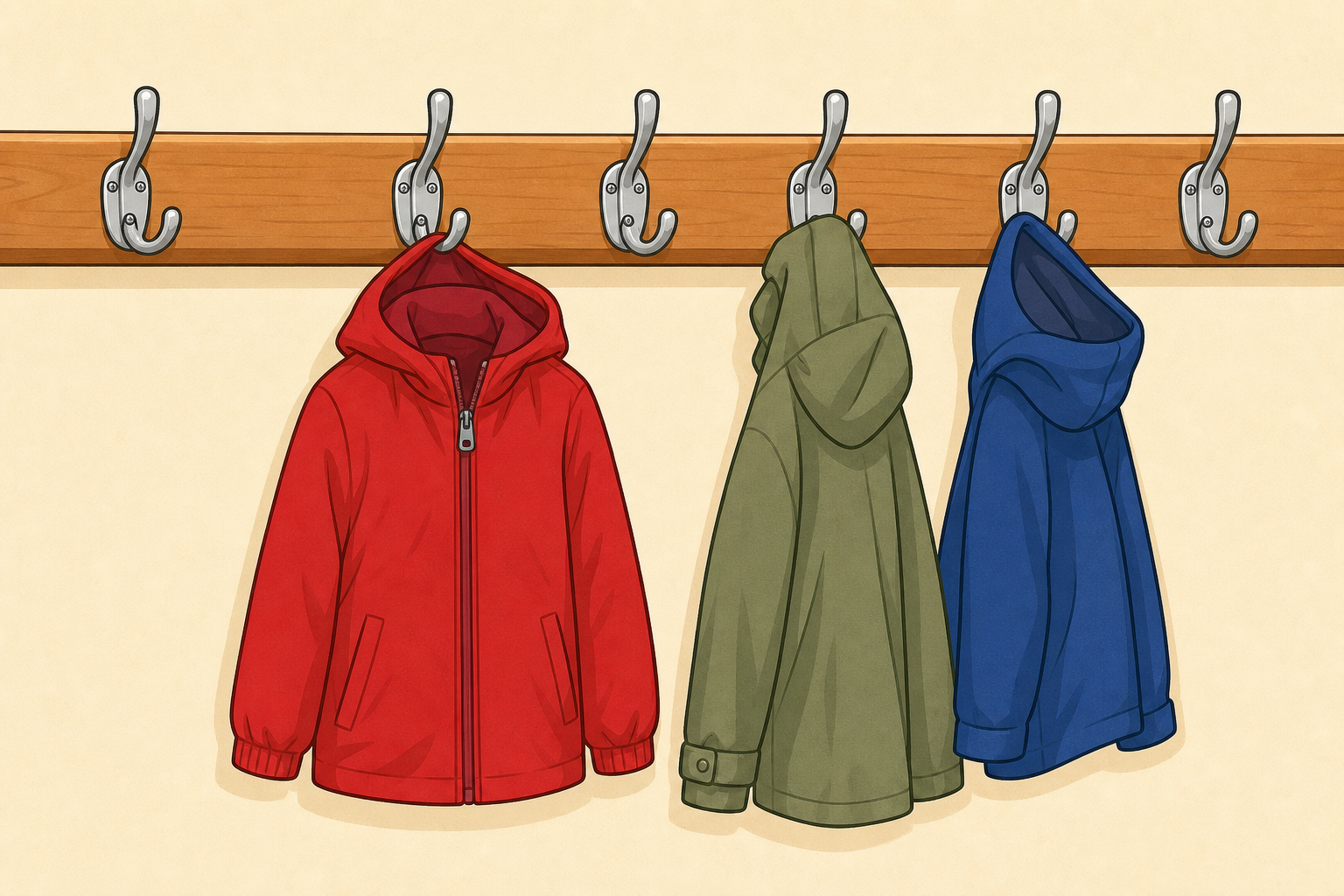
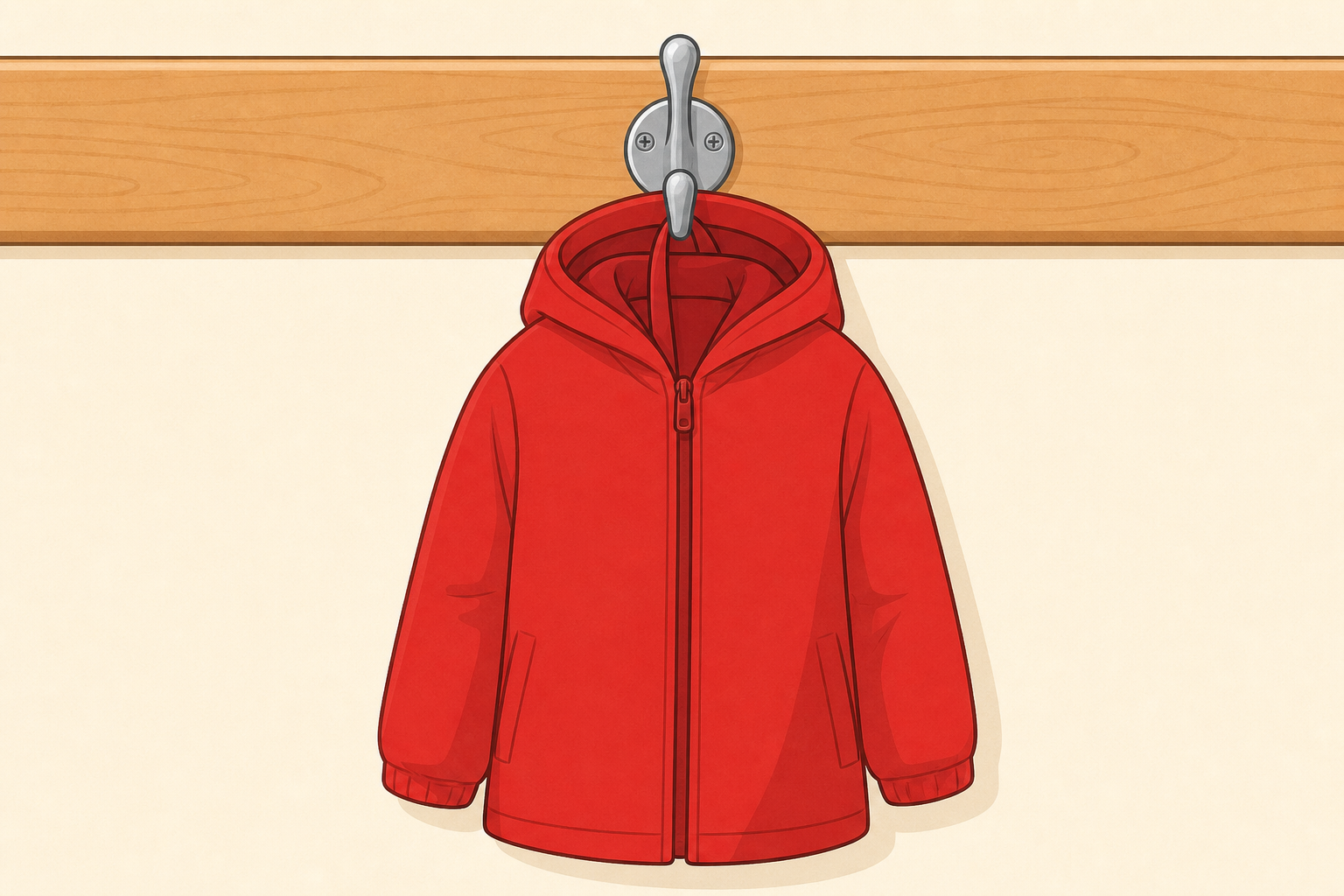
Look at our coats. Where do they hang when we come in? What if there was nowhere to hang them?
Today we will hunt for little helpers around our school and find out who makes things like that.
Keep this beat light. Point at the class coat hooks (or one coat already hanging) and pose the question. Do not list every stop on the walk yet.
Key question: What would happen if we had no hooks for our coats?
Accept any idea: coats on the floor, lost coats, a mess. That mess is a little problem. The hook is the helper. Use the phrase little problem in your talk, but do not put it on the board as a new word yet.
A helper makes a job easier. Look at our coat hook.
What little problem does our coat hook fix?
Project only the two short board lines above. One new child-facing word today: helper. Keep little problem as your revoice language in talk. Hold the word engineer for the closing summary after the hunt.
| Concept | Why it matters | Example |
|---|---|---|
| Helper — a thing people make so a job is easier, safer or neater | Helpers are all around school once we start looking for them | A coat hook holds coats so they are not in a heap on the floor |
| Engineer (save for the close) — a person who notices a problem and designs or invents something to help | After children have spotted real helpers, they can link those helpers to the people who invent them | An engineer might design a ramp so a buggy or wheelchair can go up easily |
Teacher talk only (not on the board): a little problem is a small everyday bother that makes something hard or messy. Revoice with that phrase when children name a mess or bother.
Modelled noticing cycle (do this live with one real helper before the walk):
Point at the real basket (or the coat hook from step 1) while you speak. Children hear one new word, tied to one object they can see.
Misconception to head off later: children may think only big machines or robots count as engineering. When you name engineers at the end, list everyday helpers from today's hunt: hooks, baskets, ramps, bins with lids, door stops.
Look around our room. What helpers can you already spot? Tell a partner one helper and the little problem it fixes.
Whole-class then quick pair talk. Stay in the classroom so children practise the language before the walk.
Look-fors:
Revoice weak answers: if a child says only bin, reply Yes — the bin is a helper so rubbish is not all over the floor.
Keep the same child phrase as the board: little problem (not “little job”).
Keep this short. The walk is the heart of the lesson.
We are going on a helper hunt! At each stop, look carefully. What helper can you see? What little problem does it fix?
Stay with our group and walk calmly.
Lead the line. At each stop, pause for about two minutes. Ask: What helper is this? What little problem does it fix? Let two or three children answer, then move on. Do not turn it into a long sitting.
If the weather is wet or the corridor is too busy, run the same hunt as a classroom and doorway tour only — still real helpers, still the same talk.
Safety: children stay with the group; walking feet; hands off other classes' things; return straight to the room.
Think about one helper from our hunt. What little problem does it fix? Show us with your hands or tell us in a short sentence.
Back in the classroom. This is the observation beat: slow down and link each helper to its little problem.
Invite three or four children to share. Scaffold with sentence stems said aloud: The ___ is a helper because… / Without it, …
Example answers to revoice:
If a child only names the object, gently add the problem yourself once, then invite them to repeat the full idea.
Optional: any child who made a quick sketch may hold it up while they talk. No marking and no formal sheet. Recording is oral.
You're previewing this lesson. Get full access to this lesson and hundreds more — each one ready to teach, with interactive activities, printable resources and pupil progress tracking built in.