1 - Getting Started ~3 mins
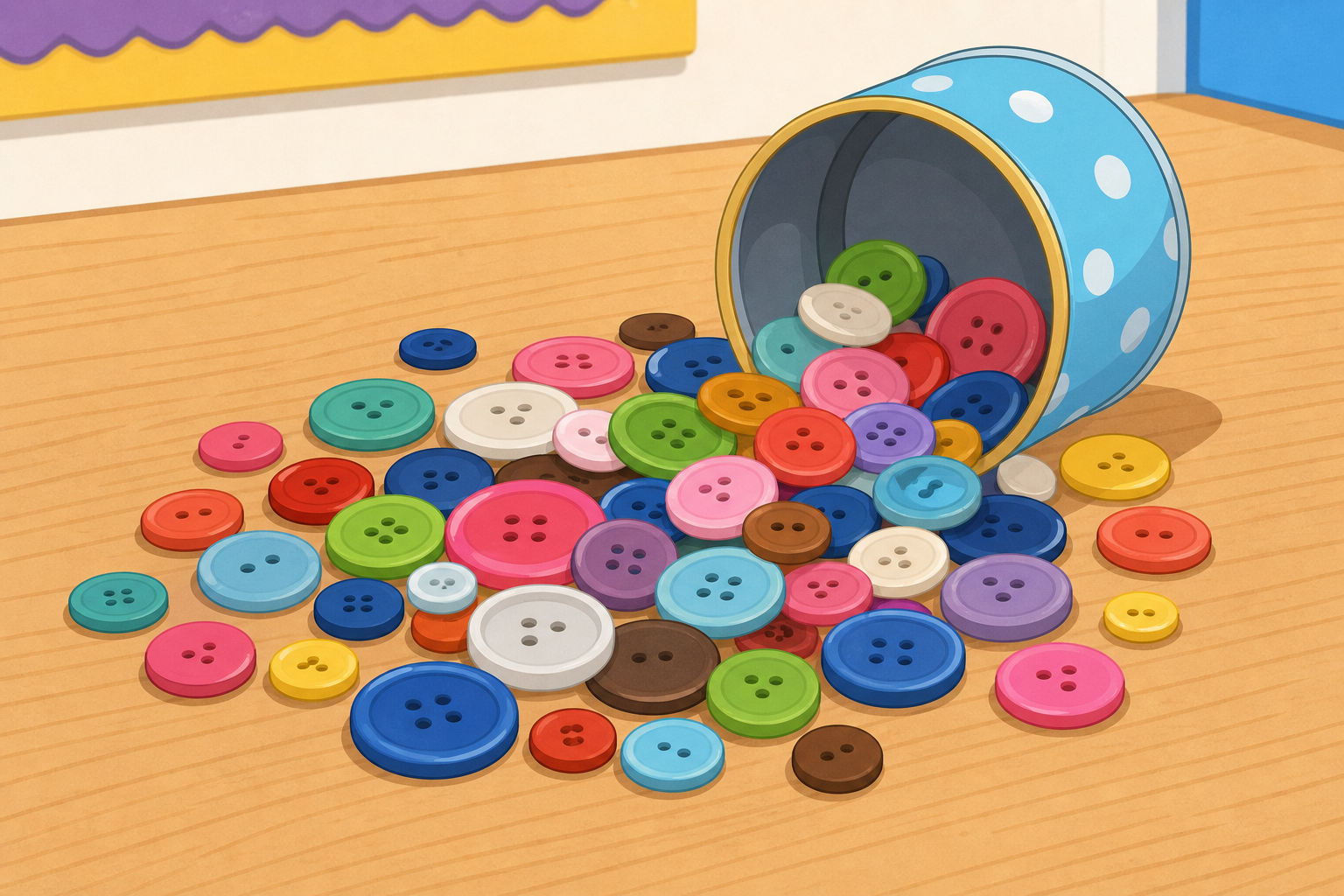 An estimate is a careful guess before you count. The button tin from the art press spills across the desk. More than 20 or fewer? More than 50? Hold your estimate quietly in your head. No counting yet.
2 - Watch and Notice ~8 mins
Two spills of counters. Each one shows its true count, so make a careful estimate before we look. Then we split the count into tens and units: 32 is 10, 20, 30 and 2 more. The leftovers (the ones that do not make a full ten) are the units.
Now a bigger spill. Estimate first, then split the true count into tens and units.
3 - Try It Together ~8 mins
A new spill of counters. Make a silent estimate first. Then we reveal the true count, compare it with your estimate, and split it into tens and units.
Estimate, then group and count
4 - Class Challenge ~10 mins
Today we work through these sets together. Estimate first, then check. How many full tens are in the true count, and how many units?
Estimate, group, count
5 - What Did We Notice? ~3 mins
How does grouping into tens make a big count quick and sure?
Unlock the full learning experience
You're previewing this lesson. Get full access to this lesson and hundreds more — each one ready to teach, with interactive activities, printable resources and pupil progress tracking built in.
This lesson is copyright of Coding Ireland 2017 - 2026. Unauthorised use, copying or distribution is not allowed.