1 - Start ~4 mins
2 - How Far a Morning Reaches ~7 mins
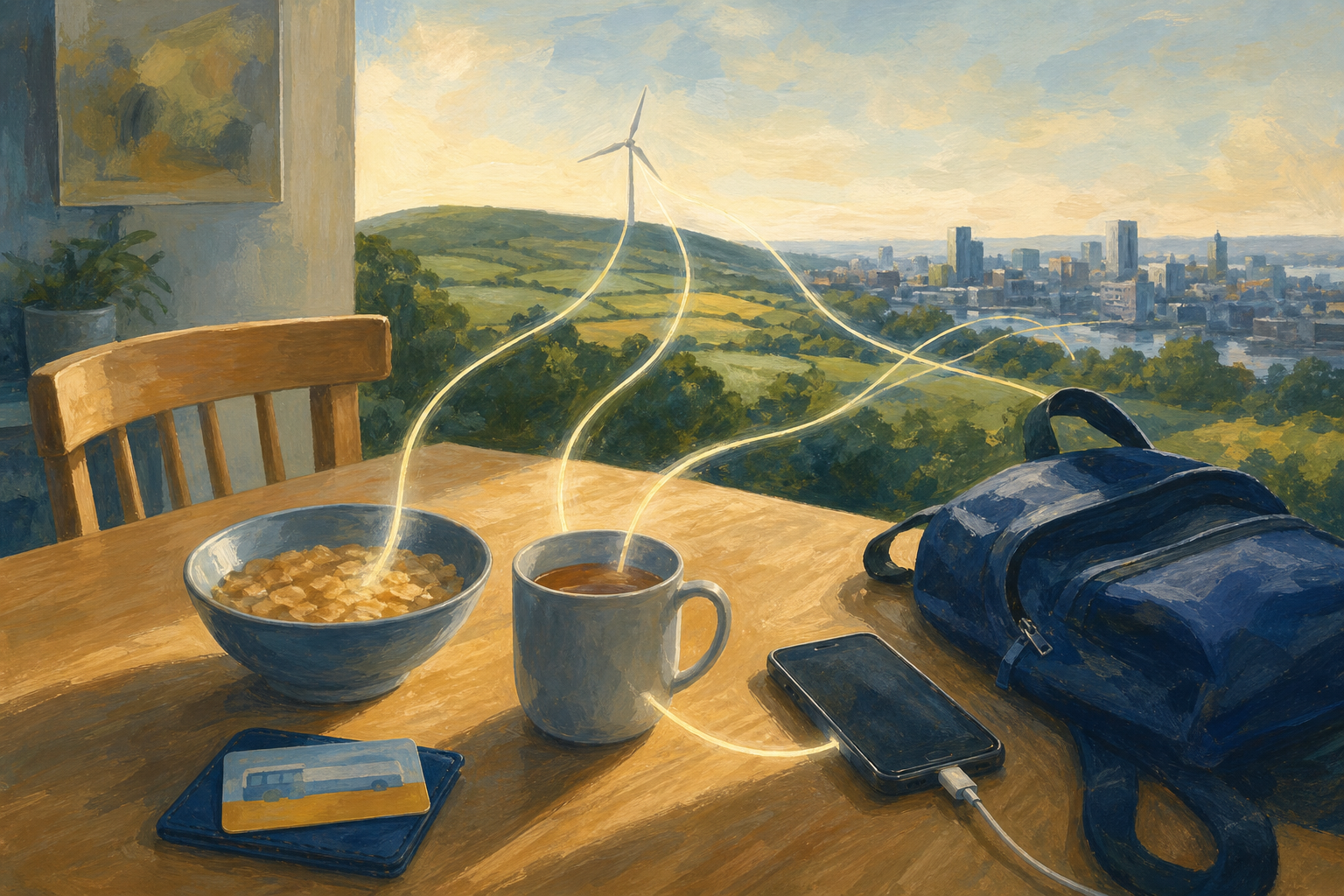
Take two ordinary things first: breakfast, and how you got to school.
Behind breakfast sit a farm, packing, transport, a shop, and people paid to move food. Behind a bus or car sit fuel or electricity, a driver or parent, a road someone maintains, and a timetable or a set of keys.
A charged phone is a quick third example: behind it sit a power station or wind farm, wires, and metals taken from the ground.
Some of those links are local. Some stretch across Ireland or further. Living systems sit under several of them too: soil, weather, rivers, animals. None of it is magic.
Today's job is not to judge any of that. It is to see it clearly enough that you can say, in your own words, what you depend on.
3 - Your Morning, Mapped ~21 mins
Your map is below, and you are at the centre. Fill the four core arms (Food and drink, Power and devices, Getting here, Eco-systems and nature) with something this morning depended on. For every note on those arms, mark whether it came from near or far, and what would happen if it stopped. Clothes and kit, and People, are optional if you have time.
When most maps have at least one note in each core arm, the class will call out connections that appear on almost everybody's map.
Your morning, mapped
4 - Miss First, or Matter Most? ~5 mins
Look at the common links on the board and at your own map.
Talk these two questions with a partner, then be ready to share one answer:
- Which connection would you miss first?
- Which connection would matter most if it stopped?
Missing something first and needing it most are not always the same thing. If your two answers differ, say why.
5 - What You Covered ~3 mins
You can now map how an ordinary morning connects you to eco-systems, people and places near and far, and say what would change if one of those links stopped.
That map is the starting point for this strand: seeing the threads first, before arguing about what to do with them.
Unlock the full learning experience
You're previewing this lesson. Get full access to this lesson and hundreds more — each one ready to teach, with interactive activities, printable resources and pupil progress tracking built in.
This lesson is copyright of Coding Ireland 2017 - 2026. Unauthorised use, copying or distribution is not allowed.