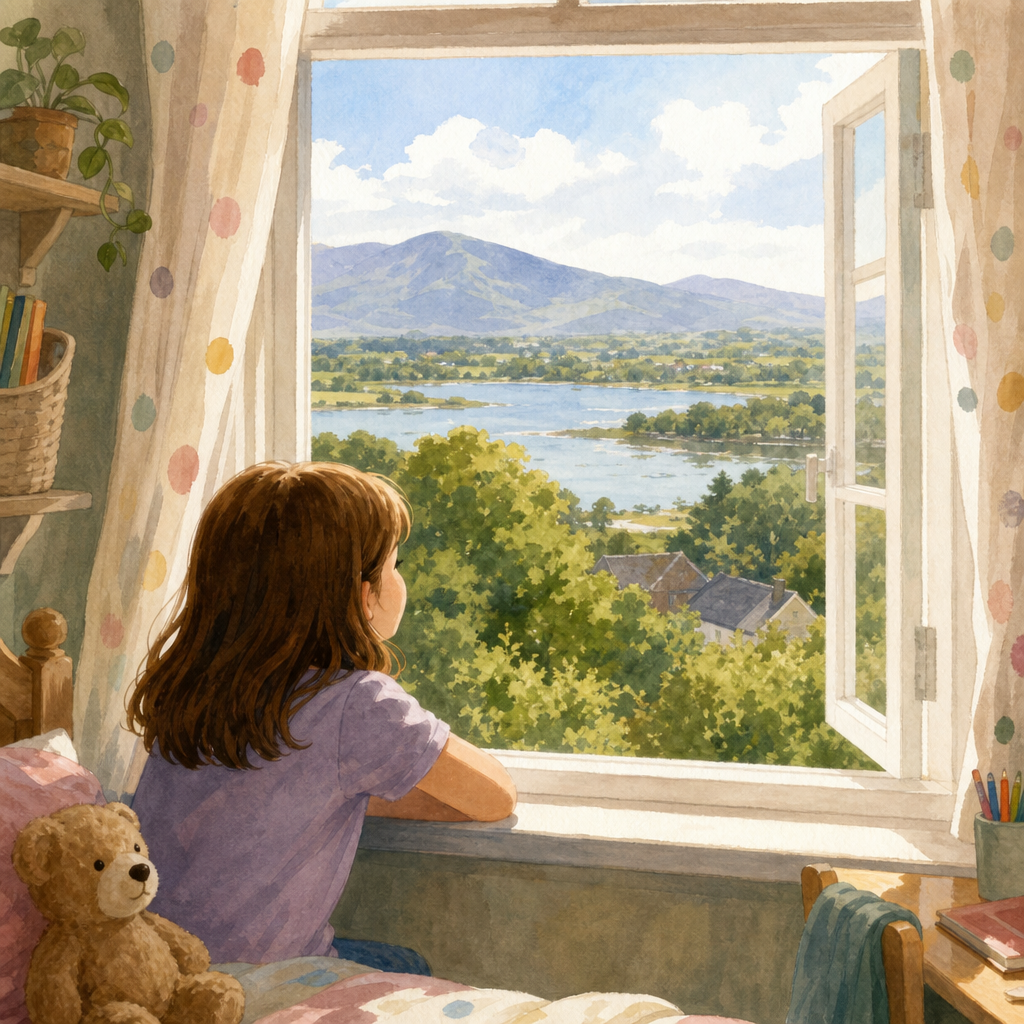
Describe the view from your bedroom window in one English sentence. What can you see: trees, a river, hills, sky?
Today we move from naming one nature word to joining two or three into a short description of a real place, including landscapes like the mountains of northern Spain.
Take three or four quick window descriptions in English only. Do not translate yet. Plant the idea of joined detail before the Spanish words arrive. Mention that later you will look at real Spanish landscapes (for example the Picos de Europa in northern Spain) so the words attach to a place, not only a list.
Listen to each nature word with its article, repeat it clearly, then check the card on the board. Keep el or la with every word.
Picture the words in a real Spanish landscape as you say them: mountains, rivers, forests and waterfalls in northern Spain, or a beach on the coast.
Whole class on the board. Hear → say → see: model (or play audio) first, class repeats twice, then show the card. Never ask pupils to guess the Spanish before they have heard it.
Teach in two chunks of four with a quick choral pass after each chunk.
Chunk 1: el árbol (el AHR-bol), el río (el REE-oh), la montaña (la mon-TAH-nyah), el bosque (el BOS-keh).
Chunk 2: el lago (el LAH-go), la flor (la flor), la cascada (la kas-KAH-dah), la playa (la PLAH-yah).
Insist on the article every time. Sound tip: listen for the ñ in montaña — soft nose scrunch, mon-TAH-nyah. After a clean chorus: “That already sounds like a weather forecast from Spain.” Leave all eight words visible on a board list for the rest of the lesson.
Optional anchor sentence to read once after both chunks: En los Picos de Europa hay montañas, un río y un bosque. (In the Picos de Europa there are mountains, a river and a forest.)
Look at the landscape picture on the board. Place each Spanish nature label on the matching part of the picture. Say the word quietly with el or la as you place it so the sound sticks.
Whole-class on the IWB only. No pupil devices. Show the landscape, model placing one label yourself, then invite volunteers or take class consensus for each of the eight. Choral-read every label with its article after it lands.
Calling and check list (self-contained): el árbol (el AHR-bol), el río (el REE-oh), la montaña (la mon-TAH-nyah), el bosque (el BOS-keh), el lago (el LAH-go), la flor (la flor), la cascada (la kas-KAH-dah), la playa (la PLAH-yah).
If a label is misplaced, pause, say the correct word together, and move it. Keep energy warm: “Quiet self-say as you place each one — you are training your ear, not only racing the board.”
First, say one model with the class. Then open your copy and write one sentence describing a place you know, using at least three of today’s nature words.
Models on the board:
Starters: Cerca de mi casa hay ___ , ___ y ___. | En el parque hay ___ , ___ y ___.
Remember: el → un, la → una when you mean “a”. Keep the eight words with articles visible while you write.
The wheel speaking has just finished. Before anyone opens a copy, run one final oral join: teacher says one model; class choral-repeats; two or three volunteers swap one nature word aloud. Then pause the board for writing.
Keep the flashcard list and both model sentences visible. Walk the room and check articles, accents (árbol, río, montaña), and that three nature words appear. Support target: at least two nature words with a full starter; core target: three or more. Extension: add a comparison with a Spanish landscape. Do not collect the copies.
Full model with respelling: Cerca de mi casa hay un río, un bosque y una montaña. (SEHR-kah deh mee KAH-sah eye oon REE-oh, oon BOS-keh ee OO-nah mon-TAH-nyah).
Spin the wheel. When it lands on a nature word, say the Spanish with el or la, then add a short place sentence about where you have seen one (near home, in a park, on holiday, or in a picture of Spain).
Useful frames:
Whole-class spin on the board. Pupil (or pair) speaks when the wheel stops. Require: (1) the nature word with its article, (2) a short place phrase built on a hay frame only. Model first, then choral-repeat the model before volunteers. Do not introduce present-perfect frames.
Model: Cerca de mi casa hay un río, un bosque y una montaña. (SEHR-kah deh mee KAH-sah eye oon REE-oh, oon BOS-keh ee OO-nah mon-TAH-nyah) Near my house there is a river, a forest and a mountain.
Second model (Spain anchor): En los Picos de Europa hay montañas, un río y un bosque. In the Picos de Europa there are mountains, a river and a forest.
Article switch (show once on the board): we learnt el / la; when you mean “a”, use un / una — el → un, la → una (un río, una montaña, una cascada, una playa).
Support: offer the starter strip Cerca de mi casa hay … and point at the eight-word list. Extension: add a second nature detail with y. Aim for several turns so many pupils speak before anyone writes. Keep pace brisk; celebrate joined detail, not perfect grammar.
You're previewing this lesson. Get full access to this lesson and hundreds more — each one ready to teach, with interactive activities, printable resources and pupil progress tracking built in.