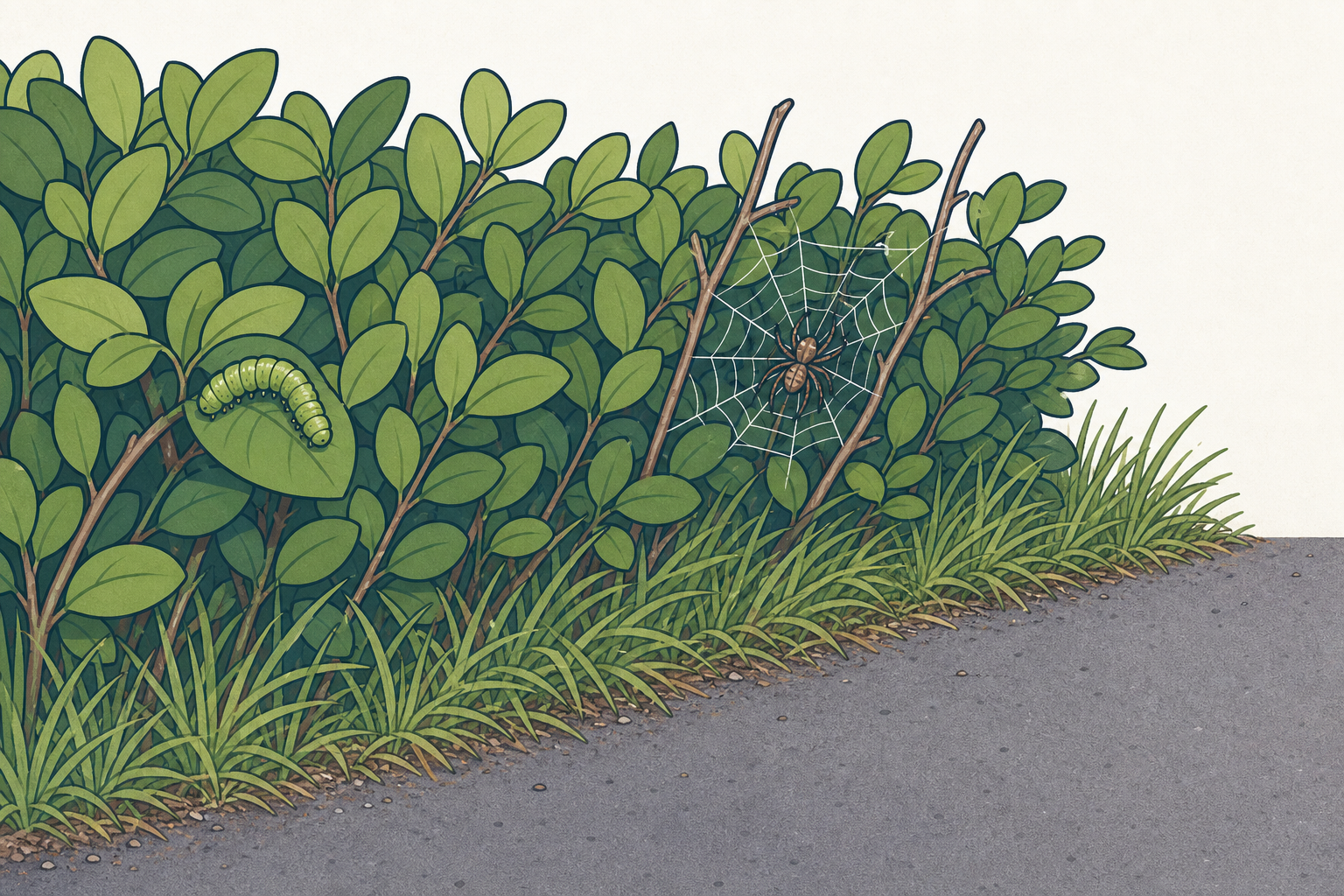
 Open your survey notes from earlier in this project. Name one living thing you found and one thing it seemed to need or eat. Today we join those finds into food chains and a web.
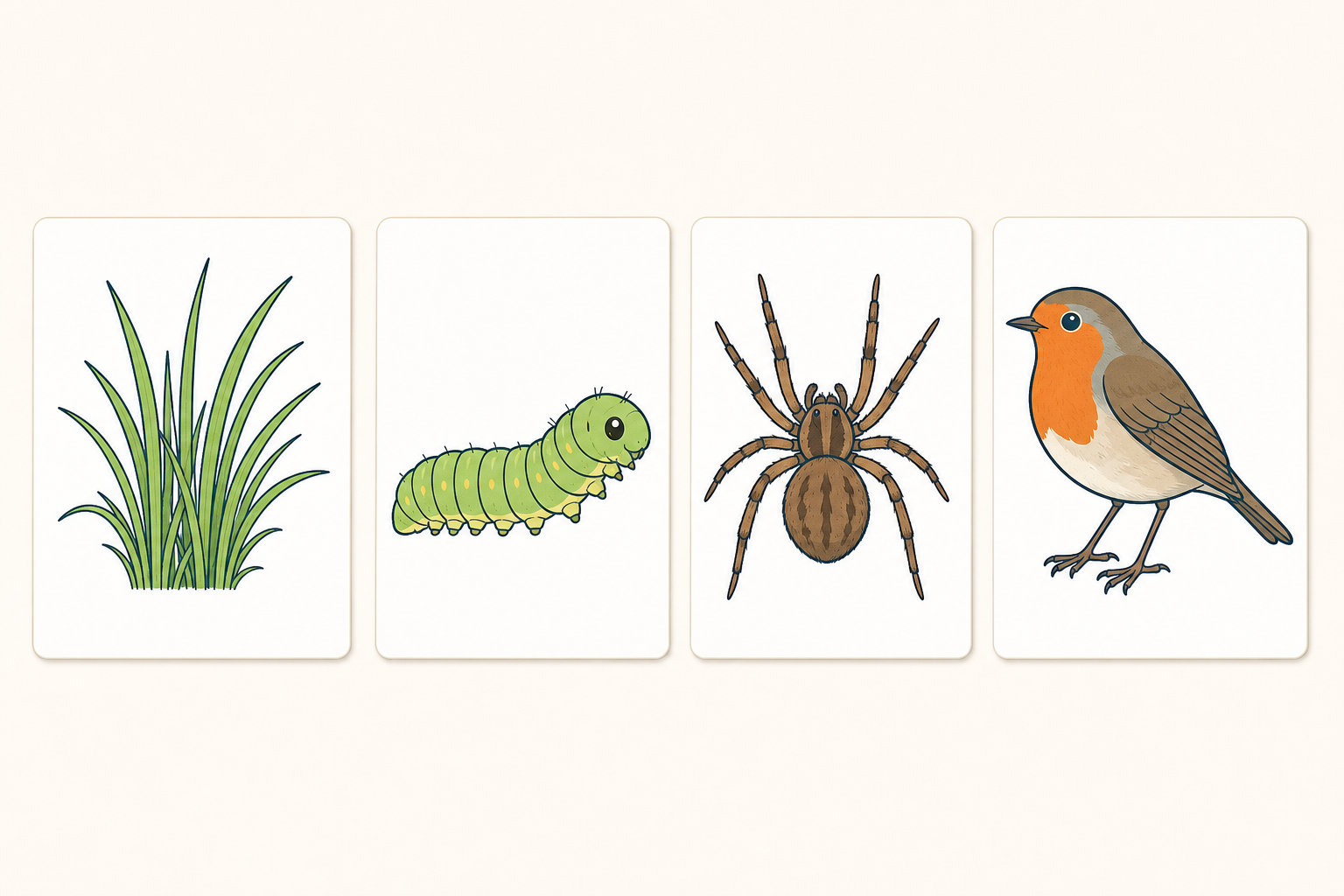 That line of who-eats-whom is how energy from the sun travels across our school hedge.
Grass is eaten by a caterpillar, the caterpillar by a spider, the spider by a robin. That line is a food chain.
A plant that makes its own food from sunlight is called a producer. Every chain starts there. When we draw a food chain, the arrow goes from the food to the eater: it shows the energy moving (the energy began as sunlight trapped by the plant).
Look at the finished food chain on the desk at the front. Read it left to right. The plant at the start is a producer. Where does the energy start? Where does each arrow point?
Now watch one more short chain join on. When two chains share a living thing, they join up. That joined picture is what you will build next from your own survey.
Help put the cards in order on the board by calling out which card has to come first and which way each arrow should point. This is a quick check rather than a full rebuild, so keep the two rules in mind as you go: the plant starts the chain, and every arrow points to the eater. Then name one other plant from the school grounds that could start a different chain.
Build the food chain
Use your survey notes and the cards, and work through the jobs on the card below in order. When your first chain is built, stop and wait for the class check before you start the second.
The evidence rule is that you may only use species you actually found in your survey, and if you did not see the eating happen, you write likely beside that arrow when you draw your web on your journal page.
When I call freeze, stop and leave your cards where they are.
Unlock the full learning experience
You're previewing this lesson. Get full access to this lesson and hundreds more — each one ready to teach, with interactive activities, printable resources and pupil progress tracking built in.
This lesson is copyright of Coding Ireland 2017 - 2026. Unauthorised use, copying or distribution is not allowed.