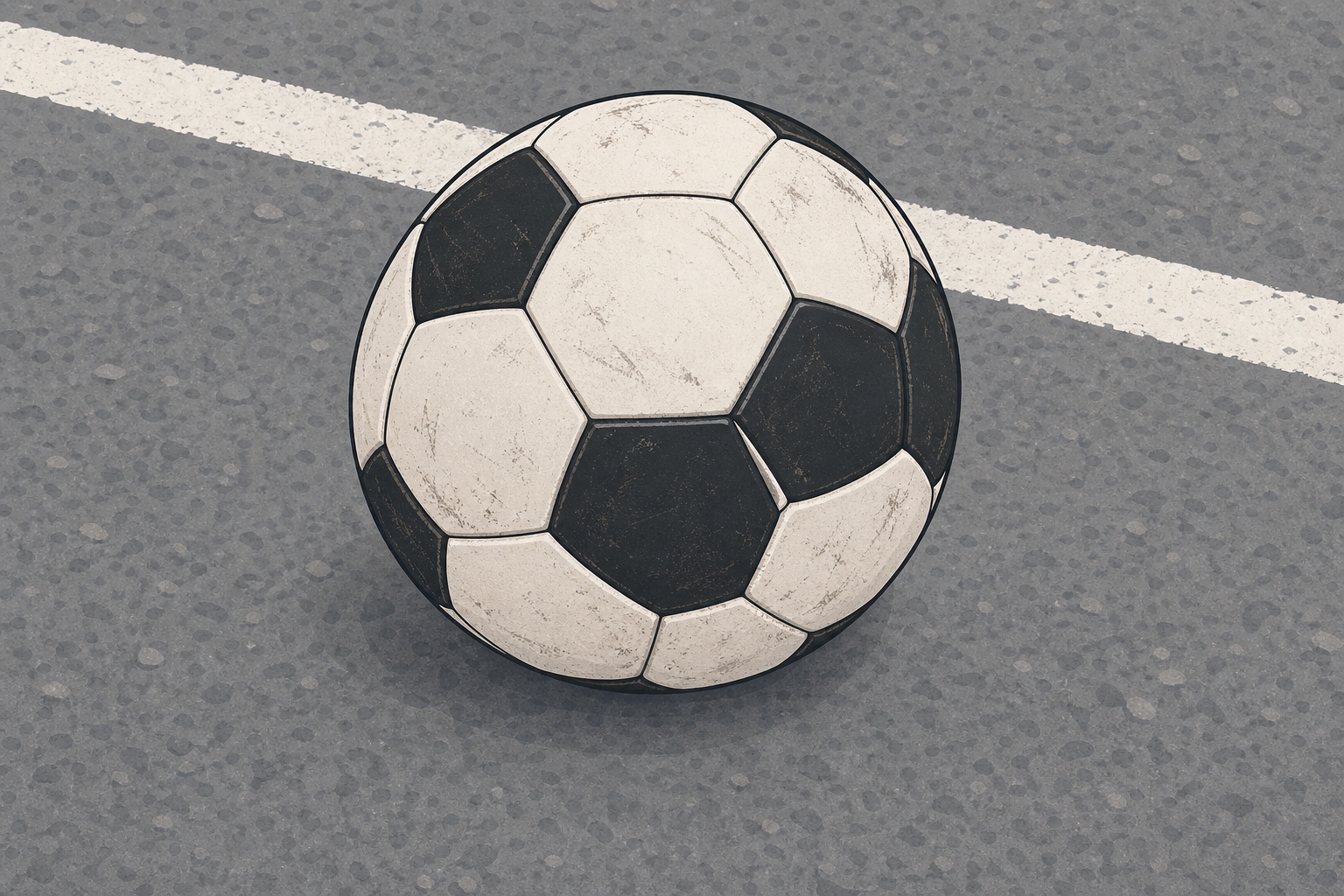
Think about a football on the yard. What makes it start moving? What makes it slow down and stop? What happens if you drop it?
Today we will feel different forces at stations and name the ones that make things start, stop, slow down or fall.
Keep this beat light. Do not set out the full station kit yet. One short talk about the yard football is enough to surface prior ideas.
Quick hands-up: Who thinks a kick is a push? Who thinks the ground helps the ball stop? Who thinks dropped things always fall the same way?
Nature of STEM: Physicists and sports scientists study forces: what starts motion, what slows it, and what pulls things down. Engineers who test road, pitch and playground surfaces work with friction every day. Today we work like them by feeling forces first, then naming them from evidence.
A force is a push or a pull that can make something start, stop, slow down or fall.
You already know everyday pushes and pulls. Today we will also feel two more forces at the stations: the rubbing that slows things down, and the pull that makes things fall.
I wonder: which force slows a book on carpet? We will come back to that after we have felt the stations.
Project only the short board text. Do not project the full table. Treat push and pull as a 30-second refresh (door push, drawer pull). Spotlight force as the umbrella idea now; let the names friction and gravity land fully from station evidence in the later discussion.
| Concept | Why it matters | Example |
|---|---|---|
| Force — a push or a pull that can make something start, stop, speed up, slow down or fall | Almost every move you make in class is a force at work, so naming forces helps you explain what you see | Kicking a football starts it moving; catching it stops it |
| Push — a force that moves something away from you | Pushes start many everyday actions, from closing a door to sending a book across a desk | Pressing a chair away from the table is a push |
| Pull — a force that moves something towards you | Pulls help us lift, open and draw objects closer safely | Opening a drawer towards yourself is a pull |
| Friction — a force that slows things down when two surfaces rub | Different surfaces change how much friction you feel, which is why some floors feel grippy and others feel slippy | A book drags harder on carpet than on a smooth wooden board |
| Gravity — a force that pulls objects towards the centre of the Earth | Gravity explains why dropped objects fall down, not sideways or up | A sponge ball always falls towards the floor when you let go |
Misconception to head off: pupils often say friction "pulls things backwards" or that heavy things fall faster in a short classroom drop. Friction is rubbing between surfaces. In our safe short drops, soft objects reach the floor so quickly that differences are hard to notice; the clear pattern is that everything falls down.
Modelled cycle (do this live before stations, using the friction kit only). This is the main teach of the step:
Say the word friction only after the class has felt or watched the difference. Mention that Station C will help us name the pull that makes things fall (gravity). Then hand out Investigation Journal pages and send groups to the three stations.
In groups, visit three shared stations. At each one, try the action, notice what you feel, and jot a quick action and feel note on your Investigation Journal page before you rotate.
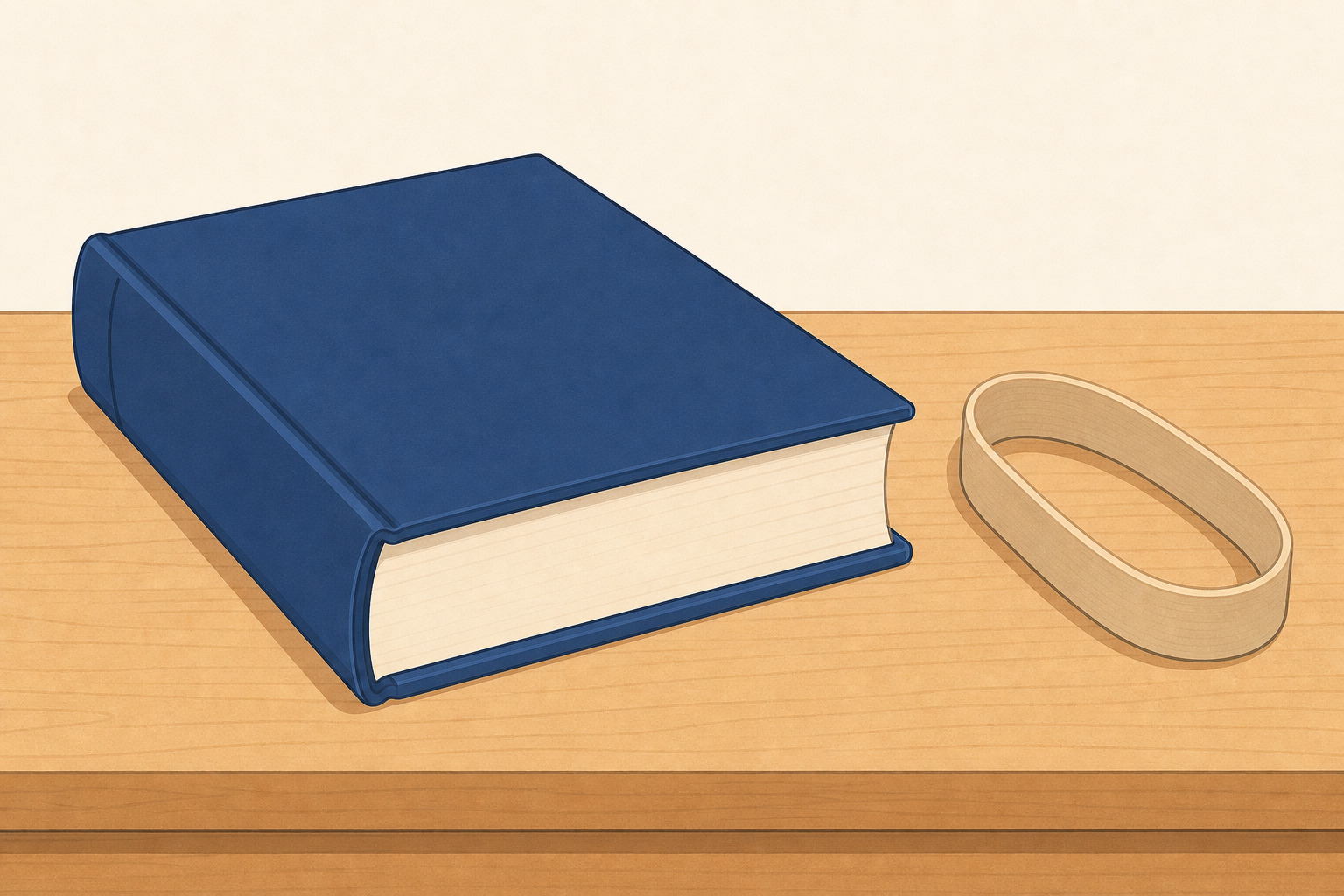
Station A: Push and pull. Gently push a book across the desk. Then hold one end of an elastic band still and pull the other end towards you (do not aim it at anyone). How does each action feel different?
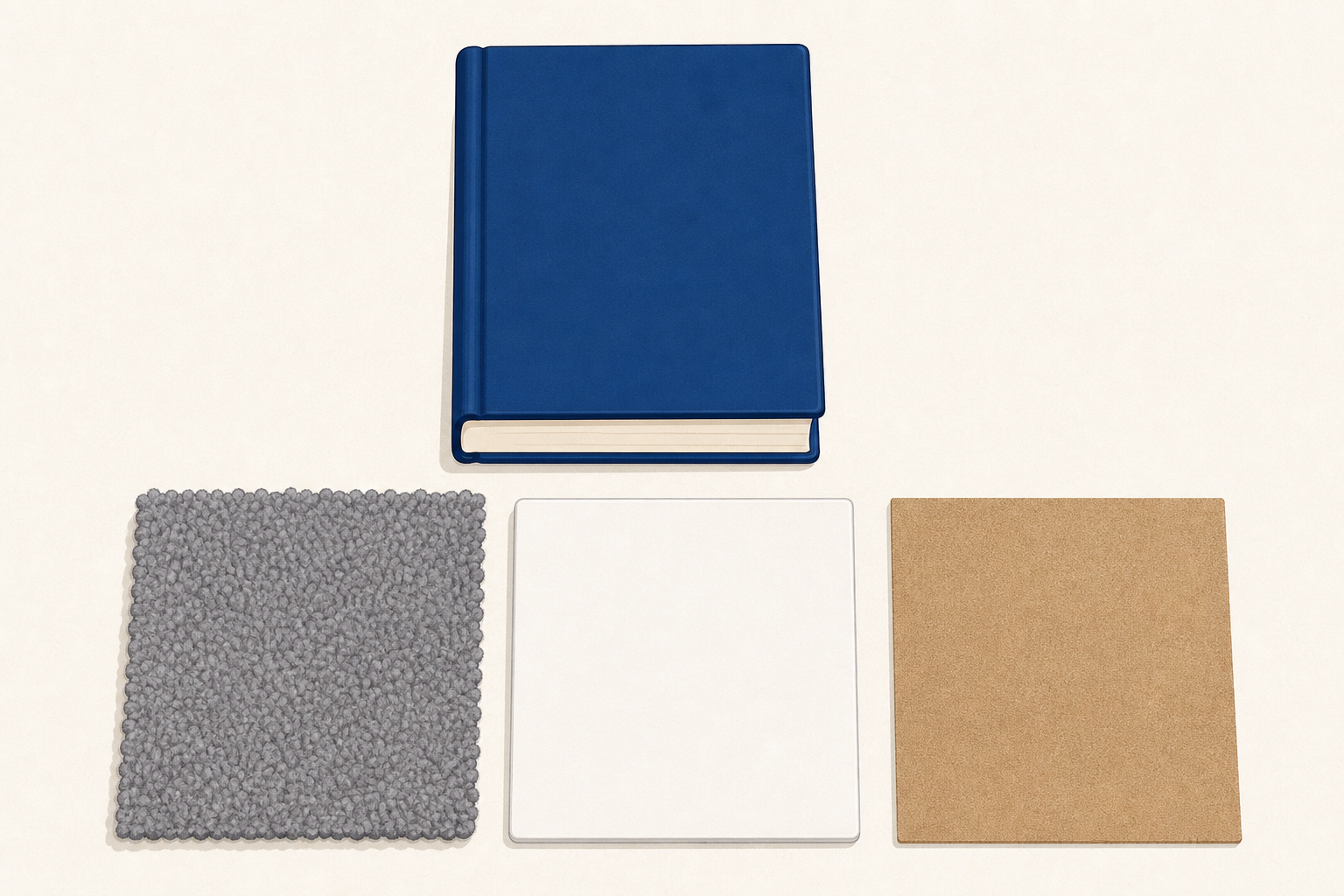
Station B: Friction feel-test. Drag the same book across carpet, a smooth board and sandpaper. Which surface makes the book hardest to move?
Station C: Gravity drop. Hold a soft object at desk height, predict, then drop it onto the clear floor mat. Which way does it always go?
Card A — Push and pull: Gently push a book away from you across the desk. Then hold one end of an elastic band still and pull the other end towards you. Do not ping the band. Talk: which action was a push and which was a pull? What started to move? Jot the action and what you felt on your journal page.
Card B — Friction feel-test: Use the same book each time. Drag it across carpet, then the smooth board, then sandpaper. Keep the same hand and the same kind of pull. Talk: which surface felt hardest? Which felt easiest? What force is rubbing between the book and the surface? Jot a quick feel note before you rotate.
Card C — Gravity drop: Stand behind the mat. Hold the soft object at desk height. Predict which way it will go, then drop it (do not throw). Try once with the sponge ball and once with the bean bag. Talk: did both fall the same way? What force pulls them down? Jot what you saw.
About 6–7 minutes per station, then rotate on your signal. Quick journal jots happen at the station so pupils do not rely on memory later. You stay mobile. At Station C, insist on drops only, never throws, and keep the landing zone clear.
Key questions while circulating:
Differentiation: Support groups with sentence stems said aloud: "I felt… so I think the force is…". Stretch groups: "Name two forces acting when you drag the book" (pull from your hand and friction from the surface).
Safety: Elastic bands stay low and pointed at the desk, never at faces. Drop soft objects only onto the mat, not near feet. No climbing on furniture to gain height.
Stay with your Investigation Journal page. Finish what you began at the stations: for every station, add the force you think was at work and one clue from what you felt or saw.
Use the words push, pull, friction and gravity where they fit. You are completing fresh notes, not trying to remember three stations from scratch.
This is the paper recording beat inside the lesson, before the pooling talk. Pupils already made quick action and feel jots at each station; now they add force names and one evidence clue. Nothing is typed into the platform. Do not set this beat as homework: Step 5 needs evidence from the journal in the room.
What good recording looks like:
If a pupil only writes "it moved", prompt: "What started it? What slowed it? Which way did it fall?"
Do not invent extra columns or a second homemade sheet. The Investigation Journal page is the record.
Let's pool what the class found. For each station, we will name the main force and say whether it helped something start, slow down, stop, or fall.
Be ready to share one piece of evidence from your journal, not just a guess. We can also answer our earlier wonder: which force slows a book on carpet?
Display-only science talk. No typing. Revoice pupil evidence in precise force language. This is where friction and gravity should be firmly named from evidence if they were only lightly introduced earlier.
Misconception check: If someone says "the carpet pulls the book back", reframe: the surfaces rub, and that rubbing is friction.
Link forward (capability, not a dated lesson): Next time we measure friction more carefully with a ramp and car, we will keep the test fair and measure distance with care.
You're previewing this lesson. Get full access to this lesson and hundreds more — each one ready to teach, with interactive activities, printable resources and pupil progress tracking built in.