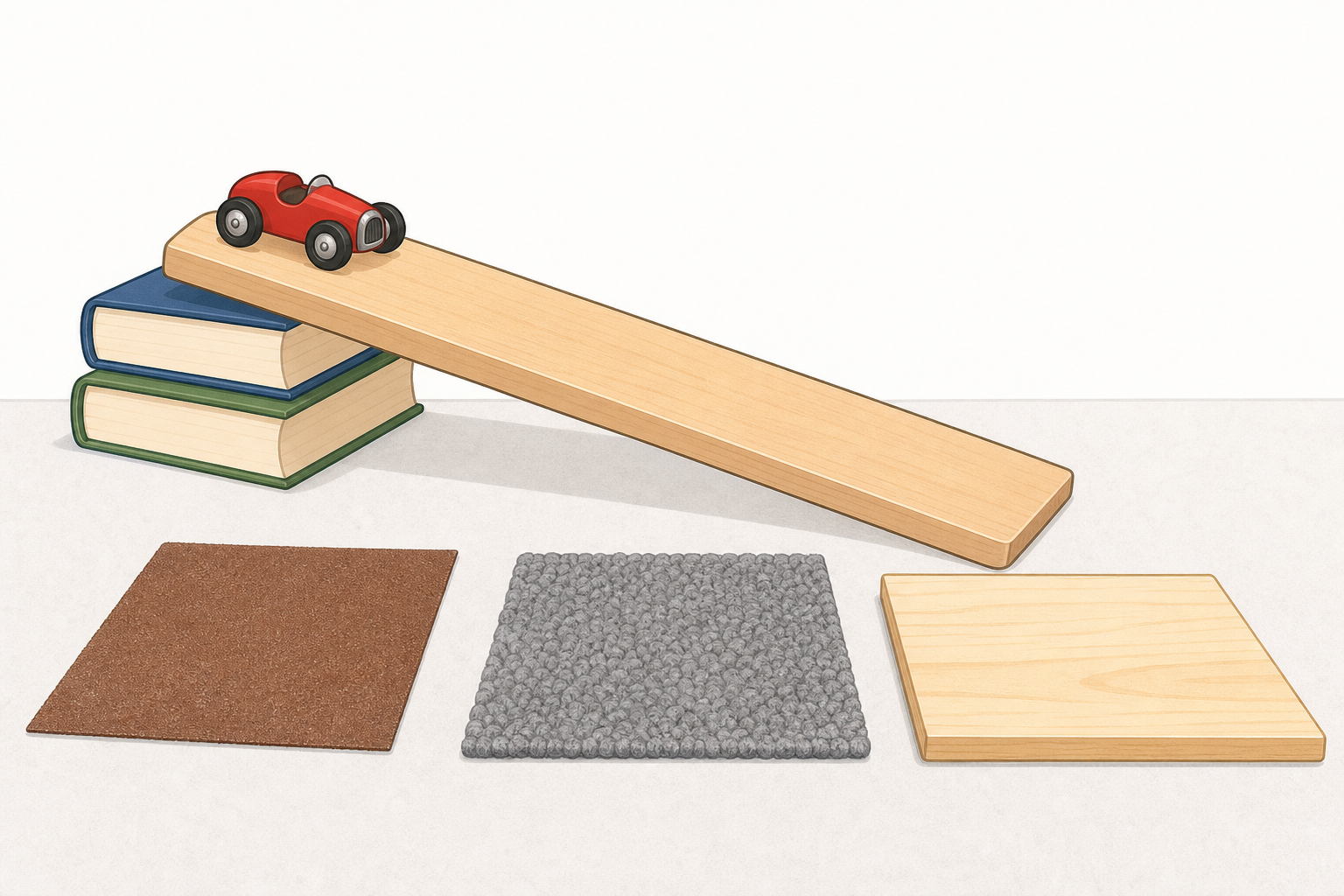
Imagine a toy car rolling off the same ramp onto four different floors: carpet, wood, sandpaper and tile. Which floor do you think will stop it soonest?
Today we will find out fairly, and we will measure with real care.
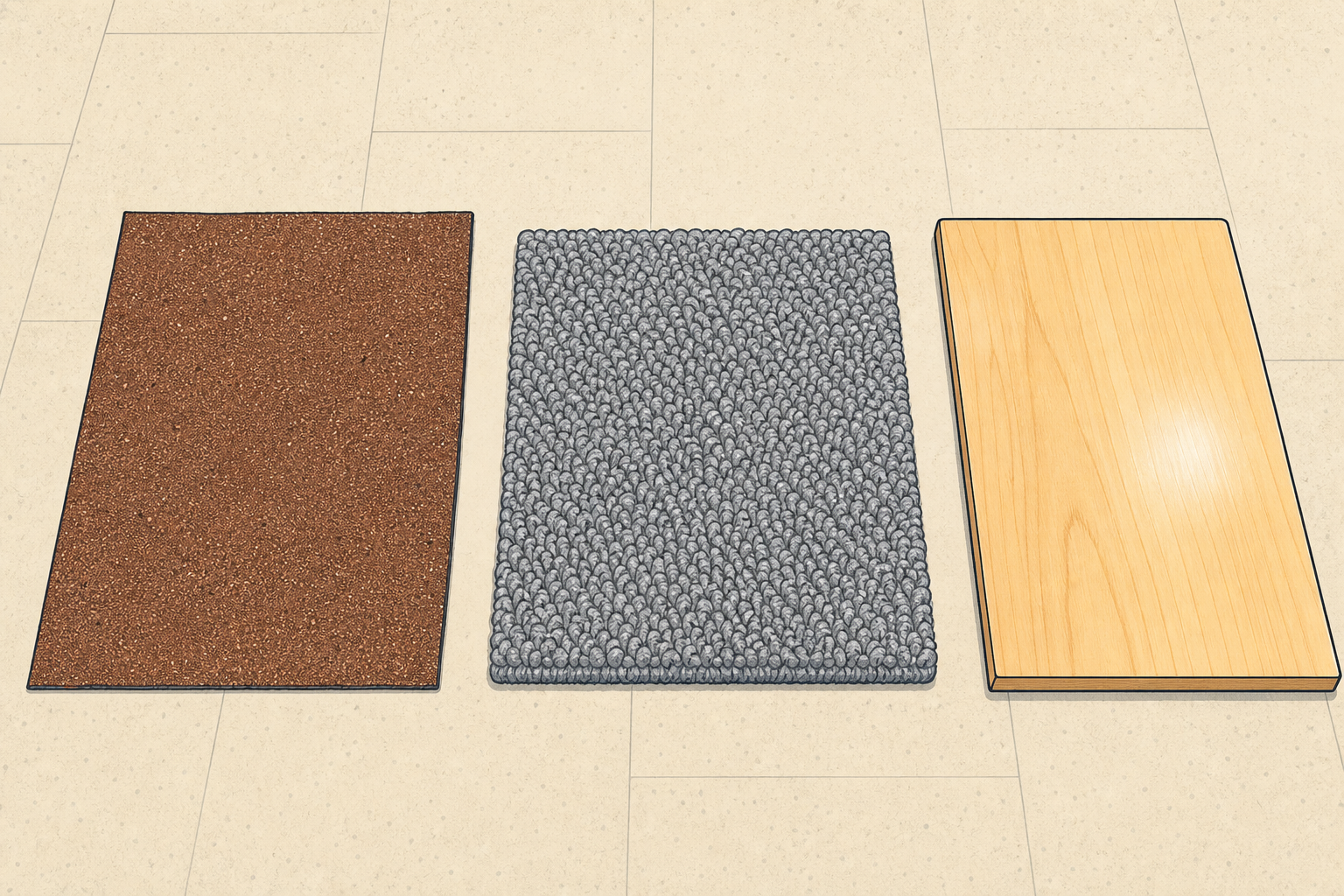
Keep this beat light. Do not lay out the full ramp kit yet. Hold up one toy car and point at two different classroom floors if you can (for example carpet and a smooth board or the hall floor) and ask for a quick show of hands: which surface would slow the car more?
Key question: How could we find that out fairly, so the result is trustworthy?
Surface prior ideas only. Save the variables, method and vocabulary for the steps that follow. Link gently to Physics: people who study forces measure carefully so they can trust what the evidence shows.
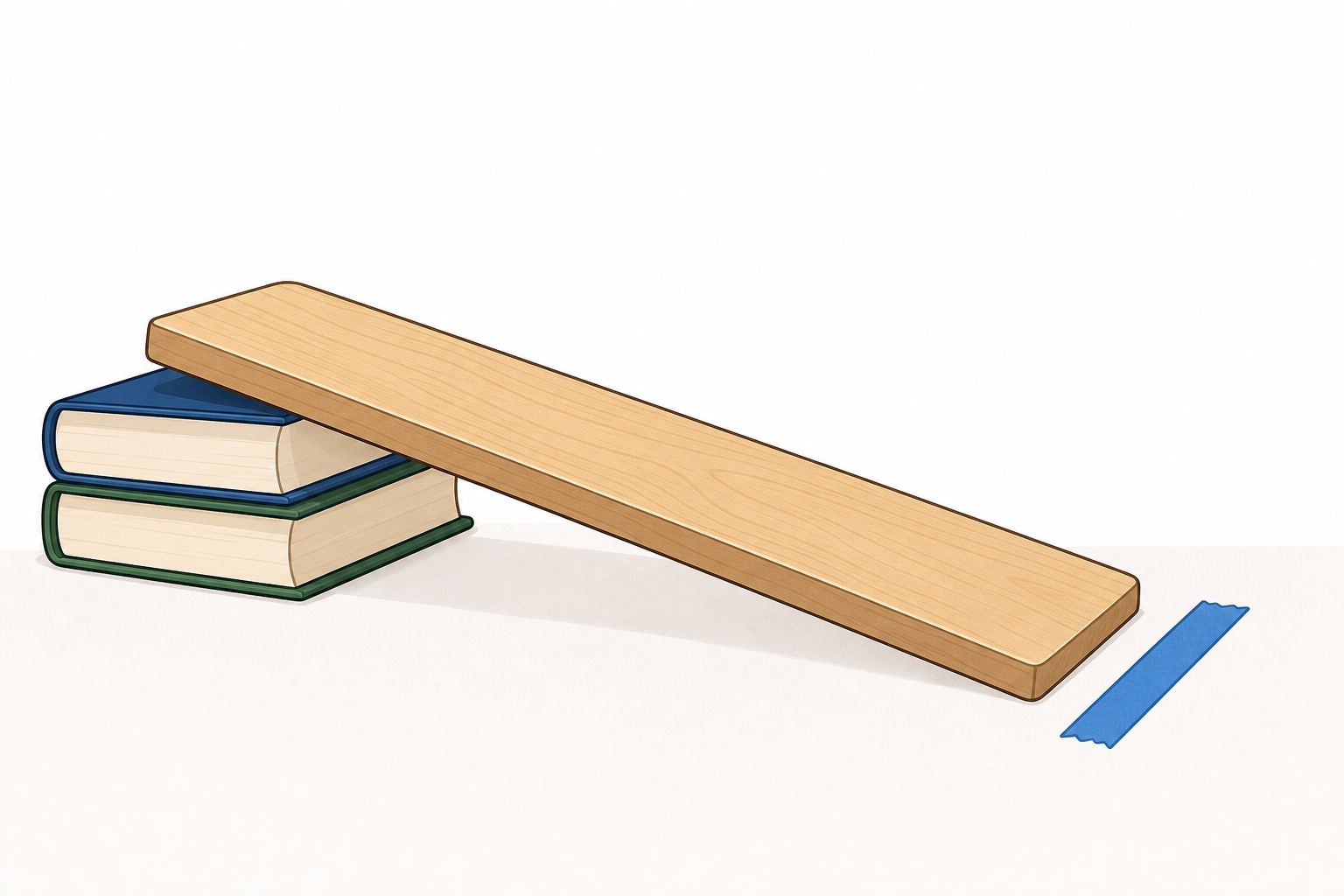
Before the practical clock: while pairs talk in step 2, or in the last minute of the plan step, have helpers set ramps to the class height (two identical books), tape start lines, and open the shared long run-out stations so groups begin trials, not setup, when the practical starts.
Our question is: Which surface slows a toy car the most?
Look at the four surfaces: carpet, wood, sandpaper and tile. Whisper to your partner which one you think will make the car roll the shortest distance, and say why. Then we will share a few ideas with the class.
Write the testable question on the board exactly as shown. Name the four surfaces clearly so every group uses the same list.
Prediction talk: take three or four predictions aloud. Predictions are never wrong; they are the start of the science. Push for a reason linked to how rough or smooth the surface feels, not just a favourite guess.
Misconception to note for later: some children say a rough surface "pulls the car back". Friction is the rubbing between the wheels and the surface, not a pull from underneath.
Differentiation: offer the stem I think … will slow it most because … for anyone who needs it. Confident pairs can also say which surface they think will let it roll furthest.
Use this talk time for helpers to begin opening the four shared surface stations and setting ramp heights if not already done.
We will plan a fair test so only one thing changes. Five cards appear on the board: surface, distance the car rolls, ramp height, the car, starting point. Call out where each belongs: Change, Measure, or Keep the same.
The shared plan stays on the board. On your Investigation Journal page, write only three quick things: one extra keep-the-same your group will check on every run (for example how you release the car, or how you place the metre stick), the order you will visit the four surfaces, and your prediction.
Drive the fair-test-planner interactive on the IWB. Read the five cards aloud before anyone places them. Agree the class plan on the board first. Keep pupil writing to the three quick boxes only (extra keep-the-same, surface order, prediction) so this step stays inside seven minutes. Do not ask groups to recopy the full shared plan.
Reveal words one at a time (do not dump all three definitions on the board at once):
| Concept | Why it matters | Example |
|---|---|---|
| Friction — a force that slows things down when two surfaces rub against each other | Friction is why the same car stops sooner on some floors than others, so we can compare surfaces fairly | A toy car rolls a shorter way on carpet than on smooth wood because the carpet grips the wheels more |
| Fair test — change only one thing, measure one thing, and keep everything else the same | If two things change at once, you cannot tell which one caused the result | We change only the surface and keep the ramp height, the car and the start line the same every run |
| Middle value — with three measurements, put them in order and use the middle number | One odd reading can mislead; three tries and the middle value make the result more trustworthy | Rolls of 42 cm, 38 cm and 40 cm give a middle value of 40 cm |
Target placement for the interactive:
Model why each keep-the-same matters: if the ramp is steeper for one surface, the car has more of a push; if a different car is used, mass and wheels change; if the start line moves, the roll is not from the same place. Measuring always in centimetres with the same metre stick keeps the unit fair.
Pupil design choice (write on Investigation Journal page): after the class cards are placed, each group chooses one extra keep-the-same to check on every run (release style, metre-stick placement, who releases every time) and the order they will visit the four shared surface stations, with a one-line prediction. That is their real planning decision within today's friction theme.
Working scientifically: this lesson deepens measuring with care: same method every time, the right units (cm), three repeats, and a sensible middle value. Physicists trust a result more when the method is steady and the measurement is careful.
If helpers still need a minute to finish opening stations, use the last 30 seconds of this step while groups finish their three quick boxes.
Watch the first teacher run carefully before you begin.
Then work with your group:
Take your time — careful measuring is the science today.
Do this live at the front on the wood station. Think aloud so pupils hear every beat. Introduce middle value here in plain words: three tries, put them in order shortest–middle–longest, write the middle number.
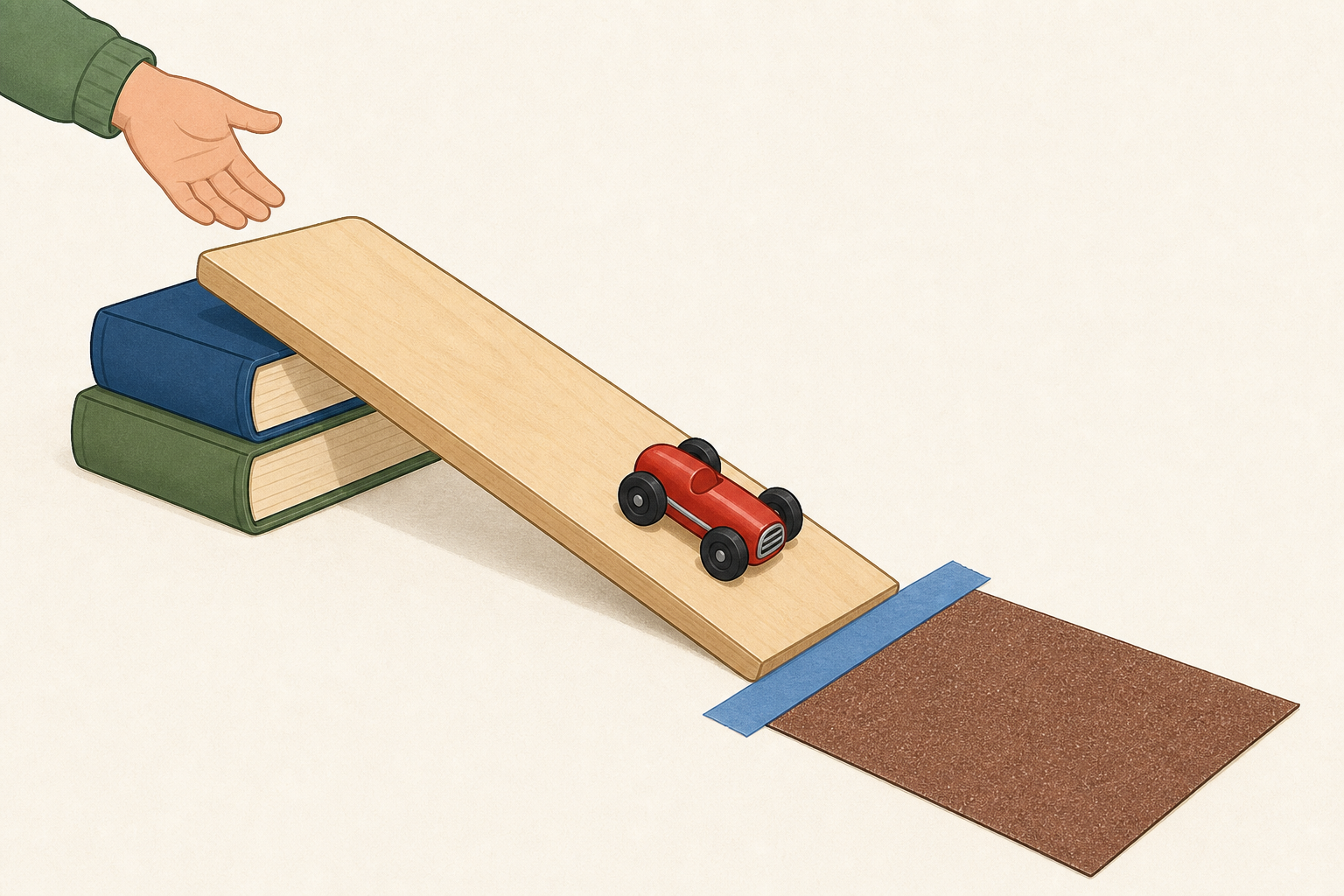
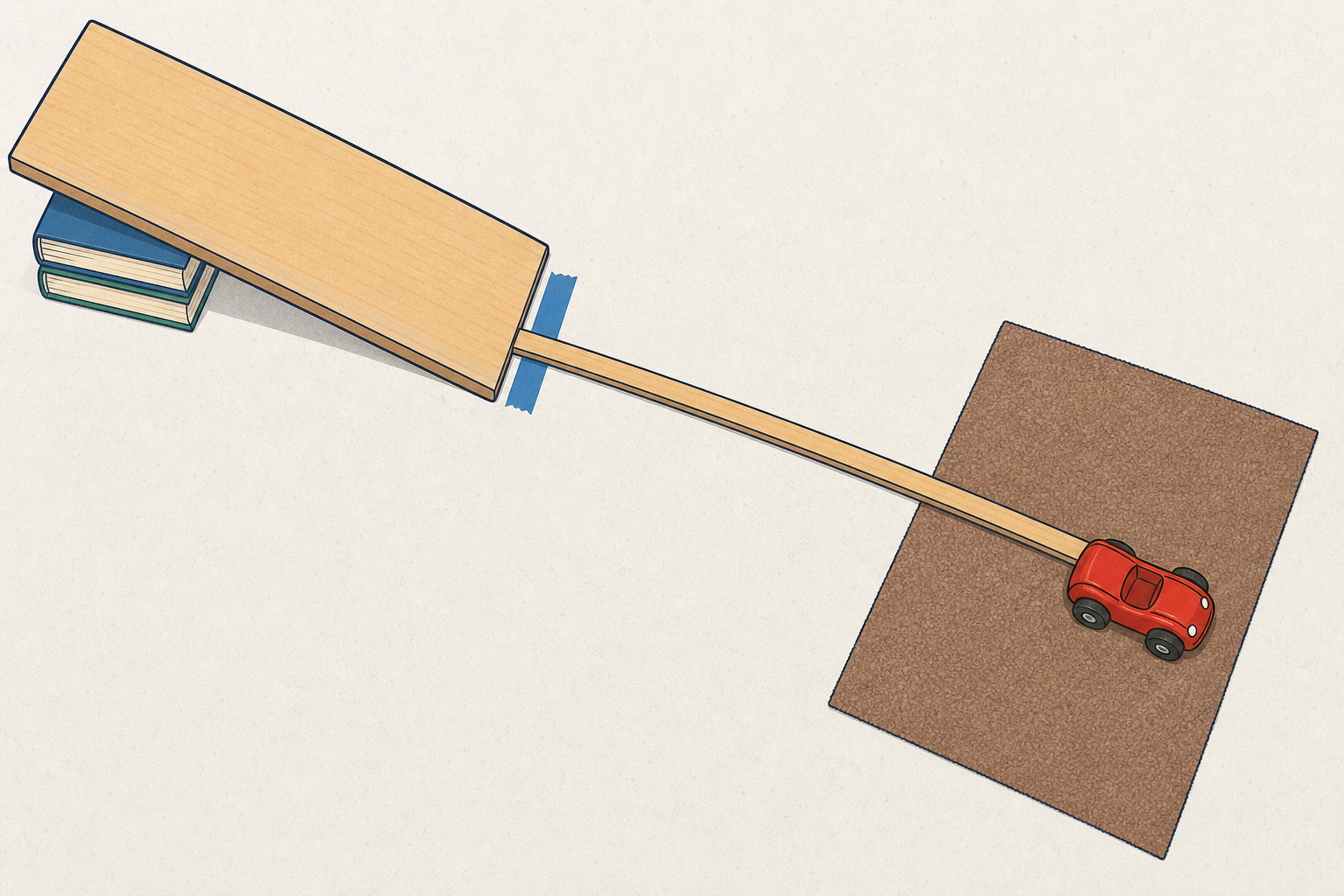
Measure note for the model (say this aloud): we always measure from the same start tape to the front bumper. The ramp section is the same every time, so a shorter total still means the surface slowed the car more. Do not restart the zero at the bottom of the ramp.
Then send groups to rotate through the shared stations. Ramps, start lines and stations should already be set so the 24 minutes are trials and recording, not setup. Circulate and check: one release style (no shove), metre stick straight along the path, three trials and middle number written on the Investigation Journal page before moving on.
Do not try to give every group four private metre-long run-outs. Set up four shared long stations for the class (carpet, wood, sandpaper, tile/laminate), each long enough that the car stops on that surface at class ramp height (about 1 m or more). Prefer marked floor or table patches. Large classes may run two of a busy station if space allows. Each group keeps its own ramp, car, metre stick and start line, and rotates from station to station in the order written on their planner. Only the surface under the car changes.
Rough surfaces (sandpaper, carpet) usually give shorter rolls than smooth wood or tile. Exact numbers vary with the car and ramp, but the pattern should be clear. Aim for all four stations. If time is slipping after about 18 minutes of group work, finish three fair surfaces rather than rushing a fourth unfinished one; incomplete groups can still join the class chart on the surfaces they completed. If all four surfaces look the same, the ramp is probably too steep or groups are pushing the car: lower the ramp and remodel a gentle release.
Differentiation: mixed-role groups (releaser, measurer, recorder) help everyone take part. A less confident child can hold the metre stick on the start line while a partner reads the number. Early finishers stay with the science: ask what would make this test unfair? or watch another group and check their keep-the-sames, not a separate device task.
Safety: cars stay on the table or marked floor strip; no aiming at people; tidy surface samples so nobody trips.
You should already have three distances and a middle value for each surface you finished on your Investigation Journal from the runs.
Take a few quiet minutes to check: same units (cm), three fair tries each, numbers ordered correctly before the middle value, and no invented readings. Keep what you measured separate from what you think it means. Finish any missing fair trial now if a car left the surface earlier.
This is a check-and-complete beat only, not a second full write-up. Pupils wrote into the Investigation Journal page during Step 4; now they neaten and verify before class pooling.
Do not set the results table as homework on this lesson path. Step 6 needs every available middle value in the room so the bar chart can run in the same sitting.
Look-fors while you circulate:
If a group has only two good trials because one car left the surface, they run a third fair trial now rather than inventing a number.
Remind them: the table holds the evidence; the conclusion comes next when we look at the class chart.
You're previewing this lesson. Get full access to this lesson and hundreds more — each one ready to teach, with interactive activities, printable resources and pupil progress tracking built in.