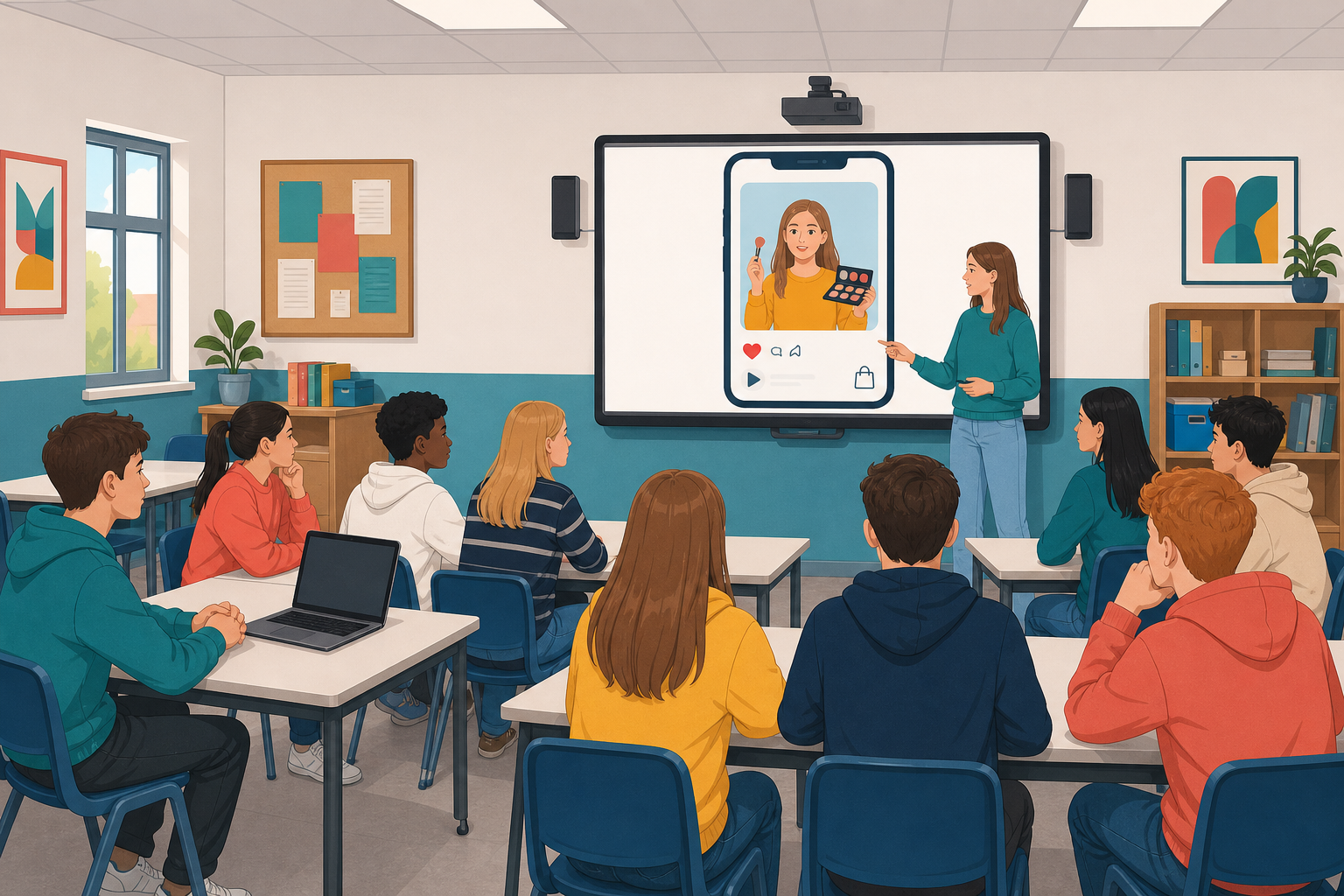
 You have already seen how a feed orders posts to keep you watching. Today you will look at influencers and content creators.
They build an audience online and earn money from it, through brand deals, links that pay them when you buy, or platform payments. That is not dishonest in itself, but it changes how they make their posts.
You will pull apart one made-up post, and then discuss how far to trust what creators recommend.
 Many creator posts mix three layers:
- Sponsored: a brand paid for the post or gave the creator free products. In Ireland the post should say so with #ad, #gifted or Paid partnership, so you can tell it is an advert and not just a friendly tip.
- Real opinion: what the creator actually thinks or recommends.
- Designed to keep you watching: cliffhangers, dramatic claims, like counts and messages that rush you. These hold your attention even when nothing is being sold.
Do you usually notice when a creator is being paid, or do you mostly notice whether you like them?
As a class, work through the made-up NovaBite post in the activity below.
| Layer | What it looks like |
|---|---|
| Sponsored | Someone paid for this to be here. A discount code, “gifted”, a link that pays the creator when you buy (an affiliate link), or an ad label tucked at the end of the caption. |
| Real opinion | What the creator actually thinks, including the bits that are not flattering to the product. |
| Designed to keep you watching | A hook in the first two seconds, a cliffhanger, “part 2 tomorrow”, or a question asked just to get lots of comments. |
“Use KYLA10 at checkout” is sponsored, because the code pays the creator for each sale.
“Wait for the end, you will not believe it” is built to keep you watching, because it promises a reveal instead of information.
Interactive activity
How much should people your age trust product or lifestyle recommendations from creators whose income depends on your attention?
Angle A (trust with eyes open): Creator recommendations are useful when the creator knows the topic well and says when a post is paid.
Angle B (treat as advertising first): If they earn money when you click, treat the post as an advert first, not as a tip from a friend.
Angle C (it depends what they are recommending): A gaming tip and a health claim need different amounts of checking before you trust them.
- With a partner, pick the angle, or point of view, that is closest to what you think now. Make it stronger with one example from the NovaBite post you pulled apart as a class, so nobody has to bring up their own feed.
- Then, for sixty seconds, make the strongest case you can for a different angle, even if you disagree with it. If you get stuck, ask yourselves whether you would trust this creator more, less or the same if they posted an unpaid review next week with no code.
- Finish the sentence in the box below, on a mini whiteboard or out loud.
I would trust a creator recommendation when… and I would double-check when…
Make sure you have argued at least one angle using NovaBite evidence, and that you can say your own trust rule in one sentence. The class does not have to agree with it.
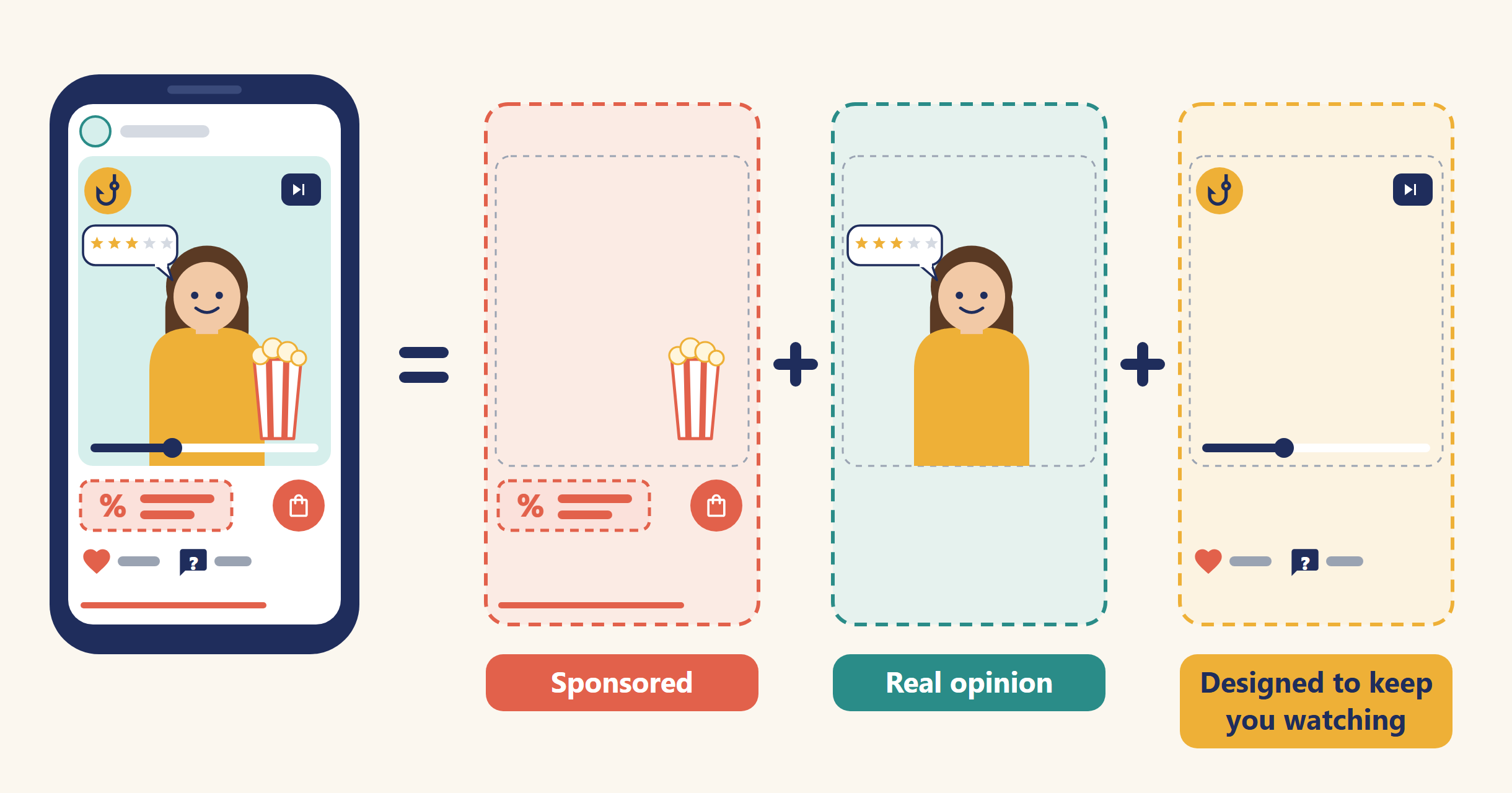
Influencers and content creators shape what you see by mixing three layers: paid promotion, their own opinion, and tricks that hold your attention. None of these is good or bad on its own. The skill is to name which layer you are looking at, check whether sponsorship is made clear, and decide how much a recommendation is worth before you act on it.
What you take away is your own trust rule, not a class verdict. You will now hear two or three strong rules from the class.
Unlock the full learning experience
You're previewing this lesson. Get full access to this lesson and hundreds more — each one ready to teach, with interactive activities, printable resources and pupil progress tracking built in.
This lesson is copyright of Coding Ireland 2017 - 2026. Unauthorised use, copying or distribution is not allowed.