 What day is it today? What day comes next? You already know the answers in English and in Irish. By Friday you will be able to tell a French friend what you do on samedi and dimanche, and name every day in between.
By the end of this lesson, you will be able to:
- Name the seven days of the week in French
- Match each French day to its English meaning
- Spot the day words when you hear them in a game
On a French school calendar the week starts on lundi. Here are all seven days. English shows first. Listen to the French, then say it with the class. Six of them end with the same soft dee sound.
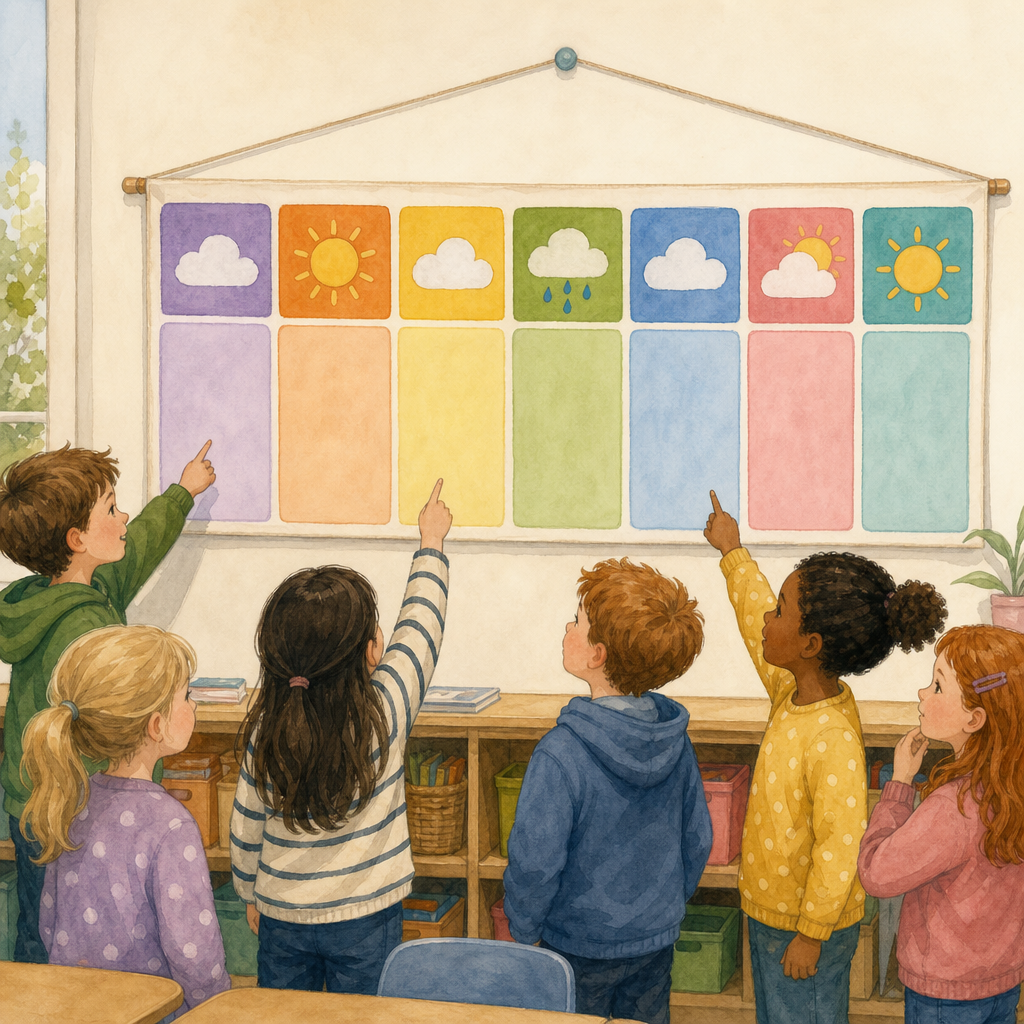
Volunteers click the pairs on the board. When a French day appears, the class says it out loud together. Help call out when someone finds a match. We are filling a French school week from lundi to dimanche.
Open your copy and write the seven French days in order from the list below, then circle the day you have PE.
| French | English | Say it |
|---|---|---|
| lundi | Monday | lun-DEE |
| mardi | Tuesday | mar-DEE |
| mercredi | Wednesday | mair-kruh-DEE |
| jeudi | Thursday | zhuh-DEE |
| vendredi | Friday | vahn-druh-DEE |
| samedi | Saturday | sam-DEE |
| dimanche | Sunday | dee-MAHNSH |
You each have a bingo card on your desk. Listen for each French day as it is called and mark it on your card. First to fill the whole card shouts Bingo! or better, Bravo!
Unlock the full learning experience
You're previewing this lesson. Get full access to this lesson and hundreds more — each one ready to teach, with interactive activities, printable resources and pupil progress tracking built in.
This lesson is copyright of Coding Ireland 2017 - 2026. Unauthorised use, copying or distribution is not allowed.