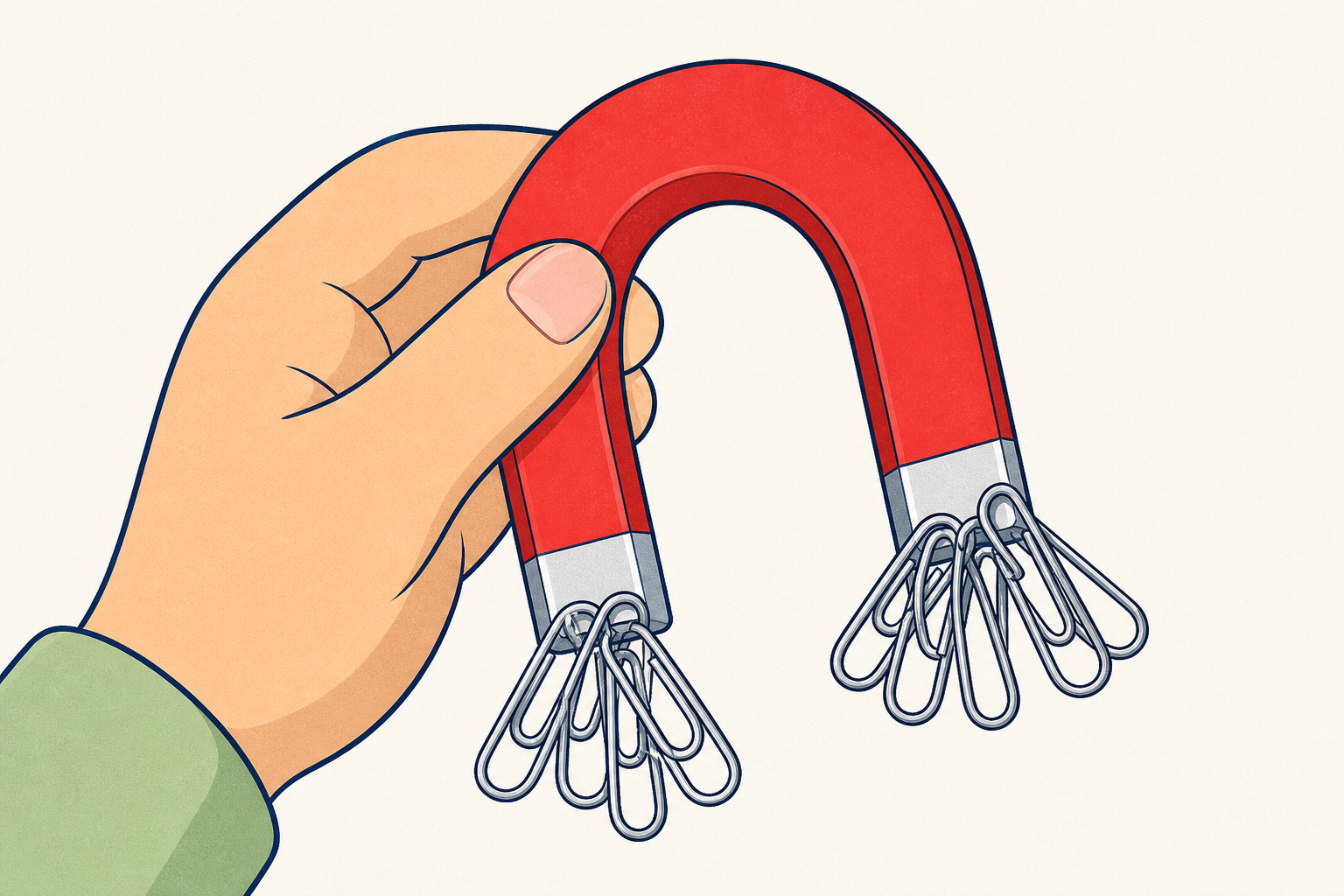
Look! This picture is stuck on without sticky tape. What do you think is holding it?
Hold a chunky fridge magnet against a metal biscuit-tin lid or baking tray so a small picture or note sticks on. Wave it gently so the class can see it stays put. Ask: What is holding the picture? Take two or three guesses. Do not name every station yet. Keep the other magnet jobs out of sight until Explore.
Before the lesson: gather the station objects (see materials list); clear floor space for four short stations; check every magnet is chunky and none can reach a mouth easily.
A magnet job is a useful thing a magnet does to help us. Look at our magnet. Is it holding something?
Keep the board short: one plain idea only. Point at the demo magnet and picture so every child can join with a look or a nod. Do not introduce designer or bag clasps on the IWB.
| Concept | Why it matters | Example |
|---|---|---|
| Magnet job — a useful thing a magnet does to help us, like holding, catching or closing | Magnets are not only for play; people put them in everyday things so jobs are easier | A fridge magnet holds a picture on the fridge so it stays put without sticky tape |
Modelled look (say the beats aloud while you try one job):
Misconception to head off: children may say magnets are only toys. Gently revoice: magnets can be fun and they help us do jobs.
Optional teacher colour only (not for the board): someone plans where magnets go in toys, bags and games so the job works well. Do not ask children to use that word.
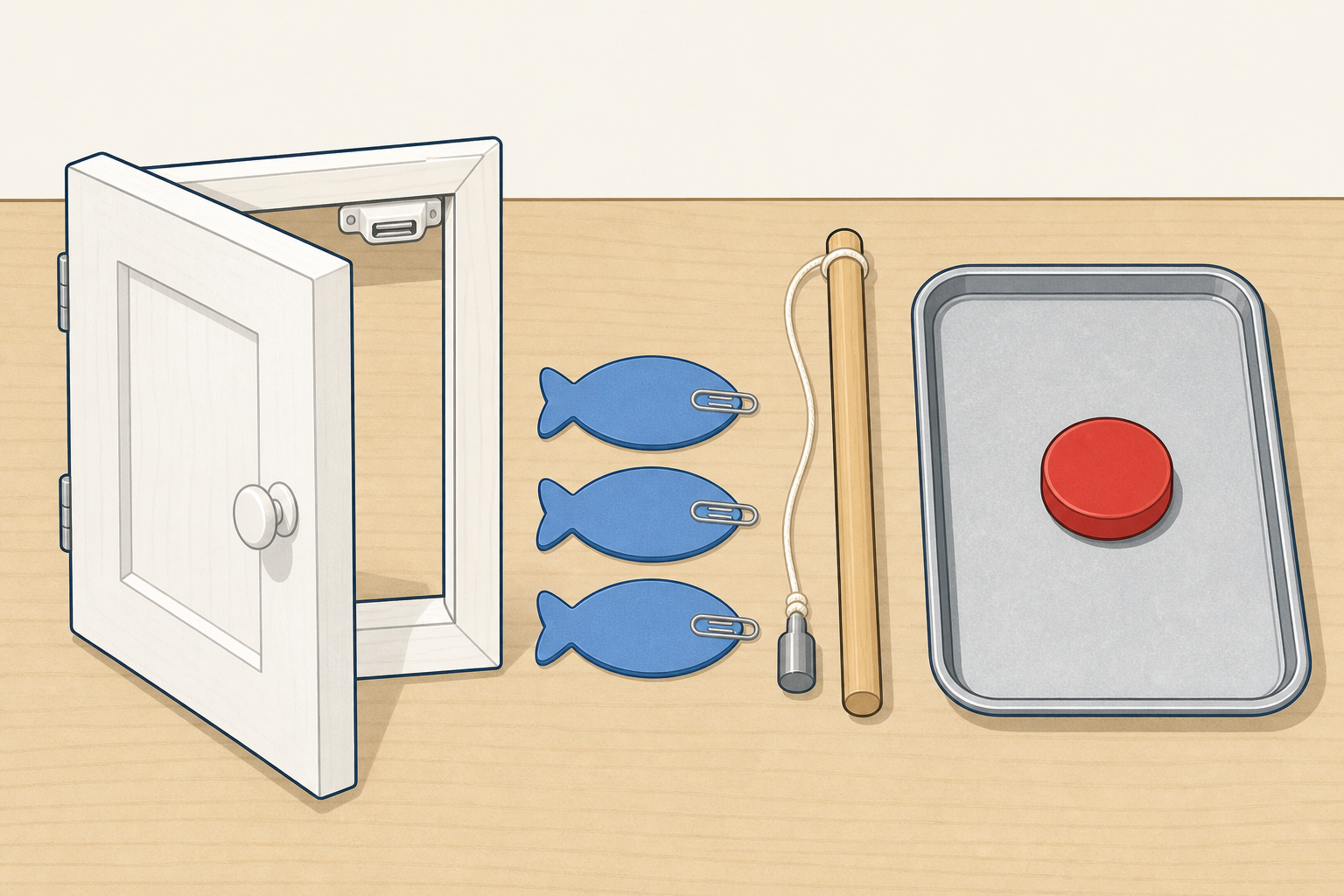
Visit the magnet stations with your group. At each one, try the magnet and talk about the job it is doing. Is it holding, closing, or catching?
Set four short stations around the room. Split the class into about four groups of 5–7 children. Rotate every three minutes with a quick clap signal (four short visits in the slot). Stay at Station D (magnet fishing) for the whole rotation so mouths and floor spills stay covered; prompt job words there and call across to other stations between turns. Other stations need no continuous adult cover if materials are chunky and groups stay seated.
At each rotation ask: What job is the magnet doing here? Use only the words holding, closing, catching. If a group finishes early, ask them to show a friend how the catch opens and shuts again.
Safety: chunky magnets only; keep magnets away from mouths; no running between stations; wipe any spill of paperclips so nobody slips.
Sit ready. Tell us one magnet job you noticed. Was the magnet holding, closing, or catching?
Whole-class carpet. Invite several children to name one station and the job word. Revoice answers in full sentences: You noticed the fridge magnet's job is holding. If a child only points, accept the gesture and supply the word for the class to hear. Keep job words to holding, closing and catching only (not fishing).
Look-fors:
No Investigation Journal page today. Keep this beat oral and short.
Think with a partner: say one way a magnet helps us. Then we will share one idea with the class.
Think-pair-share. Give pairs about one minute, then take three or four ideas. Keep the focus concrete: holds a picture, shuts a bag, catches metal in a game. Celebrate any home link (fridge, school bag, a magnetic game).
Optional one teacher sentence after pupils have shared (not a pupil target): people plan where magnets go so the job works well.
Key points to draw out:
Misconception: if a child says magnets only stick for fun, gently add: fun is one job, and helping is another.
You're previewing this lesson. Get full access to this lesson and hundreds more — each one ready to teach, with interactive activities, printable resources and pupil progress tracking built in.