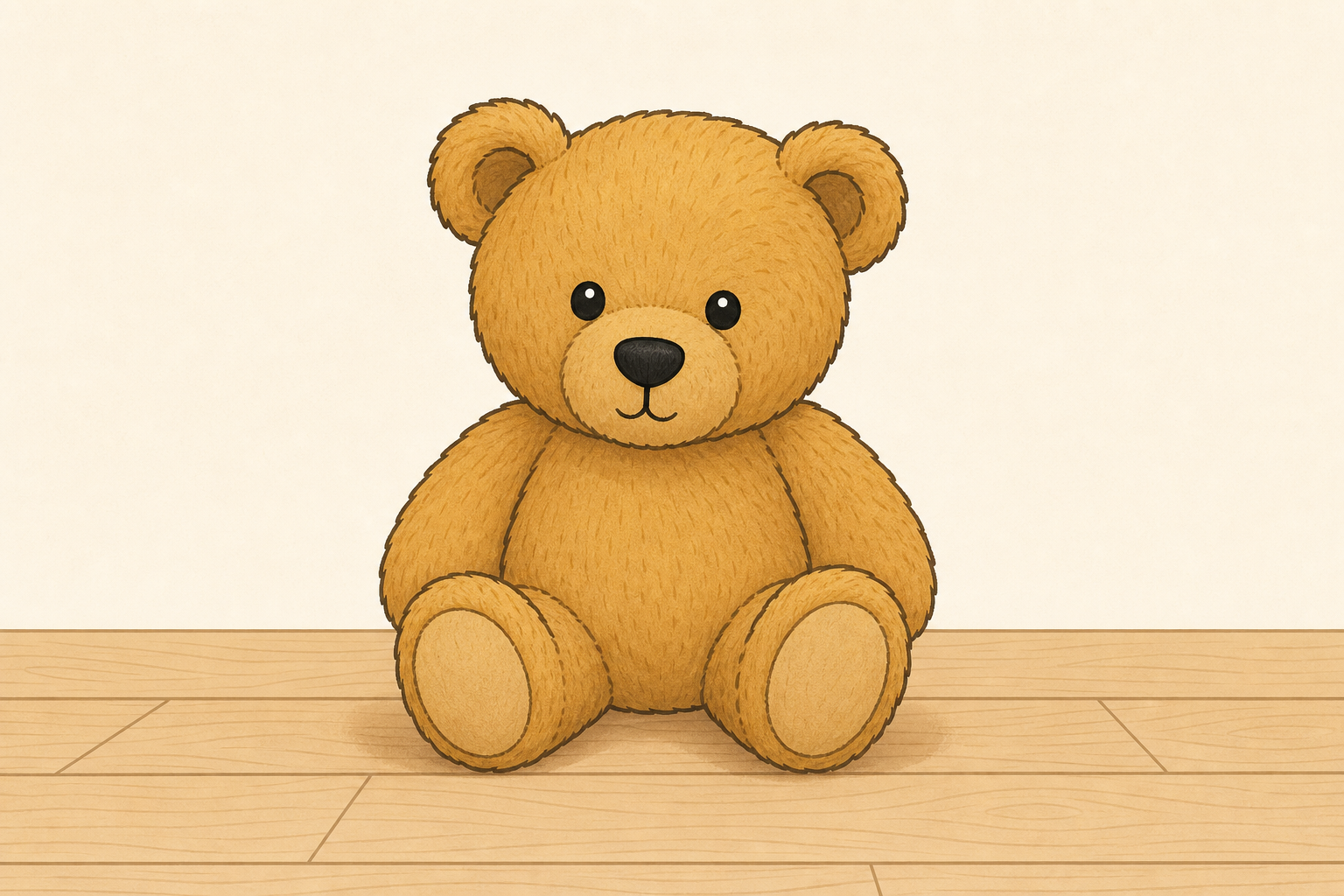
Oh no! This little teddy has nowhere cosy to sleep tonight. Can we make a bed to help him?
Hold up one small soft toy and show an empty space (or an empty box) beside it. Keep the hook light: one problem, one question. Do not hand out materials yet.
If children brought toys from home, use the toy’s name: Oh no — Benny has nowhere cosy to sleep tonight.
Ask with a smile: What does teddy need? Accept any kind answer (a bed, a blanket, somewhere soft). Name the idea in plain words: teddy has no cosy bed, so we will help.
Before the lesson:
Who are we helping today? What does teddy need?
| Concept | Why it matters | Example |
|---|---|---|
| Maker — a person who thinks about who they are helping, then builds something to help them | Real makers put the person (or toy) first so the thing they build is useful | We look at teddy’s size before we choose a box |
Keep the board simple. Children answer the two questions first. Then name ideas orally one at a time with the toy in your hand — not as a list of terms to learn:
Model aloud (worked cycle): Hold teddy. Say: I wonder what teddy needs… I think he needs a soft bed… I will choose a box that fits him, then add fabric… Briefly rest teddy in an empty box with one scrap of fabric so children see “fit” and “soft”. Do not finish a perfect bed; leave room for their own makes. When you show the fabric, say once: soft and snug means cosy.
Who helps us: makers and designers think about who they are helping before they build, just as we are thinking about teddy first.
Key questions: Who are we helping? What does cosy feel like? Should the bed be bigger or smaller than teddy?
Misconception to head off: children may rush to decorate without checking the toy fits. Gently bring them back to “does teddy fit and feel cosy?”
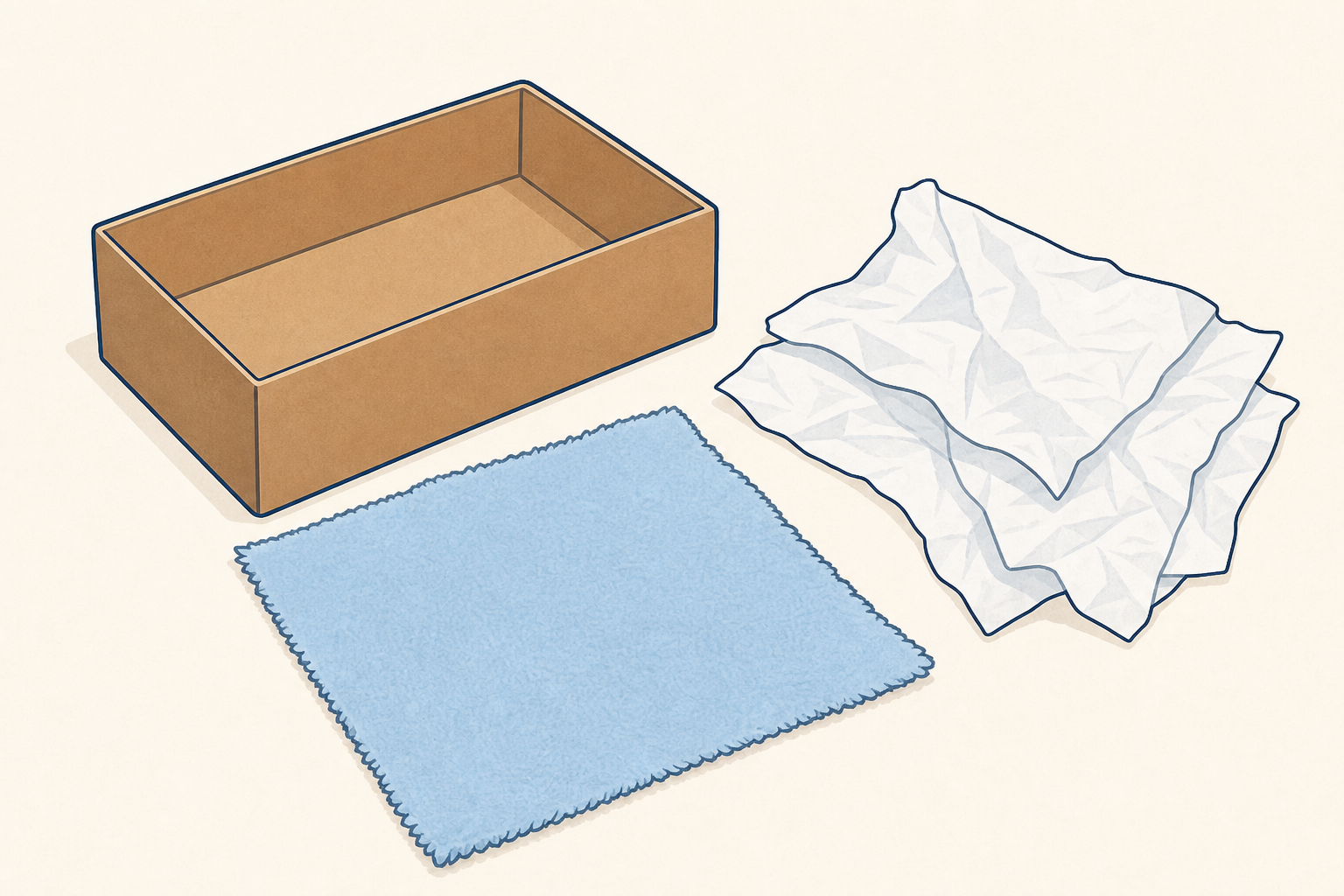
Feel the boxes, fabric and tissue. Which ones feel soft and cosy for teddy? Which box looks the right size?
Short station burst before building. Put materials in the middle of each small group table. Children touch and try materials; they do not start sticking yet. This is where “cosy” becomes real through touch, not a definition on the board.
Guiding talk: Is this fabric soft? Does this box fit your toy? Would tissue make a good blanket?
Watch for children who want to use only shiny or stiff pieces. Praise noticing soft and cosy materials.
Differentiation: offer a pre-chosen “just right” box size for children who find choosing hard; confident pairs can compare two fabrics and say which feels cosier.
Make a cosy bed for your toy. Use a box, fabric and tissue. Check: does your toy fit, and does it feel cosy?
Run as two short build bursts with a quick mid-way regroup (about 6 minutes, 1-minute stop, 5 minutes). At the stop, hold up one unfinished bed and ask: Does the toy fit? What could make it cosier?
Tape and cutting plan (so you are not a queue):
Success looks like: a simple bed or nest the toy can sit or lie in; at least one soft layer (fabric or tissue); the child can point to who it helps.
If a bed is too big or too hard, prompt: What could you add so teddy feels cosy? Scrunched tissue makes a quick mattress.
Safety: round-tip scissors stay with adults; mind fingers when closing boxes.
Early finishers: add a pillow scrap, a second blanket layer, or make a tiny cushion. Not an on-device task.
Show your bed. Snuggle your toy in. Tell a partner, then us: I helped… Teddy needed… My bed is cosy because…
First, a brief pair-share so every child says the who/help line once (about 1–2 minutes). Children turn to a partner with the toy in the bed and finish one stem: I helped… / Teddy needed… / My bed is cosy because…
Then invite a small number of children to the front (or stay at tables and call a few voices) so the plenary still fits five minutes. Keep it brisk: one short sentence each.
Say once more in simple words: makers think about who they are helping before they build.
Invite one kind comment from a friend: I like how soft your blanket is.
No writing and no Investigation Journal page today; the talk and the real bed are the record.
You're previewing this lesson. Get full access to this lesson and hundreds more — each one ready to teach, with interactive activities, printable resources and pupil progress tracking built in.