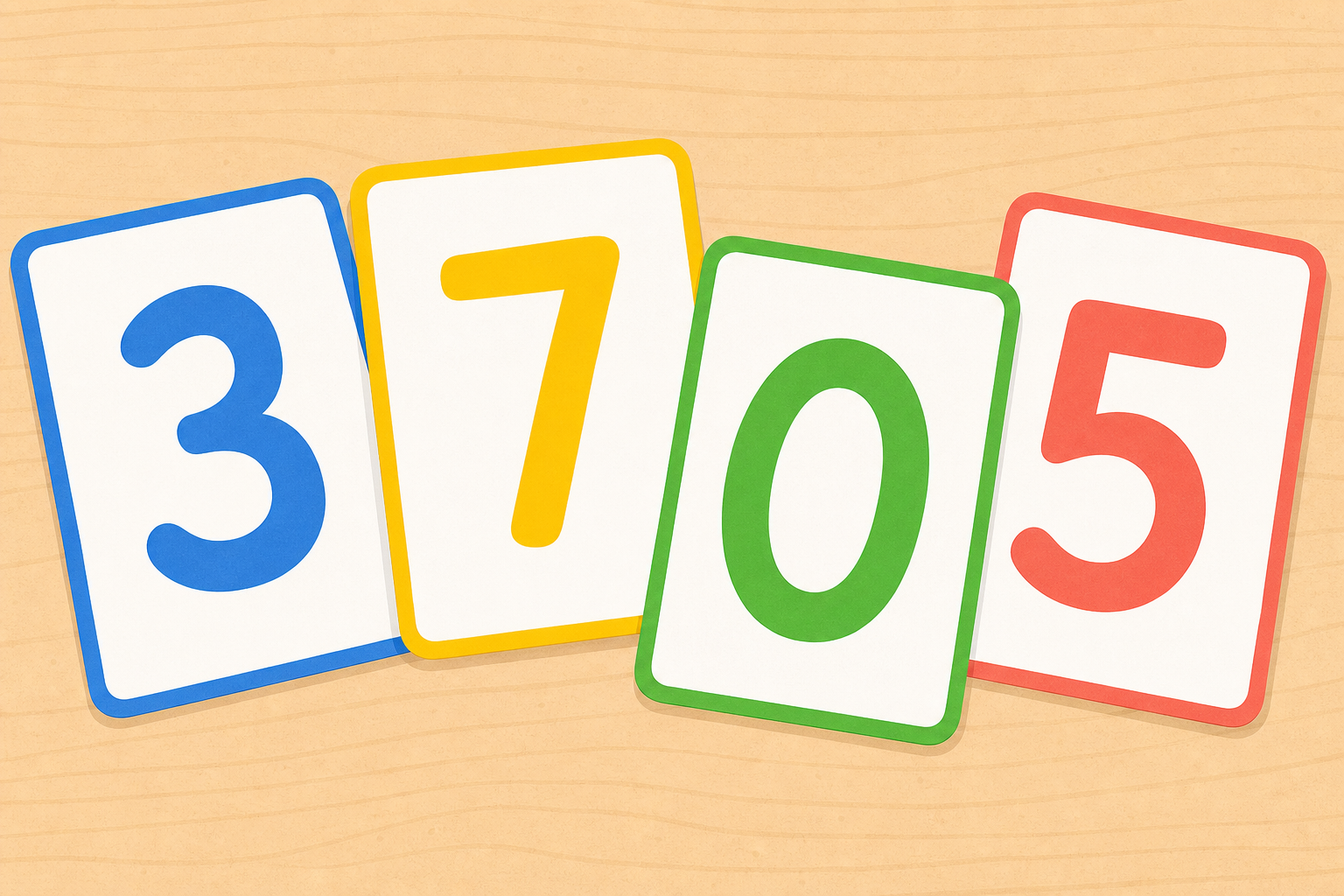
Here are four digit cards: 3, 7, 0 and 5. You may use each card once. What is the biggest four-digit number you could make from them? And where do you think the 7 should go?
Hands up when you have an idea. Think first about which card should sit at the very front.
The interactive shows the biggest and smallest numbers made from the cards 7, 5, 3 and 0, and that smallest number rounded to the nearest 100, on the place-value mat. Look at where each digit sits and why. See if you can spot the rule for the biggest number, the smallest, and what rounding does.
Today we work through a fresh set of cards together: 1, 9, 4, 6. First we build the biggest number on the mat, then rebuild the same cards to make the smallest. Talk each arrangement through as we place the cards.
Build the biggest number first, then rebuild to make the smallest. Notice how the same cards swap ends between the two numbers.
In your maths copy, use these four digits: 2, 5, 8, 0. Write the biggest four-digit number you can make, then write the smallest four-digit number. Remember the 0 cannot go in front. Then round each of your two numbers to the nearest 100 and write the rounded answer beside it.
Today we investigate one set of digits: 2, 4, 6, 8, using each digit once. We will work these in order: (a) make the biggest possible number; (b) make the smallest possible number; (c) make the smallest number you can between 4,000 and 5,000; (d) make a number that rounds to 8,600 to the nearest 100, with 2 in the tens place — and explain which arrangement works.
You're previewing this lesson. Get full access to this lesson and hundreds more — each one ready to teach, with interactive activities, printable resources and pupil progress tracking built in.